2026 Top Pmdc Motor Trends for Global Buyers to Consider?
As we approach 2026, the PMDC motor landscape is evolving rapidly. Global buyers must stay attuned to emerging trends in this sector. This overview highlights crucial aspects to consider when selecting PMDC motors for diverse applications.
Understanding the latest innovations can enhance operational efficiency. For instance, advancements in materials and design are pivotal. These changes improve performance and energy efficiency. Notably, buyers should explore customization options for specific needs. There are challenges, such as supply chain fluctuations, that may impact availability. It's vital to choose suppliers with a proven track record.
In the competitive arena of PMDC motors, one must weigh factors carefully. Price is important, but quality and reliability should never be overlooked. Each decision can carry lasting implications. Reflecting on these trends can empower buyers to make informed choices in 2026.
Emerging Technologies in PMDC Motors for 2026 Global Buyers
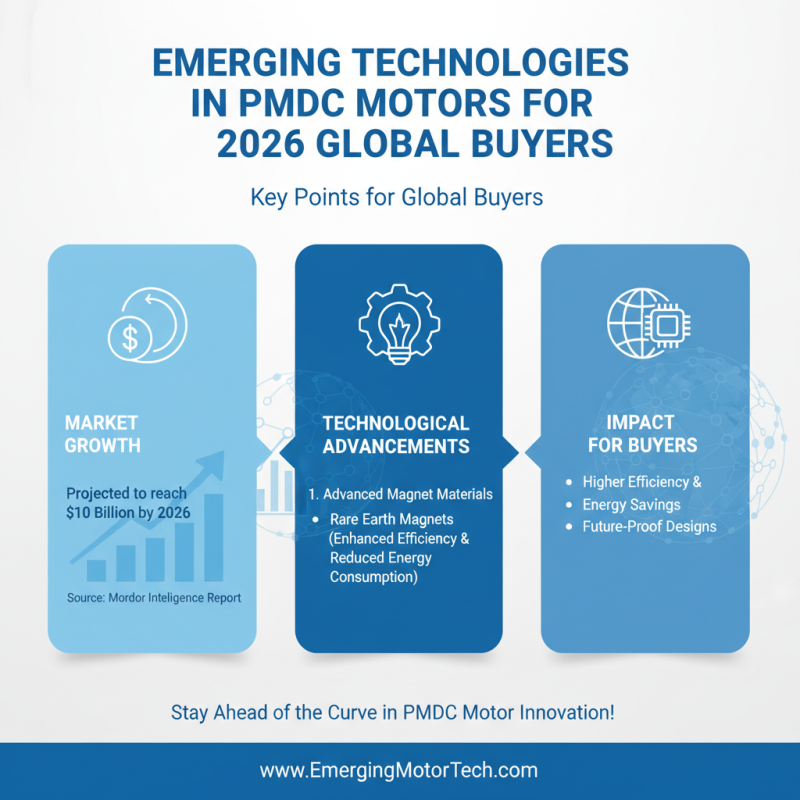
As the PMDC motor market evolves, emerging technologies are shaping its future. The global market size for PMDC motors is projected to reach $10 billion by 2026, according to a recent report by Mordor Intelligence. This significant growth hints at innovative developments that buyers should consider. Technology is advancing rapidly. For instance, advancements in magnet materials, such as rare earth magnets, enhance efficiency and reduce energy consumption.
Another crucial trend is the integration of smart technology. Motors equipped with IoT capabilities enable real-time monitoring and predictive maintenance. This leads to better performance and extended life spans. A study by Research and Markets states that smart PMDC motors are set to capture a market share of 25% by 2025. This integration can also pose challenges, such as cybersecurity risks that need careful management.
Sustainability is increasingly influencing the PMDC motor landscape. Regulations demand efficient energy use and reduced emissions. Reports indicate that sustainable designs could decrease operational costs by up to 15%. However, understanding and adapting to these requirements can be complex. Global buyers must stay informed about these trends and prepare for potential hurdles. Being aware of the evolving landscape ensures better strategic decisions in the PMDC motor market.
Sustainability Trends Influencing PMDC Motor Design and Production
The shift towards sustainability is profoundly affecting the design and production of
Permanent Magnet Direct Current (PMDC) motors. Manufacturers are increasingly focusing on
materials that reduce environmental impact. Using recyclable materials helps in minimizing waste,
while eco-friendly production processes contribute to decreasing carbon emissions.
Energy efficiency is another critical aspect driving design changes. Improved energy consumption not only benefits
the environment but also lowers operational costs for users. Innovations in motor efficiency can sometimes take years to develop. This leads to ongoing
discussions among engineers about optimal designs and materials. Stakeholders must assess whether newer technologies justify their costs in the
short term.
Consumer demand is shifting. There is a growing expectation for products to meet strict environmental standards. This pressures manufacturers to adapt
quickly. Yet, sustainability goals can sometimes clash with performance needs. Companies must find
a balance between eco-friendly practices and producing high-performance motors. This often requires a willingness to experiment and learn from setbacks.
Market Demand Analysis for PMDC Motors Across Different Industries
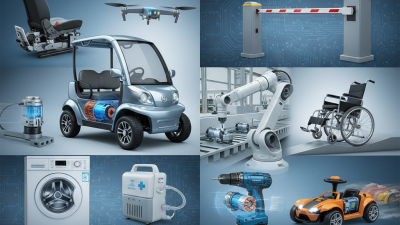
The demand for Permanent Magnet Direct Current (PMDC) motors is steadily rising across various industries. A recent market analysis indicates that the automotive sector is experiencing a surge, with the global demand for electric vehicles increasing. The International Energy Agency has reported that electric vehicle sales have reached over 6.5 million units globally in 2021, highlighting the need for efficient PMDC motors. These motors are favored for their compact size, high efficiency, and low maintenance needs.
In manufacturing, automation is driving PMDC motor adoption. According to industry reports, approximately 60% of manufacturers are investing in robotic solutions that utilize these motors. Their ability to provide precise motion control makes them ideal for packaging, assembly, and material handling processes. However, challenges remain in addressing thermal management and ensuring motor reliability under varying load conditions.
Tips for buyers: Consider integrating PMDC motors into your designs by evaluating their thermal characteristics. Proper heat dissipation can drastically enhance performance and lifespan. Additionally, keep abreast of advancements in materials and control systems. Staying informed can lead to better decision-making and future-proof investments.
Key Players and Innovations Shaping the PMDC Motor Market in 2026
The PMDC motor market is evolving rapidly, driven by technological advancements and shifting consumer needs. Key players are investing heavily in research and development to enhance motor efficiency and performance. In fact, market reports indicate that the global PMDC motor market is projected to reach USD 5.8 billion by 2026, growing at a CAGR of 7.5%. This growth reflects increasing demand from industries such as automotive, aerospace, and consumer electronics.
Innovations in materials and design are also shaping the future landscape. For example, the use of lightweight, durable materials can significantly improve motor efficiency. Companies are exploring advanced manufacturing techniques to reduce production costs while enhancing quality. However, challenges persist. The high cost of materials and the need for skilled labor can hinder growth for manufacturers. Furthermore, many buyers may hesitate to adopt new technologies without clear demonstrations of long-term benefits. Addressing these issues will be crucial for companies aiming to lead in the PMDC motor market.
2026 PMDC Motor Market Trends
This bar chart illustrates the predicted trends for PMDC motors in 2026, including key metrics such as efficiency, cost, innovations, market growth rate, and adoption rate. These insights are crucial for global buyers to understand the future landscape of the PMDC motor market.
Future Challenges and Opportunities for PMDC Motor Adoption Global Trends
The adoption of Permanent Magnet DC (PMDC) motors is transforming various industries. However, challenges persist. Many manufacturers grapple with high initial costs when implementing these motors. Training staff to operate and maintain PMDC systems adds another layer of complexity. This investment in time and resources may deter potential buyers.
Market trends indicate a growing demand for energy-efficient solutions. Businesses are increasingly seeking technologies that reduce their carbon footprints. PMDC motors, with their efficiency advantages, have the potential to meet these needs. Yet, competition from alternative technologies can stifle adoption. Buyers must evaluate their options carefully, considering both performance and longevity.
Regulatory hurdles also pose challenges. Compliance with international standards can be daunting. These regulations can vary widely across regions, complicating the supply chain. Buyers need reliable resources to navigate these complexities. As they explore the potential of PMDC motors, a deep understanding of the market landscape will be crucial.
2026 Top PMDC Motor Trends for Global Buyers to Consider
| Trend |
Description |
Potential Impact |
Adoption Rate (%) |
| Increased Efficiency |
Focus on improving energy conversion rates and reducing heat loss. |
Higher performance and lower operational costs. |
75% |
| Smart Motor Technologies |
Integration with IoT for real-time monitoring and management. |
Enhanced data analytics and predictive maintenance capabilities. |
60% |
| Miniaturization |
Development of smaller, more powerful motors for compact applications. |
Wider application scope in limited space environments. |
50% |
| Sustainability Focus |
Emphasis on eco-friendly materials and recycling initiatives. |
Meeting regulations and customer demand for sustainable products. |
70% |
| Customization and Modularity |
Rise in demand for tailored solutions to specific application needs. |
Improved satisfaction and performance in niche markets. |
65% |