What is a Bldc Motor and How Does it Work?
The world of electric motors has seen a significant shift with the rise of Brushless DC (BLDC) motors. These motors offer enhanced efficiency and reliability, making them a popular choice in various applications. According to a report by MarketsandMarkets, the global BLDC motor market is expected to reach $30 billion by 2025, growing at a rate of over 10%.
Dr. Emily Chen, a leading expert in motor technology, states, "BLDC motors are revolutionizing industries by providing superior performance with lower energy consumption." This sentiment reflects the growing trend towards eco-friendly technologies. Despite their advantages, many users face challenges understanding how BLDC motors operate.
In a time where energy efficiency matters, learning about the functioning of a BLDC motor is essential. However, it’s crucial to address the potential complexities in installation and control. Some users might overlook maintenance, impacting performance. This exploration aims to demystify the workings of BLDC motors, showcasing their benefits while acknowledging the intricacies involved.
What Defines a Brushless DC Motor (BLDC) and Its Key Characteristics
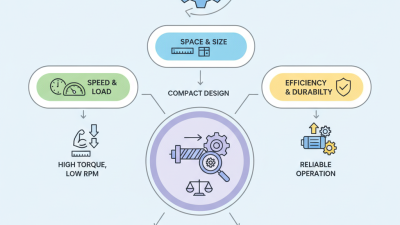
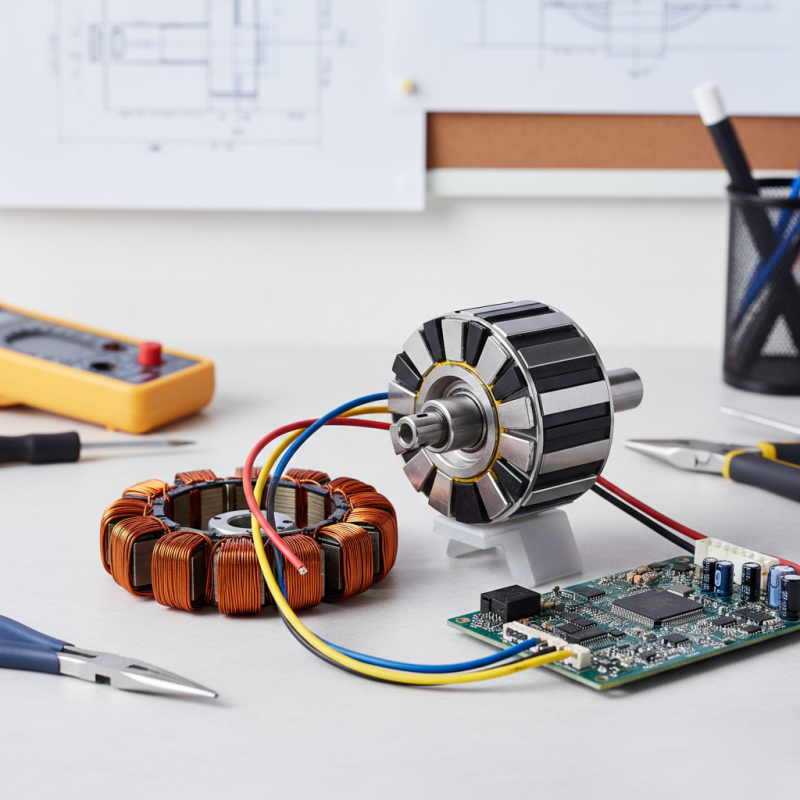
A Brushless DC Motor (BLDC) is a type of electric motor that operates without brushes. This design enhances efficiency and reduces maintenance needs. In a BLDC motor, permanent magnets are used on the rotor. This allows for a more compact design and improved performance.
Key characteristics include high efficiency and longevity. BLDC motors have fewer moving parts, which minimizes wear and tear. They often provide smoother operation and better control. However, wiring and control can be complex. Proper understanding is crucial for optimal performance.
These motors are widely used in various applications, from electric vehicles to household appliances. Each application can reveal limitations, such as sensitivity to temperature variations. Understanding these factors helps improve motor selection and usage. Analyzing real-world performance can uncover further insights into their reliability over time.
What is a Bldc Motor and How Does it Work?
| Characteristic |
Description |
| Type |
Brushless DC Motor |
| Construction |
Comprises stator, rotor, and electronic controller |
| Operation Principle |
Uses electromagnetic induction without brushes |
| Efficiency |
Higher efficiency than brushed motors, up to 90-95% |
| Control Method |
Speed is controlled by PWM (Pulse Width Modulation) |
| Advantages |
Longer lifespan, less maintenance, quieter operation |
| Applications |
Used in electric vehicles, HVAC systems, robotics, and more |
Key Components and Design Features of Brushless DC Motors
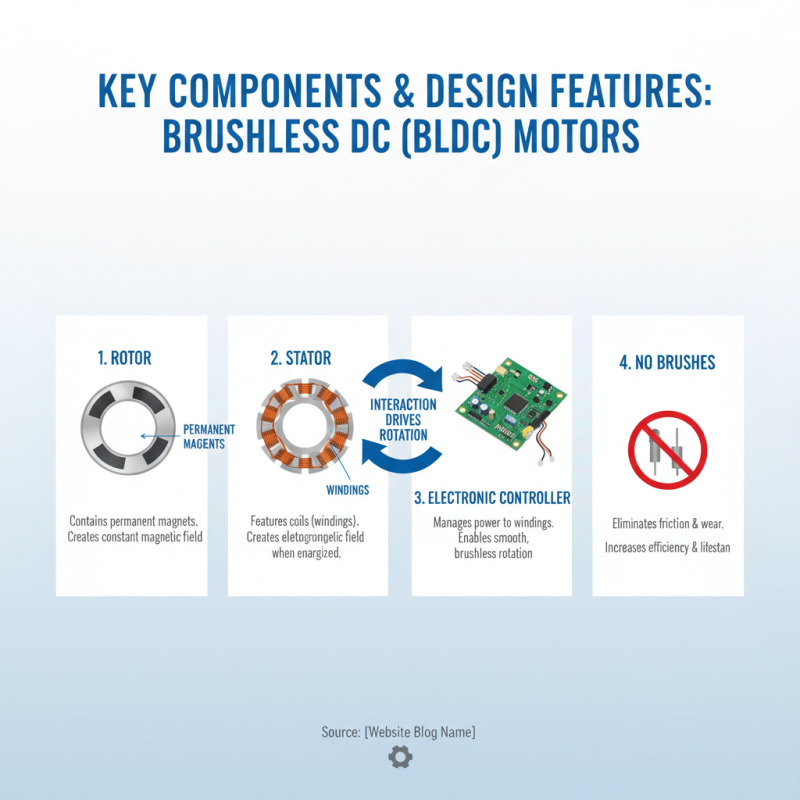
Brushless DC (BLDC) motors are innovative devices that have become vital in various applications. Their key components include a rotor, stator, windings, and an electronic controller. The rotor often contains permanent magnets, creating a consistent magnetic field. The stator features coils that create an electromagnetic field when energized. This interaction drives the rotor, enabling smooth rotation without brushes.
Design features of BLDC motors enhance their efficiency. They are compact, lightweight, and have a higher power-to-weight ratio compared to traditional motors. The absence of brushes reduces friction, leading to increased lifespan and lower maintenance needs. However, the electronic controller can be complex. It requires careful design to ensure reliable motor operation.
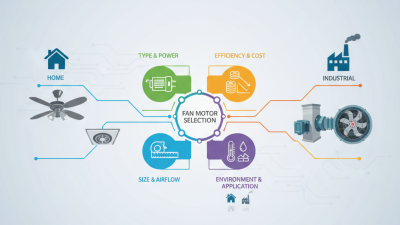
Tips for selecting a BLDC motor include considering your application requirements. Assess the torque, speed, and efficiency needed for your device. Also, ensure proper cooling, as overheating can lead to performance issues. Understand that not all applications will benefit from a BLDC motor. Evaluate alternatives to optimize your project's outcome.
How Brushless DC Motors Operate: The Role of Electronics and Magnetics
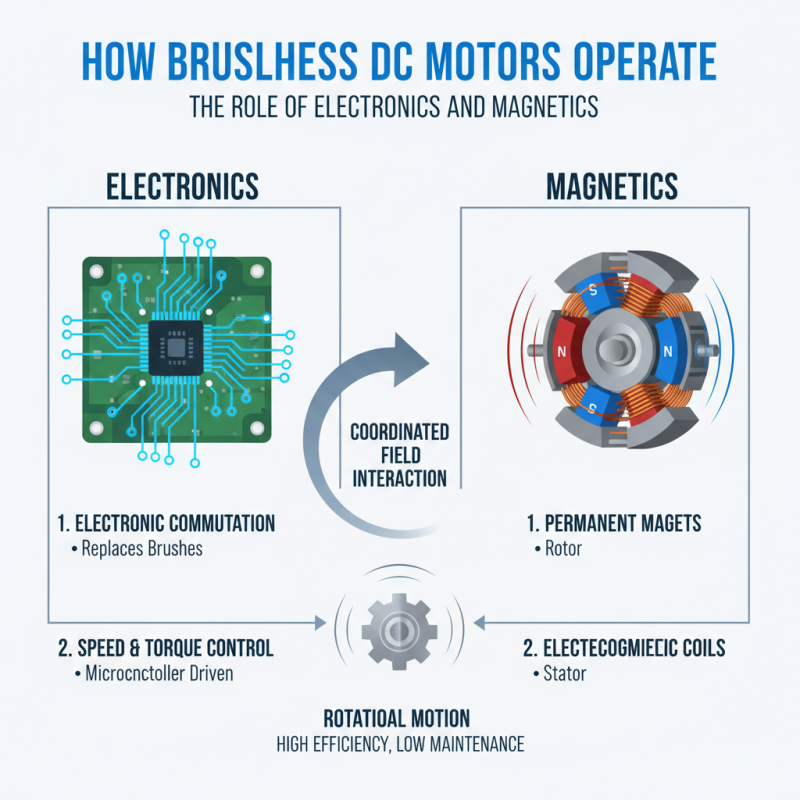
Brushless DC (BLDC) motors have gained traction in various industries due to their efficiency and low maintenance. The operation of these motors relies heavily on electronics and magnetics. Unlike traditional brushed motors, BLDC motors utilize electronic commutation to control the rotational speed and torque. This process eliminates brushes, which are often a source of wear and inefficiency.
The core component of a BLDC motor is its rotor, which typically consists of permanent magnets. When current flows through the stator windings, it generates a magnetic field. This interaction between the rotor and stator creates the rotational motion. According to a report by the International Electrotechnical Commission, BLDC motors are up to 85% efficient, highlighting their capability to convert electrical energy into mechanical energy effectively.
However, this technology is not without challenges. The reliance on electronic controllers introduces complexity. These controllers must adapt to varying loads and speeds, which can lead to performance inconsistencies. Furthermore, the design of the magnetic circuit is crucial for optimal performance, and any defects could significantly impact efficiency. A comprehensive understanding of both electronics and magnetics is essential to fully harness the potential of BLDC motors.
Applications and Advantages of BLDC Motors in Various Industries
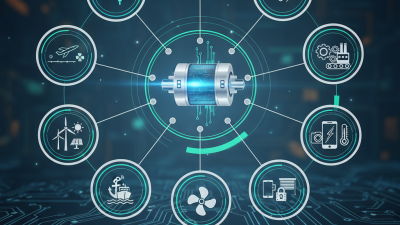
BLDC motors, or Brushless Direct Current motors, have gained substantial traction across various industries. Their efficiency and reliability result in significant operational benefits. According to recent industry reports, the global BLDC motor market was valued at $13.23 billion in 2020 and is projected to reach $23.77 billion by 2026, growing at a compound annual growth rate (CAGR) of 10.25%. This growth reflects a rising demand in sectors such as automotive, aerospace, and manufacturing.
In the automotive sector, BLDC motors enhance performance and energy efficiency. They are commonly used in electric vehicles (EVs), contributing to extended battery life. A study showed that EVs equipped with BLDC motors can achieve up to 90% efficiency. This efficiency translates to longer driving ranges and reduced charging times, making EVs more appealing to consumers. However, the higher initial cost of these motors might deter some manufacturers.
Manufacturing automation also leverages BLDC motors extensively. They function in robotics, conveyor systems, and CNC machines. These applications benefit from the precise control and high speed that BLDC motors offer. Research highlights that integrating BLDC technology can improve production rates by 30%. Yet, challenges like the need for advanced control systems and initial setup costs remain. Industries must weigh these factors against the potential performance gains.
Applications of BLDC Motors in Various Industries
Comparative Analysis of BLDC Motors and Traditional DC Motors
BLDC motors, or Brushless DC motors, offer significant advantages over traditional DC motors. One notable difference is their efficiency. BLDC motors can achieve efficiencies of up to 90%, compared to around 75% for traditional brushed motors. This efficiency leads to reduced energy consumption and lower operational costs. An industry report from the International Electrotechnical Commission highlights that the use of BLDC motors can lead to energy savings of 30% or more in many applications.
Another important aspect is maintenance. Traditional DC motors require regular brush replacement due to wear. In contrast, BLDC motors have no brushes, resulting in longer lifespans and less frequent maintenance. This is particularly beneficial in industries where downtime is costly. However, BLDC motors often require more complex electronics for control, which can add to initial costs and complexity.
The choice between these motors depends on specific application requirements. While BLDC motors excel in performance and efficiency, their initial investment can deter some users. In applications where simplicity and cost are paramount, traditional DC motors may still be viable. Ultimately, evaluating specific use cases, along with cost-benefit analysis, is essential for making the right decision.