Why Choose AC Motors for Your Industrial Applications?
In today's industrial landscape, the choice of motor can significantly impact efficiency and performance. AC motors are increasingly favored for their versatility and reliability. As industrial expert Dr. Emily Tran states, "AC motors are the backbone of modern manufacturing." This establishes the importance of understanding their advantages in various applications.
AC motors provide advantages like energy efficiency and reduced maintenance needs. They operate smoothly under varying loads and are well-suited for repeated starts and stops. These motors come in various types, accommodating different industrial needs. However, not all applications may benefit equally from AC motors. Factors such as cost, environment, and specific requirements should be carefully considered.
While AC motors offer many benefits, their integration into systems requires careful planning. The communication among systems may not always be seamless. This leaves room for optimization. Therefore, organizations should conduct thorough assessments before making the switch to AC motors in their operations.

Benefits of AC Motors in Industrial Settings
AC motors have become a popular choice in industrial applications due to their numerous benefits. One significant advantage is energy efficiency. These motors consume less power while providing consistent performance. This feature translates to lower energy costs, which is essential for manufacturers aiming to improve their bottom line. With the rise of sustainability initiatives, using AC motors aligns with eco-friendly practices.
Another critical benefit is their reliability. AC motors have fewer moving parts compared to DC motors, which means less wear and tear. This robustness leads to reduced maintenance needs and longer operational lifespans. Industries that rely on heavy machinery benefit greatly from this reliability. However, maintenance is still necessary. Regular checks can prevent unexpected downtime.
In addition, AC motors offer versatility. They come in various designs and size ranges to suit different applications. This adaptability makes them a go-to choice in various settings—be it pumps, fans, or conveyors. It’s important to properly match the motor type to the application for optimal performance. Misalignment can lead to inefficiency and unnecessary costs, which companies need to evaluate carefully.
Understanding the Efficiency of AC Motors
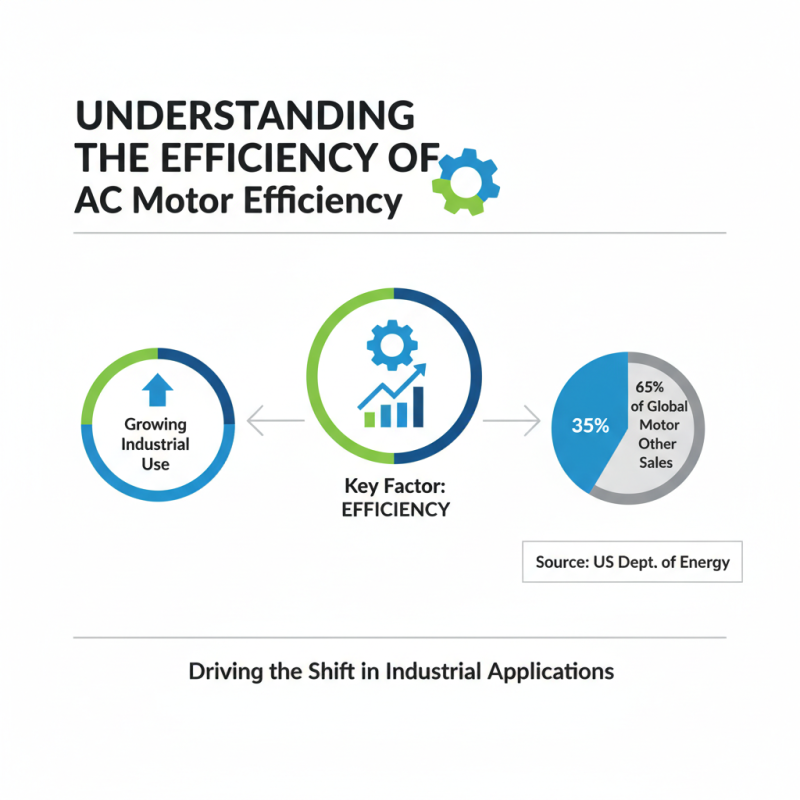
AC motors are becoming a popular choice for various industrial applications. Their efficiency is one of the key factors driving this shift. According to a report by the U.S. Department of Energy, AC motors account for approximately 65% of global motor sales. This figure highlights their importance in industrial setups.
The efficiency of AC motors can reach up to 95% in optimal conditions. This level of efficiency translates into significant energy savings over time. An industry study noted that upgrading to high-efficiency AC motors can reduce energy use by 10% to 30%. Yet, maintenance is crucial to achieving such savings. Failure to perform regular checks can lead to inefficiencies creeping in, diminishing the benefits.
However, not all AC motors are created equal. Different applications may require different types, such as induction or synchronous motors. Selecting the appropriate motor for specific tasks is essential. This choice can impact productivity and energy consumption significantly. Therefore, understanding the nuances of AC motor efficiency is vital for decision-makers in the industry.
Comparing AC Motors to Other Motor Types
When it comes to industrial applications, AC motors are often the preferred choice. They offer distinct advantages over other motor types, such as DC motors and stepper motors. AC motors are generally more reliable and require less maintenance. They also have better efficiency, especially in high-torque applications.
One key benefit of AC motors is their simplicity. Unlike DC motors, which require commutators and brushes, AC motors have fewer moving parts. This design makes them less prone to wear and tear. As a result, they can operate longer without needing significant repairs. However, users must consider their specific needs before making a decision. Not every situation favors AC motors; some may require the precise control offered by stepper motors.
Tips: Always evaluate the electrical supply requirements before selecting a motor type. AC motors can have varying voltage needs. It's also wise to calculate the total load to ensure optimal performance. Lastly, if energy efficiency is a concern, consult an expert to analyze your application. Understanding these factors can help prevent costly mistakes.
Common Applications of AC Motors in Industry
AC motors are widely used in various industrial sectors due to their efficiency and versatility. In manufacturing, they power conveyor systems, enabling smooth material handling. This ensures that production lines operate without interruptions. Additionally, AC motors drive pumps in water treatment facilities, efficiently transporting fluids for purification processes. Their reliability in such critical applications cannot be overstated.
Another key area is the food processing industry. AC motors control mixers and packaging machines. These motors maintain consistent speeds, ensuring product quality. In the automotive sector, they drive assembly line equipment. This speeds up production while maintaining precision. However, unexpected downtime can happen. Regular maintenance is crucial to avoid disruptions.
In textile manufacturing, AC motors operate loom machines. They adapt to varying production speeds, meeting changing demands. Yet, not all applications may benefit equally. Some industries might require more specialized motors. This makes it essential to evaluate specific needs carefully. Making the right choice can enhance productivity significantly.
Why Choose AC Motors for Your Industrial Applications? - Common Applications of AC Motors in Industry
| Application |
Industry |
AC Motor Type |
Power Range (kW) |
Benefits |
| Pumps |
Water Treatment |
Induction Motor |
1.5 - 75 kW |
Efficient & Reliable |
| Conveyors |
Manufacturing |
Synchronous Motor |
0.5 - 100 kW |
High Performance |
| Fans |
HVAC |
Induction Motor |
0.75 - 30 kW |
Quiet Operation |
| Machine Tools |
Metalworking |
Synchronous Motor |
1 - 50 kW |
Precise Control |
| Compressors |
Refrigeration |
Induction Motor |
2 - 100 kW |
Durability |
Factors to Consider When Selecting AC Motors
When selecting AC motors for industrial applications, several key factors come into play. Efficiency is crucial. High-efficiency AC motors save energy and reduce operating costs. This is vital for large-scale operations. The environment in which the motor operates also affects choice. Certain enclosures are better suited for dusty or humid conditions.
Another consideration is the power requirements. Accurately assessing load and torque requirements ensures optimal motor performance. Oversizing can lead to increased costs without benefits. Additionally, the motor's speed control is essential. Some applications require variable speed capabilities. This flexibility can improve productivity.
Don't forget about maintenance needs. Some motors require less upkeep, which can be a significant advantage. Reducing downtime leads to higher efficiency. However, opting for a low-maintenance motor may come with higher upfront costs. Always weigh long-term benefits against initial investments. Choosing the right AC motor is essential. It can greatly influence overall operational efficiency.
Why Choose AC Motors for Your Industrial Applications?
This chart illustrates the key factors influencing the selection of AC motors in industrial applications, showcasing the importance of efficiency, cost, reliability, and maintenance.