Selecting the right gear motor for your project can be daunting. The gear motor industry is experiencing a significant surge, projected to grow at a CAGR of 5.6% from 2020 to 2027, according to a recent report by Research and Markets. This growth is influenced by rising automation in various sectors such as manufacturing, automotive, and renewable energy.
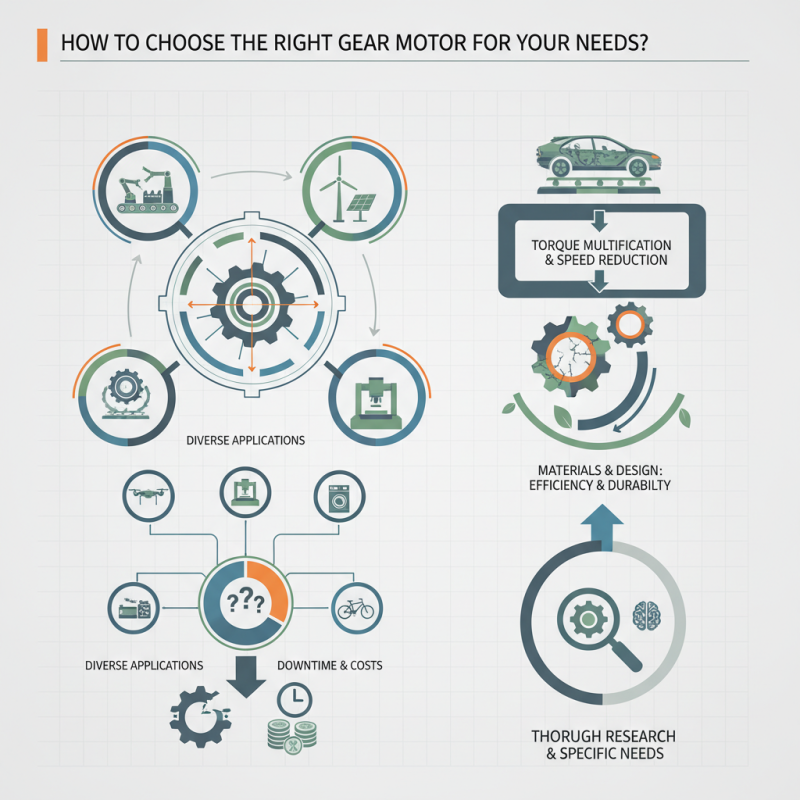
Understanding the key features of gear motors is crucial. They provide essential torque multiplication and speed reduction, making them ideal for applications that require precision. Moreover, the choice of materials and design can greatly impact efficiency and durability. Unfortunately, many may overlook these factors, leading to inefficiencies in performance and increased maintenance costs.
Additionally, the diverse range of applications means that one size does not fit all. Customization options are widely available but often underutilized. A poorly chosen gear motor could cause downtime, affecting productivity and profits. Therefore, thorough research and an understanding of your specific needs are vital in making the best decision for your operations.
Gear motors are crucial components in various applications, from industrial machinery to consumer products. Their primary function is to convert electrical energy into mechanical energy efficiently. According to industry reports, the global gear motor market is expected to reach USD 8.85 billion by 2025, reflecting a compound annual growth rate (CAGR) of 6.4%. This growth is driven by increasing automation in sectors such as manufacturing, agriculture, and logistics.
Choosing the right gear motor involves understanding your specific needs. Factors include torque requirements, speed ranges, and the environment in which the motor will operate. For instance, a motor in a dusty factory may need a different sealing capability than one used in a cleanroom setting. Misjudging these variables can lead to performance issues, inefficiencies, or even equipment failures.
Additionally, gear motors present some challenges. Overheating can occur if a motor is overloaded. It's crucial to assess the load requirements thoroughly. Feedback from operators can provide insights into common problems faced during operations. Regular maintenance and proper installation can significantly enhance longevity and efficiency. Understanding these nuances will guide informed decisions when selecting the ideal gear motor for your application.
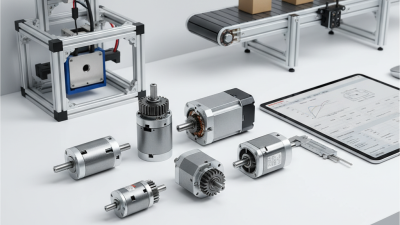
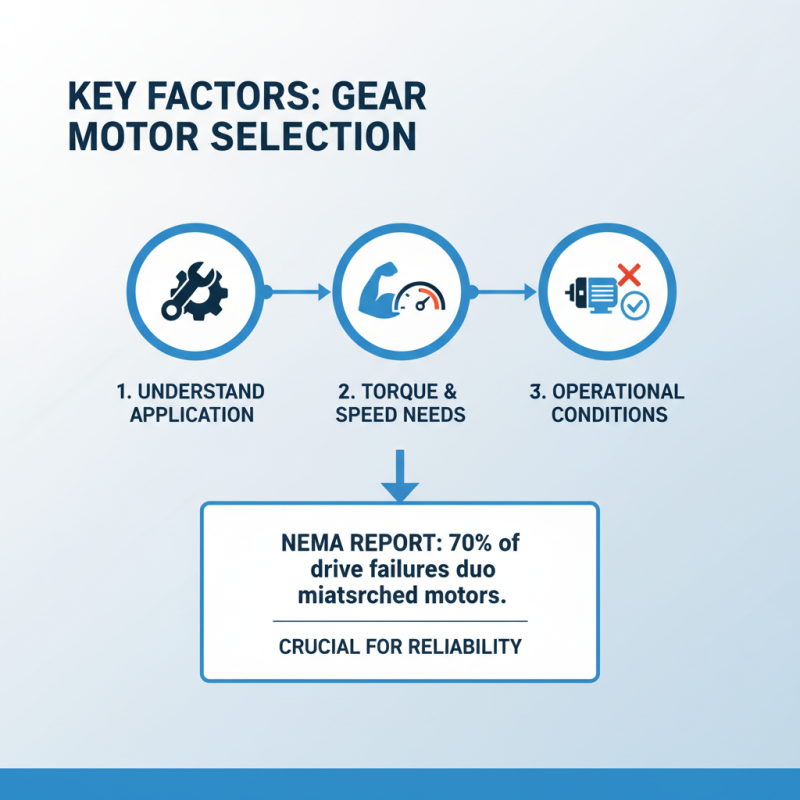
When selecting a gear motor, understanding the application is crucial. The torque and speed requirements shape the decision-making process. For instance, a report by the National Electrical Manufacturers Association suggests that approximately 70% of drive failure stems from mismatched gear motors. This highlights the importance of assessing operational conditions.
Another key factor is the environment. Will the gear motor be used indoors or outdoors? Harsh environments can lead to premature wear. A study from the International Electromechanical Commission indicates that environmental factors can decrease motor lifespan by over 30%. Identify materials that can withstand specific conditions, such as moisture or temperature extremes.
Efficiency ratings also play a significant role. Look for gear motors that comply with the latest standards, such as the IEC 60034-30. These ratings help ensure energy savings and optimal performance. However, be cautious; high-efficiency motors can sometimes come with higher upfront costs. Balancing efficiency with budget constraints requires careful consideration.
When choosing a gear motor, understanding specifications is crucial. The gear ratio, torque, and speed are significant factors. A common ratio found in many applications is 10:1, which allows for an efficient balance between speed and torque. Torque is often expressed in Nm (Newton meters) and plays a vital role in determining the motor's effectiveness for specific tasks. Reports indicate that mismatching gear ratios can lead to performance issues, such as overheating or insufficient power output.
Tip: Always ensure your gear motor's torque exceeds the required application value by a minimum of 20%. This cushion prevents mechanical failure during peak loads.
Motor efficiency ratings can vary significantly. Generally, you might find efficiency ranging from 70% to 95%. Higher efficiency leads to energy savings and lower heat generation. However, higher efficiency often comes at a higher cost. Crafting an optimal trade-off is essential.
Tip: Evaluate your budget versus long-term operational costs. Sometimes, investing more initially in an efficient motor can yield savings over time.
An often-overlooked metric is the duty cycle. It defines how long a motor can run without overheating. Choosing a motor with a suitable duty cycle can prevent excessive wear and ultimately extend the motor's lifespan. Understanding these details helps in making a more informed decision about gear motors for any application.
This chart compares the specifications of three different gear motors based on Torque, Speed, Power, and Efficiency. Choosing the right gear motor depends on balancing these specifications according to your specific application requirements.
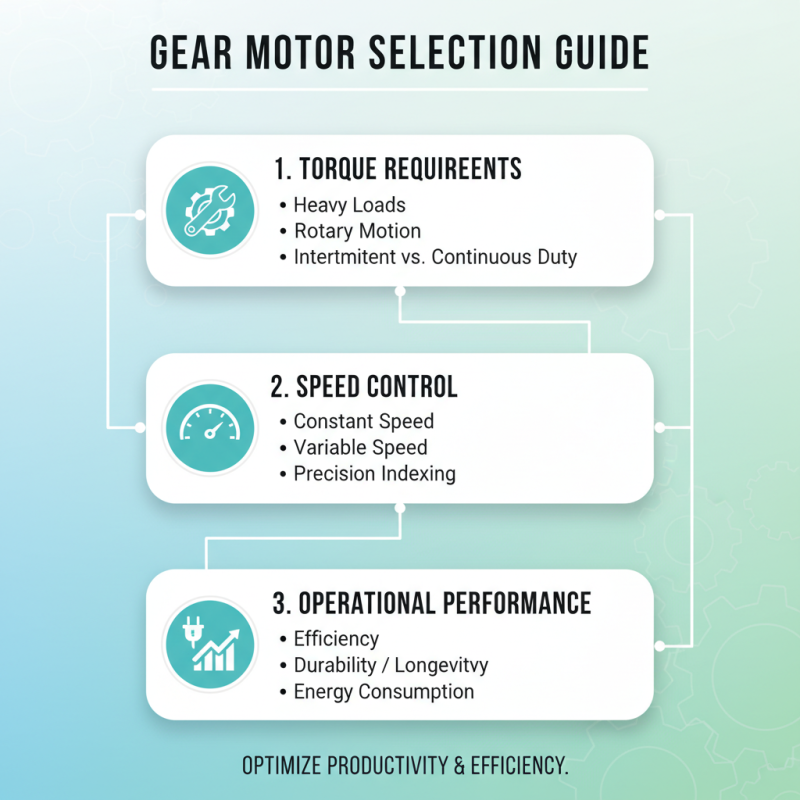
Selecting the appropriate gear motor is crucial for efficiency. Different applications demand specific functionalities. Consider the torque requirements, speed control, and overall performance needed for your operations. The right motor significantly affects productivity and energy consumption.
For instance, heavy-duty applications require high torque motors. According to industry studies, gear motors with a torque capacity greater than 200 Nm are often used in construction and lifting industries. Conversely, light-duty applications may only need motors with capacities around 20 Nm. Understanding the load requirements will help in narrowing down the choices.
Speed control is another vital aspect. Many operations need precise speed adjustments. Variable speed gear motors can offer flexibility in production processes. A study shows that systems with adjustable speed settings can enhance efficiency by 25%. However, balancing speed with torque can be tricky. Overemphasis on speed may lead to inadequate torque, causing potential system failures. Analyze your specific application needs carefully to avoid these pitfalls.
Choosing the right gear motor can be tricky. Many people overlook the importance of matching motor specifications to their project needs. One common mistake is focusing solely on size. A small motor may not provide enough torque. Conversely, a large motor can waste energy. Understanding load requirements is essential.
Another frequent error is neglecting to consider the environment where the motor will operate. Operating conditions can affect performance. For instance, high humidity or dusty environments require specific motor protection. Failure to account for these factors can lead to premature motor failure.
Ignoring maintenance requirements is also a significant oversight. Some gear motors need regular lubrication and checks. Others may be “maintenance-free.” Knowing the maintenance level needed can prolong the motor’s lifespan. Always assess your operational capabilities and technical expertise before making a decision. Recognizing these pitfalls can significantly improve your gear motor selection process.