How to Choose the Right Motor Rotor for Your Application?
Choosing the right motor rotor is crucial for various applications, from electric vehicles to industrial machinery. The global motor rotor market is projected to reach $22 billion by 2026, according to a recent report by MarketsandMarkets. Factors like efficiency, weight, and material impact performance significantly.
Taking time to assess specific needs is essential. For instance, high-performance applications require rotors that can endure extreme conditions. It's vital to consider the rotor's design and the magnetic materials used. Manufacturers often overlook the benefits of advanced materials, which can enhance efficiency by up to 30%.
Not every motor rotor fits all uses. Misguided choices can lead to poor performance and unexpected failures. Selecting the right motor rotor demands careful analysis of the application requirements. This decision can greatly influence operational costs and longevity. Understanding these factors is key to making an informed choice.

Understanding Motor Rotor Types and Their Functions
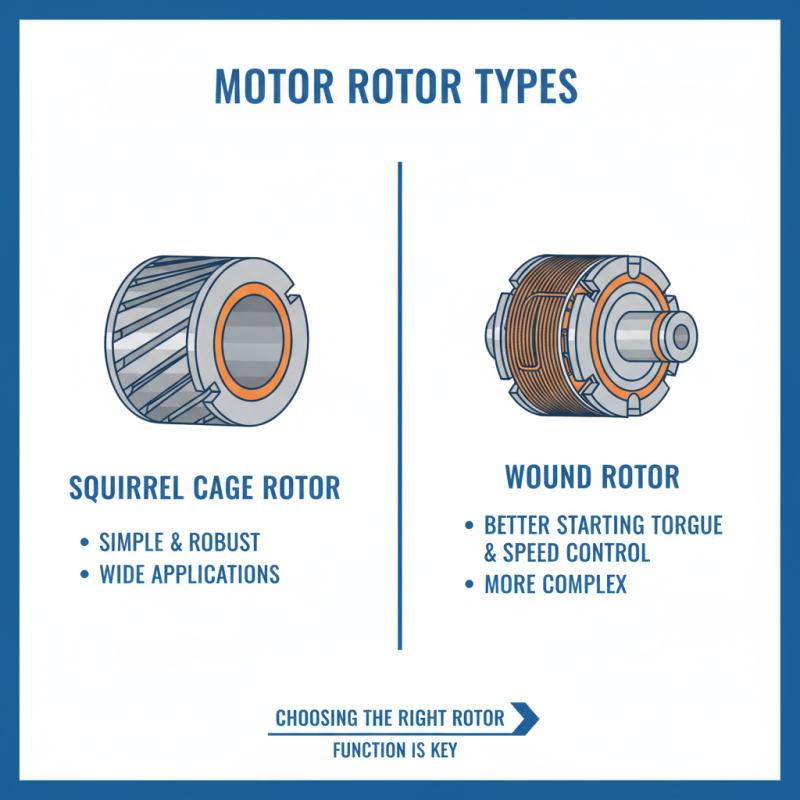
Choosing the right motor rotor begins with understanding different types. Each rotor type serves a specific function. The most common types are squirrel cage and wound rotors. Squirrel cage rotors are simple and robust. They work well in a wide range of applications. Wound rotors allow for better starting torque and speed control. However, they are more complex.
Consider your application’s needs. If you require high efficiency with minimal maintenance, a squirrel cage rotor may be ideal. On the other hand, if you need adjustable speed, a wound rotor is a better fit. Think about installation space too. Some rotors need more room for their components. Don’t overlook this aspect; it can lead to installation issues later.
It’s vital to assess your specific requirements. Take time to reflect on potential usage scenarios. You may find that your initial choice isn’t optimal. Testing and adjustment can be necessary. The right rotor significantly impacts performance. Rushing this decision could lead to complications down the line. Each application is unique, after all.
Assessing Application Requirements for Motor Rotors
Choosing the right motor rotor is crucial for efficiency. Understanding application requirements is the first step. Each application has unique needs. For example, speed and torque requirements can vary greatly. According to a recent industry report, nearly 70% of rotor issues stem from mismatched specifications.
Consider the environment where the rotor will operate. Will it face high temperatures or humidity? Such conditions can affect rotor material selection. For instance, certain alloys resist corrosion better than standard steel. In a dusty environment, a sealed rotor might be necessary. It’s essential to think about maintenance as well. A rotor requiring frequent checks can interrupt operations.
Evaluate the power source too. A system designed for AC will not work efficiently with a DC motor. Performance may drop by over 30% if the rotor is not compatible. Keep in mind the mounting style as well. Misalignment can cause vibrations. This not only wears the motor down but can also lead to failures. Each detail matters significantly in this selection process.
Analyzing Performance Specifications for Optimal Rotor Selection
Choosing the right motor rotor is crucial for ensuring optimal performance in industrial applications. Performance specifications are key to this decision. Factors such as torque, efficiency, and thermal properties greatly influence rotor selection. For instance, a report by the Electric Power Research Institute indicates that optimizing rotor design can improve efficiency by up to 10%. That’s a significant increase.
Torque plays a critical role, especially in demanding applications. Different rotor configurations can deliver varying torque levels. It's vital to analyze your application’s requirements carefully. Heat generation is another factor to consider. A rotor with poor thermal management can lead to reduced lifespan and efficiency. Many professionals overlook this aspect, leading to costly operational failures.
In a case study from the International Journal of Engineering, improper rotor selection resulted in a 15% drop in overall efficiency for a manufacturing plant. This serves as a reminder to scrutinize specifications closely. Performance audits should be part of the selection process. The right rotor can enhance stability and performance, while a hasty choice may cause operational headaches. Always question your choices and aim for continuous improvement.
Considering Environmental Factors in Rotor Suitability
When selecting a motor rotor, environmental factors play a crucial role. Various reports, such as those from the International Electromechanical Research Institute, highlight how extreme temperatures can impact rotor material. For example, rotors used in high-heat applications may require materials with enhanced thermal stability.
Moisture is another significant consideration. A report by the National Electrical Manufacturers Association indicates that humidity can lead to corrosion. Rotors designed for humid environments need special coatings to prevent damage. Choosing the wrong rotor can result in decreased efficiency or premature failure.
Moreover, vibrations in industrial settings cannot be overlooked. The American Society of Mechanical Engineers states that excessive vibrations can reduce a rotor's lifespan. Engineers often overlook this factor, leading to costly repairs. Understanding these environmental parameters is essential for making informed choices that ensure efficiency and longevity.
How to Choose the Right Motor Rotor for Your Application? - Considering Environmental Factors in Rotor Suitability
| Dimension |
Factor |
Considerations |
| Temperature Range |
Thermal Stability |
Select rotors with materials rated for high temperature to ensure reliability. |
| Humidity |
Corrosion Resistance |
Choose rotors with anti-corrosive coatings for humid environments. |
| Dust and Particles |
Contamination Protection |
Ensure rotors are designed to prevent dust ingress and maintain performance. |
| Vibration |
Mechanical Stability |
Select rotors with enhanced structural integrity for high-vibration applications. |
| Altitude |
Performance Efficiency |
Consider how rotor efficiency may change with altitude variations. |