How to Choose the Right Pmdc Motor for Your Project?
Choosing the right PMDC motor is crucial for any project requiring motion control. John Smith, a recognized expert in the motor industry, emphasizes, “Selecting the right PMDC motor can make or break your project.” This advice highlights the importance of understanding your specific needs and applications.
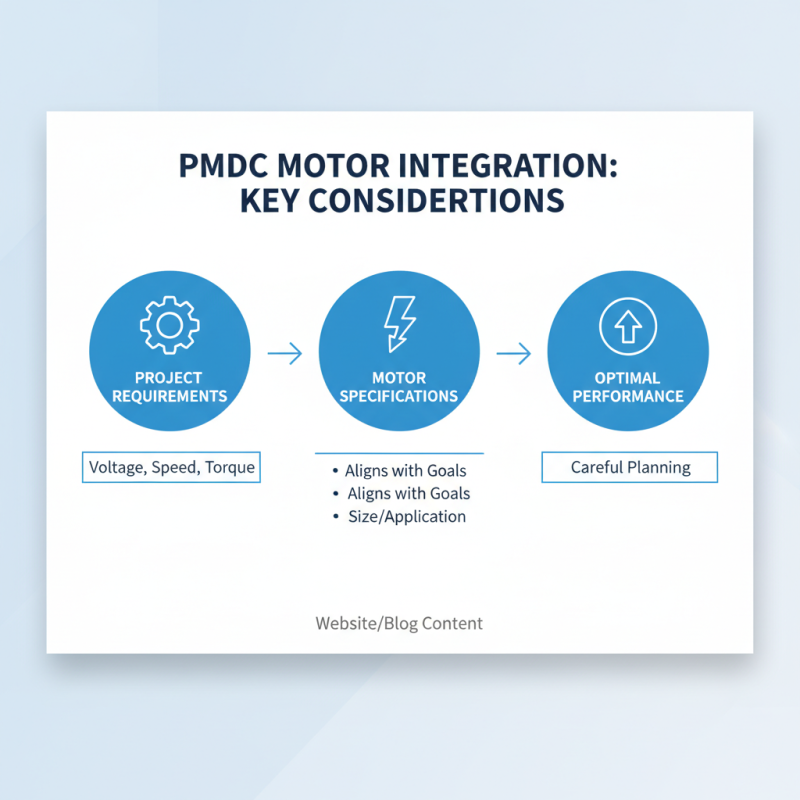
PMDC motors offer unique advantages, such as high torque and efficient performance. However, not all PMDC motors are the same. Factors like voltage, speed, and load capacity must align with your project's requirements. Considering these elements is essential to avoid potential failures.
When evaluating options, assess your project’s environment. Extreme temperatures or moisture can affect motor performance. Additionally, reflective thinking is important. Ask yourself if your PMDC motor choice truly meets your requirements or if you are settling for something less. Investing time in this decision can lead to greater success in your project.
Understanding the Basics of PMDC Motors
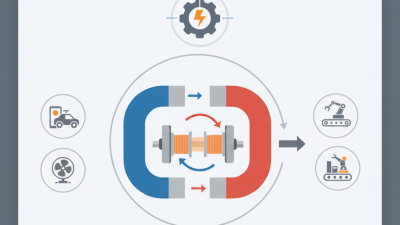
PMDC motors, or Permanent Magnet Direct Current motors, are popular in various applications. They offer simplicity and reliability. Understanding how they work is essential when choosing one for your project. These motors use permanent magnets to create a magnetic field. This field interacts with current in the winding. The result is rotational motion.
The efficiency of PMDC motors can be impressive, but it's not perfect. Their performance can degrade over time. Factors such as temperature and load will affect efficiency. It's crucial to assess these variables during your selection process. Proper testing is key for ensuring the motor fits your needs.
Different configurations exist for PMDC motors. Each design serves specific applications, but they all have weaknesses. For example, some may struggle in high-speed situations. Others might fail under heavy load. Understanding these limitations helps in avoiding future regrets. An informed choice now can save time and resources later.
How to Choose the Right Pmdc Motor for Your Project?
| Motor Type |
Voltage Rating (V) |
Current Rating (A) |
Power Output (W) |
Speed (RPM) |
Efficiency (%) |
| Small PMDC Motor |
12 |
1.5 |
18 |
5000 |
70 |
| Medium PMDC Motor |
24 |
3.0 |
72 |
3000 |
75 |
| Large PMDC Motor |
48 |
5.0 |
240 |
1800 |
80 |
Key Specifications to Consider When Selecting PMDC Motors
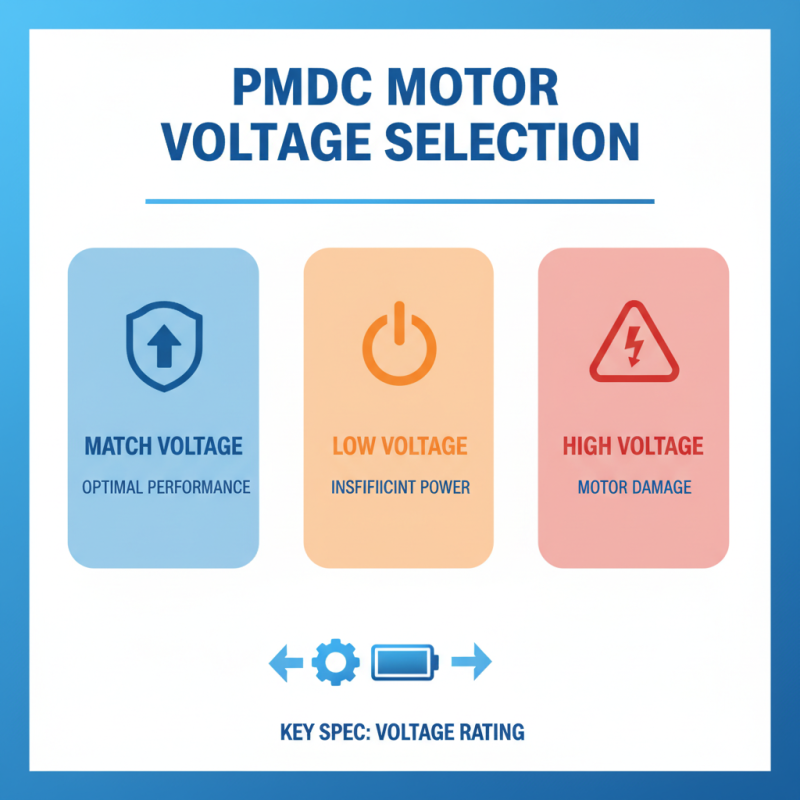
When selecting a Permanent Magnet Direct Current (PMDC) motor, key specifications play a crucial role. Start with voltage ratings. They affect the performance and efficiency of the motor. For example, using a lower voltage than needed may lead to insufficient power. On the other hand, too high a voltage could damage the motor.
Next, consider the torque requirement. Knowing the application’s torque needs helps in choosing a motor that performs efficiently. A motor with too much torque can be overkill and waste energy. A lack of torque may hinder performance. Understand your project's demands to avoid these pitfalls.
Tips: Always check the RPM rating. This defines how quickly the motor can operate. Mismatched RPM may result in unexpected outcomes. Additionally, examine the motor’s thermal ratings. Heat can diminish performance. Cooler motors generally last longer.
Finally, evaluate the physical size and mounting options of the motor. Ensure it fits well into your project design. A motor that's too big or heavy can complicate installation. Balancing size and power is challenging but necessary. Take time to reflect on these specifications for the best outcomes.
Evaluating Application Requirements for PMDC Motors
When selecting a PMDC motor for your project, evaluating application requirements is essential. Begin by identifying the motor's purpose. What will it drive? A precise understanding will guide your choice. Consider factors like speed and torque needs. These aspects impact efficiency. If you underestimate torque, the motor may stall. If you overestimate, you could waste energy.
Size and weight are crucial. Where will the motor fit? Understand space constraints. A compact motor can save room but may sacrifice power. Analyze the environment too.
Will the motor face dust or moisture? Choose materials accordingly. Remember, not all motors perform well in harsh conditions.
Power supply options also matter. Are you using AC or DC power? Make sure your PMDC motor is compatible. Additionally, control methods are important. Simple on/off control may work for basic tasks. However, variable speed control can enhance performance. Think about future needs. Flexibility in your motor choice may save you from future headaches.
Comparing Different PMDC Motor Brands and Models
When choosing a PMDC motor for your project, it’s essential to compare different brands and models. Various factors impact performance, such as torque, size, and efficiency. Some motors excel in high torque applications, while others shine in speed. Always assess the requirements of your project.
**Tips:** Consider the space available. If your design is compact, a smaller motor may be necessary. Don't overlook weight, as it can affect other components.
Additionally, read reviews and user feedback. This insight often reveals hidden strengths and weaknesses. Some motors might promise high efficiency but underperform in real-world situations. Pay attention to how they behave in your specific applications.
**Tips:** Look for versatility in models. Some may come with features that enhance their adaptability. Always factor in future projects. Your selection today may influence your choices tomorrow.
Comparing PMDC Motor Parameters for Your Project