Top 7 Tips for Choosing the Right 7 RPM Motor for Your Needs
When selecting the right 7 RPM motor, various factors come into play. According to industry reports, electric motors account for about 70% of the energy consumed in industrial applications. Choosing the correct motor can significantly impact efficiency and operational costs. A 7 RPM motor may seem simple, yet its applications range from conveyor systems to agitators. Understanding these uses is crucial for making informed decisions.
Moreover, studies show that improper motor selection leads to waste and inefficiency. A poorly chosen motor can result in overloading, overheating, and ultimately, early failure. On the other hand, a well-suited 7 RPM motor enhances performance and reduces downtime. It’s essential to consider not only the specifications but also the environment in which the motor operates.
Lastly, reflect on the importance of long-term reliability. Many buyers prioritize immediate cost savings, often overlooking the potential for future maintenance issues. In the competitive landscape of motor selection, informed choices can lead to lasting benefits. Investing time in understanding your needs is key to selecting the ideal 7 RPM motor.
Understanding the Basics of RPM Motors and Their Applications
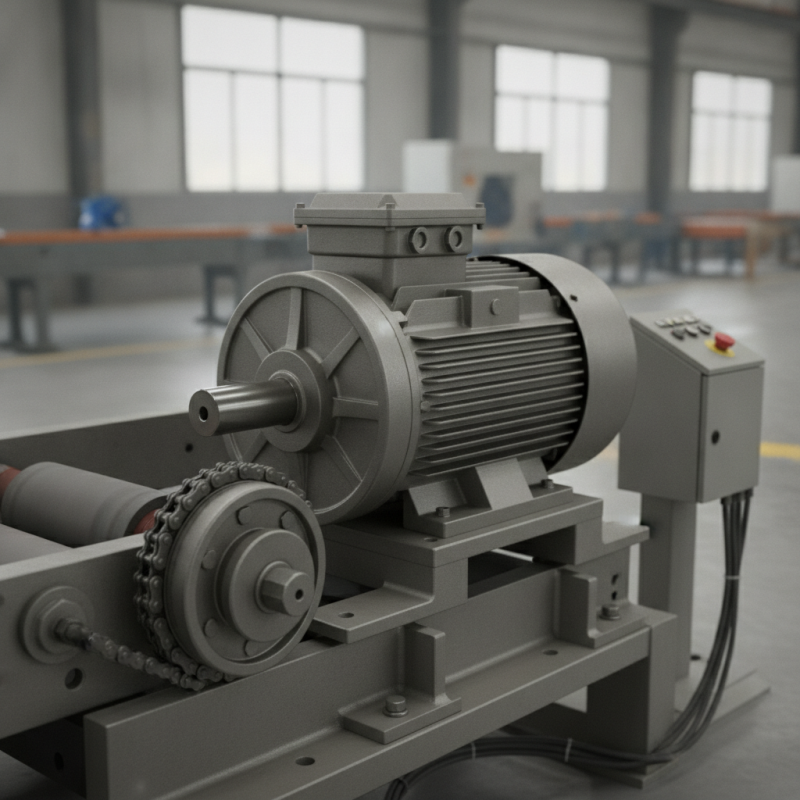
RPM motors are essential components across various industries, from automotive to manufacturing. Understanding the basics of RPM motors helps in making informed decisions. The term RPM stands for revolutions per minute, reflecting how quickly a motor can spin. A standard RPM range for many applications is between 1,000 to 3,000 RPM. However, specific tasks may require different speeds, such as precision machining, which often uses lower RPMs for accuracy.
Different RPM motors serve various applications. For instance, high RPM motors are suitable for tasks requiring quick, repetitive motions, like conveyor belts. In contrast, low RPM motors are better for heavy loads that demand torque over speed. As per a report by the Global Industrial Motor Market, the demand for customized motors is rising, expected to reach 10% CAGR by 2025. This indicates a shift toward specialized applications where understanding motor specifications is crucial.
Selecting the right RPM motor can be challenging. Analyzing factors such as load requirements, environmental conditions, and energy efficiency is vital. Many users tend to overlook these details, which can lead to underperformance or premature failure. Understanding your specific needs is critical. If you focus on RPM ratings without considering other factors, you may end up with a motor that doesn't meet your expectations.
Motor Performance Comparison
This chart illustrates the comparative performance of different RPM motors across various applications, showcasing their speed (in RPM) and torque (in Nm).
Factors to Consider When Selecting RPM Motors for Specific Tasks
Choosing the right RPM motor involves various factors tailored to your specific needs. The motor's speed, torque, and application type are crucial. According to a report by the International Energy Agency (IEA), approximately 70% of industrial electricity is consumed by motors. This highlights the importance of selecting the proper motor to ensure efficiency and effectiveness.
One essential consideration is understanding the load requirements. If your application demands high starting torque, you’ll need a motor that can handle that without failure. The National Electrical Manufacturers Association (NEMA) states that a mismatch can lead to overheating and decreased lifespan. Another factor is the operational environment. Motors in harsh conditions, such as extreme heat or dust, may require special coatings or enclosures.
Lastly, the RPM range should align with your task. Different applications demand varying speeds, and running a motor outside its optimal RPM can lead to performance issues. An analysis from the U.S. Department of Energy indicates that optimizing RPM can improve motor efficiency by up to 30%. This potential for improvement underlines the need for careful selection based on specific requirements.
Evaluating Motor Specifications: Power, Torque, and Efficiency
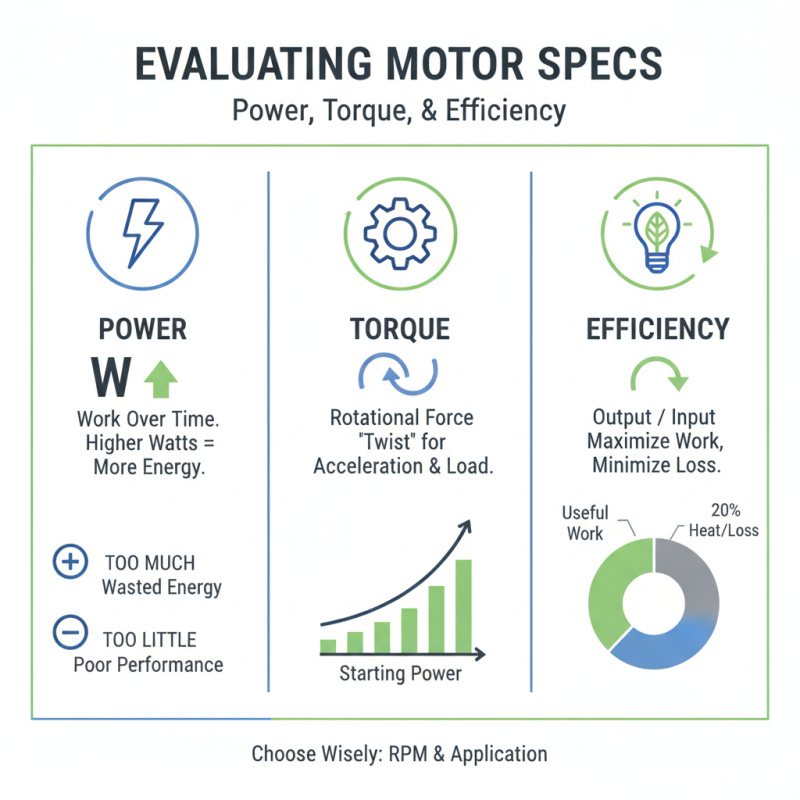
Choosing the right RPM motor requires a deep understanding of specific motor specifications. Power is a critical factor, as it determines how much work the motor can perform over time. A higher wattage often translates to more energy available for tasks, but balance is crucial. Too much power can lead to inefficiency and wasting energy, while too little can hinder performance.
Torque is another vital consideration. It refers to the rotational force the motor can deliver. Motors with high torque are essential for applications requiring heavy lifting or starting a load. Efficiency ties into both power and torque. An efficient motor consumes less energy for the same output, which can reduce operational costs over time. It's essential to scrutinize efficiency ratings carefully. An inefficient motor might seem cheaper upfront but can lead to higher electricity bills later.
When evaluating these specifications, it's easy to overlook the integration of these elements. Many users choose based solely on one aspect, which can lead to operational issues. Consider how the motor interacts with the whole system. Think about the application, the load it needs to handle, and how often it will run. Sometimes, what looks good on paper may not perform well in real-world conditions. The decision should reflect both immediate and long-term needs.
Assessing Environmental Conditions for Motor Performance
When selecting an RPM motor, understanding environmental conditions is key.
Humidity, temperature, and dust levels can significantly impact motor performance. For example, a study from the Electric Power Research Institute indicates that motors in high-humidity environments can lose efficiency by up to 15%. Likewise, extreme temperatures may require special materials or coatings to avoid degradation.
Dust and contaminants in the air also pose threats. Motors operating in dusty environments often need additional filtration systems. The Institute of Electrical and Electronics Engineers found that dust accumulation can cause motors to overheat, reducing lifespan by about 20%. It’s vital to assess these factors before making a choice.
Considering these environmental elements ensures reliability. Overlooking them can lead to costly repairs. An experienced technician may recommend regular maintenance schedules that account for specific environmental challenges. There’s no one-size-fits-all solution when it comes to RPM motors. Each situation demands careful consideration of unique conditions.
Budgeting for Your RPM Motor: Cost vs. Quality Considerations
When budgeting for an RPM motor, it's crucial to consider the balance between cost and quality. Higher-priced motors often come with better performance and durability. They may also offer advanced features that enhance functionality. Spending a bit more sometimes means investing in longevity, which can save money over time.
Tip: Assess your specific needs before diving into costs. Do you need high torque for heavy-duty tasks, or a lower RPM for delicate operations? Knowing your requirements helps in making informed choices. Cheaper options might seem appealing, but they could lead to frequent replacements.
Another aspect to consider is the warranty. A good warranty can be a sign of a reliable motor. It reflects the manufacturer's confidence in their product. This might justify a higher cost, as you'll appreciate the peace of mind it brings. Yet, not all warranties are equal, and some may require careful inspection.
Tip: Read reviews to gauge user experiences. Look for patterns in feedback regarding the motor's performance and reliability. This can provide insights into whether a motor is worth its price. Be cautious, as some features that attract buyers may not be essential for your project.
Top 7 Tips for Choosing the Right 7 RPM Motor for Your Needs - Budgeting for Your RPM Motor: Cost vs. Quality Considerations
| Motor Type |
Cost ($) |
Quality Rating |
Power (W) |
Efficiency (%) |
| DC Gear Motor |
150 |
4.5 |
30 |
85 |
| AC Induction Motor |
200 |
4.7 |
50 |
90 |
| Stepper Motor |
120 |
4.3 |
25 |
75 |
| Brushless DC Motor |
250 |
4.8 |
40 |
95 |
| Synchronous Motor |
300 |
4.6 |
60 |
88 |
| Servo Motor |
350 |
4.9 |
75 |
92 |
| Universal Motor |
180 |
4.4 |
20 |
80 |