Top 10 Mini Motor Types You Should Know About?
Mini motors play a crucial role in various applications. They are compact, efficient, and widely used. Understanding different types can enhance your projects. This article explores the top 10 mini motor types you should consider.
Each mini motor type has unique features. For instance, brushless motors are known for their longevity. Meanwhile, brushed motors are simpler and often cheaper. Knowing their characteristics can guide your choice. Consider your specific needs carefully. There is no one-size-fits-all solution.
As you dive into these options, remember that not all motors are perfect. Each has its strengths and limitations. Reflect on what fits best for your application. With a thoughtful approach, you can select the right mini motor for your needs.
Understanding Mini Motor Types: A Comprehensive Overview
Mini motors come in various types, each serving unique purposes. Understanding these types offers insight into their applications. For instance, brushed motors are simple. They are cost-effective and easy to control. However, they wear out faster due to friction. Many overlook maintenance, leading to premature failures.
Brushless motors, on the other hand, last longer. They provide higher efficiency and performance. Yet, they need more complex control systems. Some users find this daunting. Stepper motors are another type. They allow precise control over movement but can resonate if not programmed correctly.
Each motor type has drawbacks. Users often need to consider their project requirements. Noise, heat, and speed are crucial factors. As technology advances, new variations emerge. Staying updated on these options is essential for optimal performance. Balancing cost, complexity, and effectiveness is vital in choosing the right mini motor.
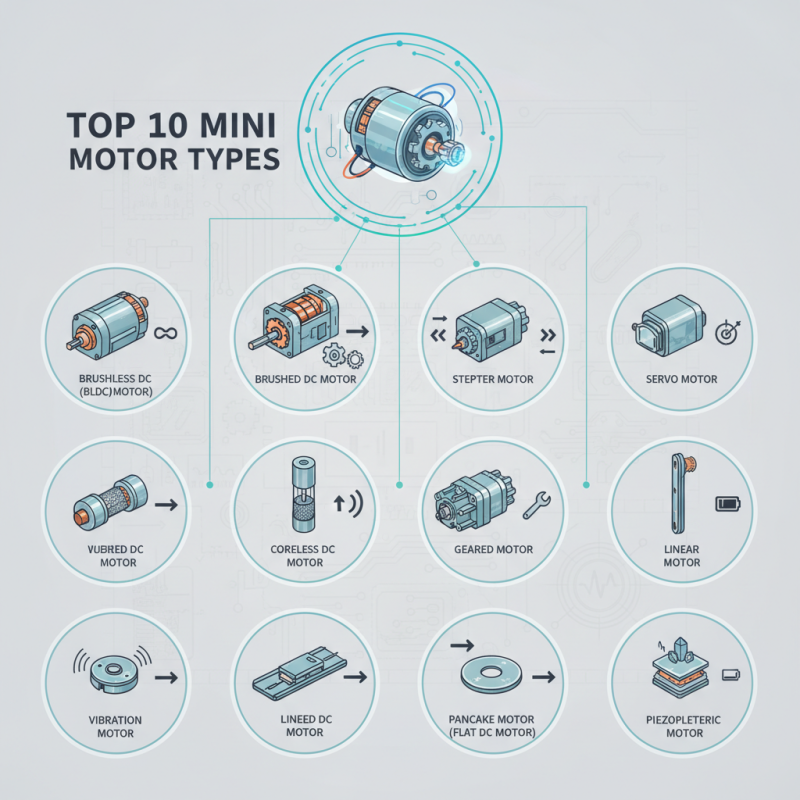
Top 10 Mini Motor Types You Should Know About
| Motor Type |
Power Source |
Typical Applications |
Advantages |
Disadvantages |
| Brushed DC Motor |
Electric |
Robotics, Toys |
Simple Control, Cost-effective |
Shorter Lifespan, Maintenance Required |
| Brushless DC Motor |
Electric |
Drones, Electric Vehicles |
High Efficiency, Longer Lifespan |
Higher Initial Cost, Complex Control |
| Stepper Motor |
Electric |
3D Printers, CNC Machines |
Precise Positioning |
Low Speed, Limited Torque |
| Servo Motor |
Electric |
Robotics, Industrial Equipment |
High Performance, Feedback Control |
Complex and Costly |
| AC Motor |
Electric |
Home Appliances, HVAC |
Durable, High Starting Torque |
Less Control over Speed |
| Universal Motor |
Electric |
Power Tools, Kitchen Appliances |
High Speed, Versatile |
Noisy, Short Lifespan |
| Linear Motor |
Electric |
Conveyors, Actuators |
Direct Linear Motion |
Space Requirement, Complexity |
| Coreless DC Motor |
Electric |
Robotics, Compact Devices |
Lightweight, High Performance |
Costly, Limited Output |
| Torpedo Motor |
Electric |
Model Submarines |
High Torque, Water Resistant |
Specialized, High Cost |
| Stepper Driver |
Electric |
Microcontrollers, Robotics |
High Stability, Easy Control |
Driving Current Limitation |
Characteristics of Brushless DC Mini Motors
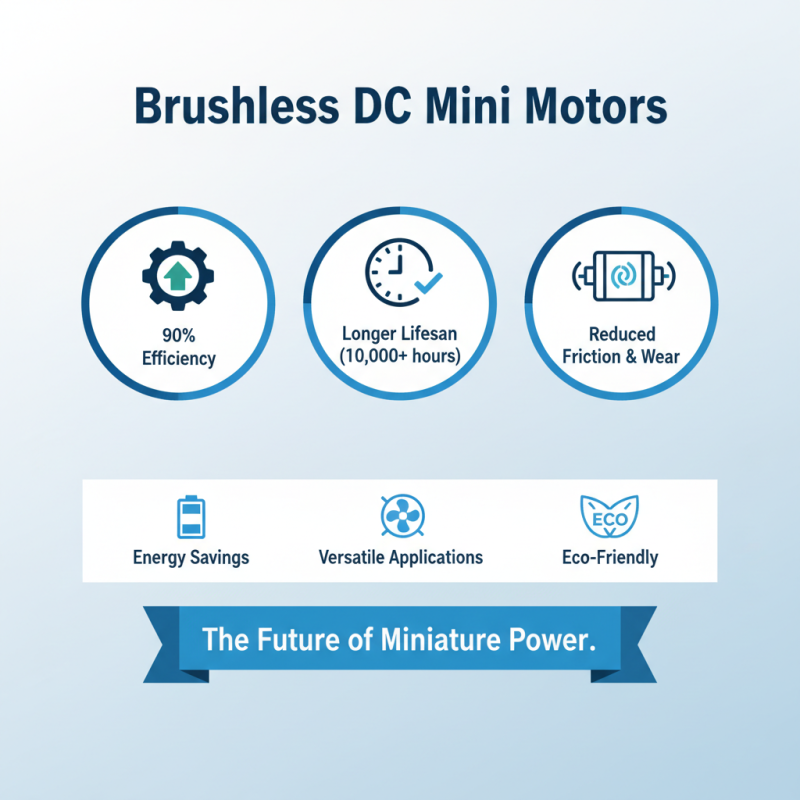
Brushless DC mini motors have become increasingly popular due to their efficiency and versatility. A report by the International Electrotechnical Commission highlights that these motors can achieve up to 90% efficiency. This is significantly higher than traditional brushed motors. Their design eliminates the need for brushes, which reduces friction and wear. As a result, they tend to have a longer lifespan, often exceeding 10,000 hours of operation.
One key characteristic of brushless DC mini motors is their ability to operate quietly. This feature is essential in applications like drones and medical devices. Additionally, they provide better torque and speed control. A study from the IEEE showed that these motors can offer a torque-to-weight ratio two to three times higher than their brushed counterparts. However, they can be more costly upfront.
There are some drawbacks too. The complexity of the electronic controller increases system costs. This might deter smaller operations with limited budgets. It's important to weigh these factors. The benefits are clear, yet the initial investment is a concern for many.
Exploring Brushed DC Mini Motors and Their Applications
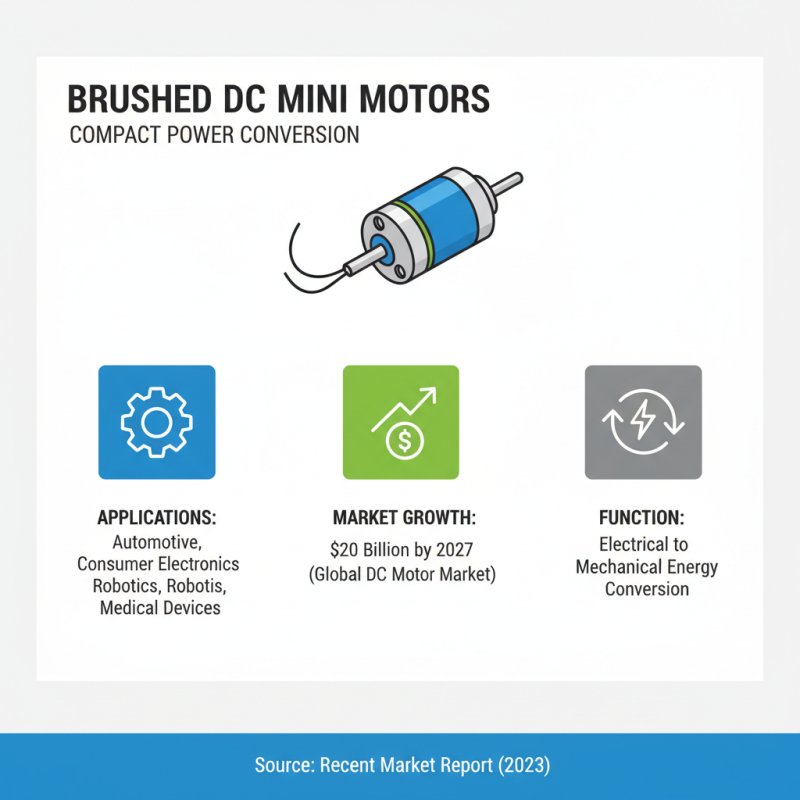
Brushed DC mini motors are widely used in various applications. These motors convert electrical energy into mechanical energy efficiently. According to a recent market report, the global DC motor market is expected to reach $20 billion by 2027. This growth is driven by demand in automotive and consumer electronics sectors.
Many industries rely on the versatility of brushed DC mini motors. They are popular in robotics, automotive systems, and home appliances. The simplicity of their design promotes easy maintenance. Yet, these motors can face challenges. They often generate electromagnetic interference, which can affect nearby electronic devices. Additionally, wear and tear on brushes may lead to performance issues over time.
Applications of these motors are diverse. In robotics, they provide precise control for movement. In household devices, they drive fans and pumps effectively. However, users must consider the efficiency losses due to friction. This could lead to reduced lifespan and higher operational costs. Thus, while brushed DC mini motors are appealing, understanding their limitations is crucial for long-term use.
Advantages of Stepper Mini Motors in Precision Control
Stepper mini motors are gaining attention for their precision control capabilities. They operate by moving in distinct steps. This allows for accurate positioning. In various applications, such as robotics and CNC machines, precise control is essential. The ability to control the position and speed intuitively makes them a popular choice.
One advantage of using stepper mini motors is their ease of use. They require simple control circuits. This makes it possible for beginners to get started quickly. However, users should note that stepper motors can lose steps if overloaded. This is a common issue to keep in mind. They also generate heat during operation, which might lead to performance issues if not managed properly.
Tips: Always ensure your stepper motor is within its specified load limits. This helps maintain accuracy. Regularly check for overheating signs to prevent potential failures. Proper maintenance can extend the motor's lifespan. Do not assume all setups are optimal from the start. Testing and adjustments might be necessary to achieve desired performance levels.
The Role of Servo Mini Motors in Robotics and Automation
Servo mini motors play a crucial role in robotics and automation. These motors offer precise control over position, speed, and torque. They are integral to applications such as robotic arms, drones, and conveyors. According to a recent market report, the global servo motor market is expected to reach $12.2 billion by 2026, growing at a CAGR of 6.1%. This growth reflects the increasing demand for automation in various industries.
In robotics, servo mini motors allow for smooth and accurate movements. They provide feedback through sensors that help in correcting the position in real time. For instance, in a robotic arm, a servo motor can adjust the grip strength to handle fragile objects gently. However, the design and implementation of these motors can sometimes lead to unexpected limitations. Calibration issues may arise, affecting performance. Developers must account for that, ensuring reliability and effectiveness.
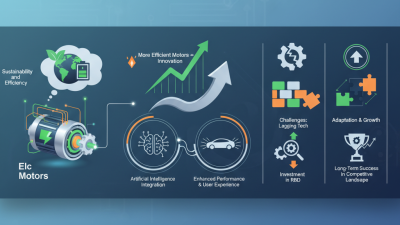
Additionally, the evolving landscape of automation presents challenges for servo mini motors. As machines become smarter, they need better integration with AI systems. This requires ongoing innovation in motor technology. Data suggests that 45% of automation projects do not meet their initial goals. Understanding these complexities is essential for engineers and developers. Embracing these challenges can lead to significant advancements in robotic applications.
Top 10 Mini Motor Types You Should Know About
This bar chart illustrates the popularity of different types of mini motors used in robotics and automation, with a focus on their applications and efficiency.