Top 10 Applications of DC Motors You Need to Know in 2023
As we move further into 2023, the significance of DC motors in various industries continues to grow, reflecting their versatility and efficiency. According to a recent market research report by Allied Market Research, the global DC motor market is projected to reach $25.5 billion by 2027, expanding at a robust CAGR of 6.2%. This growth is driven by the rising demand for automation in sectors such as automotive, manufacturing, and consumer electronics, where the need for precise speed control and high reliability is paramount.
DC motors, known for their simplicity and ease of control, are increasingly being utilized in applications ranging from electric vehicles to robotics and medical equipment. Their ability to provide consistent torque at different speeds makes them indispensable in systems requiring variable speed and positioning. Furthermore, with the booming trend of smart technologies and IoT, the integration of DC motors in advanced applications is expanding, indicating a ripe opportunity for innovation and development. Understanding the top applications of DC motors in 2023 not only highlights their crucial role in modern technology but also showcases their potential to revolutionize industries in the future.

Overview of DC Motors: Principles and Advantages
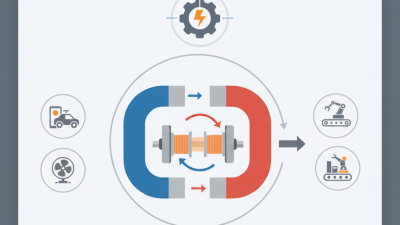
DC motors are versatile electromechanical devices that convert direct current electrical energy into mechanical energy, operating on the principles of electromagnetism. They consist of a rotor, stator, and commutator, with the interaction between the magnetic field and current-carrying conductors generating torque. A significant advantage of DC motors is their simplicity in design, which allows for easy speed control through voltage adjustments. This feature makes them ideal for applications ranging from small household appliances to large industrial machines.
According to a report published by Fortune Business Insights, the global DC motor market is projected to grow from approximately $30 billion in 2020 to over $45 billion by 2028, reflecting a CAGR of about 5.7%. This growth is driven by the increasing demand for automation in industries and the rising adoption of electric vehicles, where efficient power management is crucial. Furthermore, due to their inherent efficiency and adaptability, DC motors are increasingly being utilized in renewable energy applications, particularly in wind and solar power systems, where they play a critical role in energy conversion and management. This expanding range of applications underscores the importance of understanding the principles and advantages of DC motors as industries continue to evolve in the pursuit of efficiency and sustainability.
Top 10 Applications of DC Motors in 2023
Common Applications of DC Motors in Household Appliances
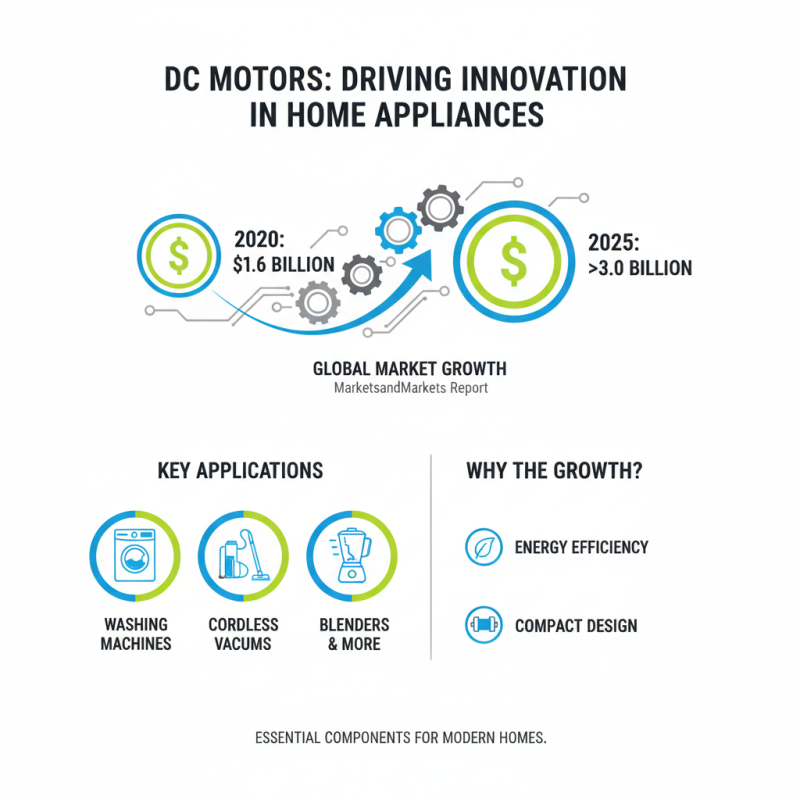
DC motors have become an essential component in various household appliances, driving innovation and enhancing performance in everyday tasks. In recent years, the global market for DC motors in household appliances is projected to grow significantly, with a report from MarketsandMarkets estimating an increase from $1.6 billion in 2020 to over $3 billion by 2025. This growth can be attributed to the rising demand for energy-efficient and compact motor solutions across a wide range of applications.
In household settings, DC motors are commonly used in appliances such as vacuum cleaners, fans, and washing machines. Their ability to provide precise speed control and high torque at low speeds makes them ideal for such uses. For instance, in vacuum cleaners, DC motors contribute to improved suction power and reduced noise levels, allowing for a more pleasant cleaning experience. Moreover, with increasing energy costs, manufacturers are focused on developing models that are energy-efficient, further driving the adoption of DC motors. According to research by Technavio, the demand for energy-efficient home appliances is expected to increase by 40% by 2025, solidifying the role of DC motors in this trend.
As we move further into 2023, it is clear that DC motors will continue to play a pivotal role in enhancing the functionality and efficiency of household appliances. Their versatility allows them to adapt to various applications, and as technology advances, we can expect to see even broader usage across the sector, promoting smarter and more sustainable home environments.
The Role of DC Motors in Automotive Systems and Electric Vehicles
DC motors are crucial components in modern automotive systems and electric vehicles (EVs), playing a pivotal role in enhancing efficiency and performance. According to a report by MarketsandMarkets, the global electric vehicle market is projected to grow from $3.2 million units in 2020 to over 30 million units by 2030, significantly driving the demand for DC motors. These motors are widely used in various applications within EVs, such as in power steering, windshield wipers, and battery-operated systems, facilitating seamless vehicle operation.
One of the advantages of DC motors is their precise control, which is paramount in automotive applications where functionality and safety are key. For instance, the use of brushless DC motors in electric traction drives can increase the overall efficiency of EVs by reducing energy losses. A study from the International Energy Agency highlights that efficient motor systems can improve the performance of electric vehicles, potentially extending their range and reducing charging frequency.
Tips for manufacturers considering DC motors in automotive applications include conducting thorough testing under varying load conditions to ensure reliability and efficiency. Additionally, integrating regenerative braking systems utilizing DC motors can significantly enhance energy recovery, contributing to better energy management within electric vehicles. As the automotive industry evolves, leveraging the capabilities of DC motors will remain essential for innovation and progress in electric mobility.
Industrial Uses of DC Motors in Automation and Robotics
DC motors play a critical role in the automation and robotics sectors, significantly impacting industrial efficiency and productivity. According to a report by MarketsandMarkets, the global industrial automation market is projected to reach USD 295 billion by 2026, with DC motors being a key component in various applications due to their precise control, efficient energy usage, and reliability. They are prevalent in conveyor systems, robotic arms, and automated guided vehicles (AGVs), where their ability to provide consistent torque at low speeds is vital for optimal performance.
In robotic applications, DC motors enable precise movements and accurate positioning, which are essential for tasks ranging from assembly lines to complex surgical procedures. A study published by the International Robotics Federation highlights that the robotics market is expected to grow at a CAGR of 26% from 2021 to 2026. This growth is fueled by advances in motor technology and the increasing integration of automation in manufacturing processes. As industries strive for higher efficiency and reduced downtime, the demand for DC motors will continue to rise, solidifying their importance in modern automation and robotics.
Top 10 Applications of DC Motors You Need to Know in 2023 - Industrial Uses of DC Motors in Automation and Robotics
| Application |
Description |
Industry |
Key Features |
| Robotic Arms |
Used for precise movements in assembly tasks. |
Manufacturing |
High torque, speed control, reliability |
| Conveyor Systems |
Facilitates the movement of goods within facilities. |
Logistics |
Continuous operation, adjustable speed |
| Electric Vehicles |
Powering the drive mechanism for better efficiency. |
Automotive |
High efficiency, compact size |
| Home Appliances |
Used in devices like washing machines and fans. |
Consumer Electronics |
Versatility, low maintenance |
| CNC Machines |
Provides accurate control for cutting and engraving. |
Manufacturing |
Precision, programmable settings |
| Medical Equipment |
Drives various diagnostic and surgical machines. |
Healthcare |
Reliability, safety features |
| Aerospace Applications |
Controls systems in aircraft and drones. |
Aerospace |
Lightweight, precise control |
| Smart HVAC Systems |
Regulates airflow and temperature efficiently. |
Construction |
Energy-efficient, responsive |
| 3D Printers |
Drive motors for accurate printing processes. |
Printing |
High precision, rapid response |
| Agricultural Equipment |
Utilized in harvesting and tilling machinery. |
Agriculture |
Durability, high torque |
Emerging Trends: Innovations in DC Motor Applications for 2023
As we move further into 2023, the applications of DC motors continue to evolve, driven by innovations and emerging technological trends. One notable trend is the integration of DC motors in renewable energy systems. With the growing emphasis on sustainability, these motors are being utilized in solar tracking systems, enabling solar panels to adjust their angles for optimal sunlight exposure. This not only maximizes energy capture but also enhances the overall efficiency of solar energy systems.
Another exciting development is the rise of smart manufacturing, where DC motors are critical in automation and robotics. These motors provide precise control and responsiveness necessary for tasks such as assembly and material handling. The incorporation of IoT technology allows for real-time monitoring and optimization of motor performance, leading to increased productivity and reduced operational costs.
Tips: When considering the implementation of DC motors in your projects, focus on energy efficiency and smart connectivity. Evaluate the specifications of different motors to ensure they align with your performance goals. Moreover, keep an eye on emerging technologies such as AI and machine learning, which can drive the next wave of innovations in DC motor applications. Legal compliance and safety standards should also be a priority when designing any system incorporating these motors.