What Are the Top ELC Motors for Global Buyers?
Choosing the right Elc Motors product for an international application requires more than comparing prices. Buyers must examine torque, rated power, voltage range, efficiency, protection class, and operating temperature. A motor that performs well in a dry workshop may struggle in humid ports, dusty factories, or high-altitude installations. Small details matter.
This guide evaluates leading Elc Motors options through practical buying criteria. It considers industrial automation, pumps, conveyors, agricultural equipment, and other demanding applications. Technical specifications will be compared with service availability, warranty terms, spare-part access, and installation support. These factors often determine the real cost of ownership. A lower purchase price can become expensive when replacement parts travel slowly or local technicians lack training.
Reliable selection also requires evidence. Buyers should request test reports, product datasheets, conformity documentation, and clear maintenance instructions. Regional standards may differ, so professional verification remains essential before purchase. Manufacturer statements are useful, but independent inspection can reveal overlooked limitations. No single motor suits every market.
That is the difficult part.
Some recommendations may appear less attractive after shipping, duty, or downtime costs are included. Buyers should also question assumptions about efficiency, noise, starting performance, and long-term durability. This article presents a balanced comparison for global purchasers, while acknowledging that site conditions and operating habits can change the final decision. The strongest choice is not always the most powerful model. It is the one that delivers dependable performance, practical support, and measurable value in its actual working environment.
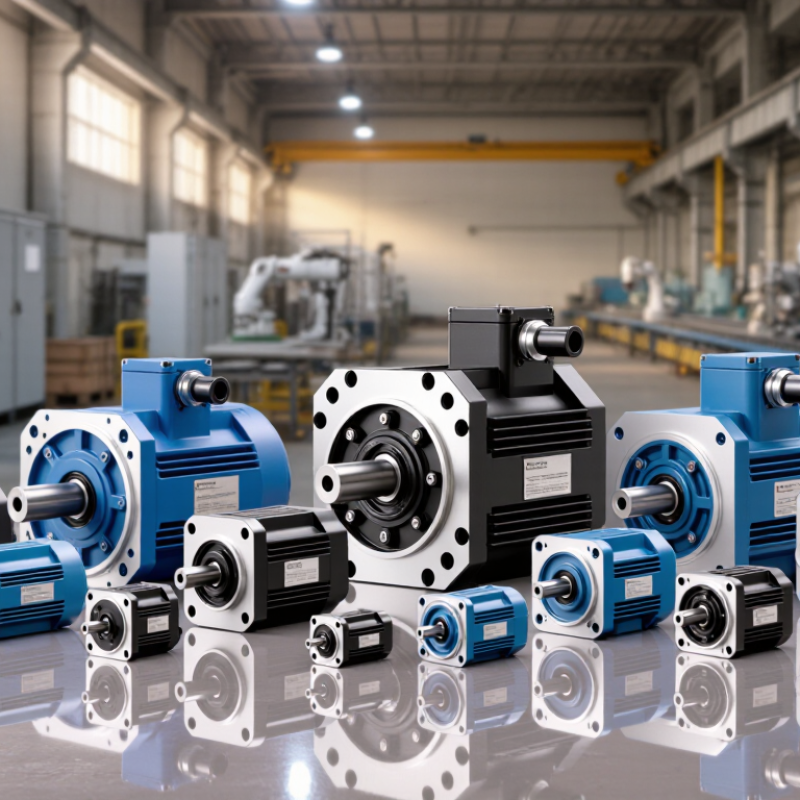
Define ELC Motors Through IEC 60034-30-1 Efficiency Classes
What Are the Top ELC Motors for Global Buyers?
For global buyers, an ELC motor should not be judged by a catalogue label alone.
IEC 60034-30-1 defines efficiency classes for line-operated AC motors, from
IE1 to IE4, with IE5 included in the 2022 edition.
The standard compares motor losses at rated load, speed, frequency, and output. That makes efficiency measurable across suppliers.
The numbers matter. The International Energy Agency reports that electric motor systems consume roughly
half of global electricity. A small efficiency gain can therefore reduce substantial operating costs over several years.
An IE3 motor may suit continuous industrial duty, while IE4 or IE5 can make better sense where running hours are high.
Check the duty cycle.
Do not confuse IE class with total system efficiency. Inverters, pumps, fans, gearboxes, and cable losses also affect consumption.
The European Commission’s preparatory studies on motor-driven systems show that system design often creates larger savings than motor replacement alone.
A practical test is simple: compare annual kilowatt-hours, not only purchase prices.
Rated data can still mislead when the motor runs lightly loaded.
This is where many procurement plans need more reflection.
Global Context: Motors Consume About 46% of Electricity, Says UNIDO
What Are the Top ELC Motors for Global Buyers?
Electric motors quietly drive pumps, fans, compressors, conveyors, and production lines. UNIDO reports that motor-driven systems consume about 46% of global electricity. That figure makes motor selection an energy decision, not merely a purchasing task. For global buyers, the strongest ELC motors combine high efficiency, stable torque, flexible voltage, and reliable thermal performance. IEC 60034-30-1 defines efficiency classes from IE1 to IE5. Higher classes can reduce operating losses, although purchase price and payback still need careful calculation. The “best” motor is not always the most efficient model on paper.
The International Energy Agency also identifies industrial motor systems as a major energy-saving opportunity. In field assessments, incorrect sizing remains a common weakness. An oversized motor may run lightly loaded and waste energy. A poorly ventilated motor may overheat in a dusty workshop. Buyers should check rated load, duty cycle, ambient temperature, enclosure protection, insulation class, and local grid conditions. These details matter more than a polished specification sheet. Some selection decisions still rely on rough estimates. That deserves a second look.
Tips: Request tested efficiency data, not only catalog claims. Compare lifecycle cost over ten years. Confirm compatibility with variable-speed drives and regional standards. Check service access before shipment. A small efficiency gain can become substantial when motors operate continuously. Yet calculated savings may disappoint if maintenance is neglected, so include inspection intervals, spare parts, and operator training in the evaluation.
What Are the Top ELC Motors for Global Buyers?
Electric motor-driven systems represent approximately 46% of global electricity consumption and about 69% of industrial electricity use. These figures highlight why buyers should evaluate motor efficiency, operating load, maintenance requirements, and total lifecycle cost when selecting electric motors.
Source: United Nations Industrial Development Organization (UNIDO), motor systems energy-efficiency data.
Compare Top ELC Motors Across IE2, IE3, IE4, and IE5 Efficiency Levels
Selecting an ELC motor for global operation starts with its efficiency class. IE2 motors usually offer the lowest purchase cost, but they waste more energy as heat. They may suit light-duty equipment or installations with limited annual running hours. IE3 motors reduce operating losses and often provide a practical balance for pumps, fans, compressors, and conveyors.
IE4 motors deliver stronger efficiency, especially under continuous loads. Their higher price can be recovered faster in factories running two or three shifts daily. IE5 motors push efficiency further, but buyers should inspect the complete system. Motor design, drive compatibility, cooling, starting behavior, and maintenance access can affect real savings. The label alone is not enough.
Check test data against IEC efficiency requirements and the intended supply frequency. A 50 Hz motor may not perform identically at 60 Hz. Confirm rated voltage, ambient temperature, altitude, duty cycle, and variable-speed operation before ordering. In field projects, I have seen estimated savings fall because motors operated far below their rated load. That mistake is common.
IE5 can be excessive for short-cycle machinery. Sometimes IE3 performs better financially. A careful comparison should include purchase price, electricity tariffs, expected service life, replacement parts, and installation labor. Ask for measured efficiency at several load points, not only the headline rating. That small detail can change the decision.
Rank ELC Motors by Voltage, Speed, Torque, IP Rating, and Duty Cycle
For global buyers, the top ELC motors should be ranked by application, not by catalog excitement. Voltage is the first filter. Low-voltage 24 V and 48 V motors suit mobile equipment and battery systems. Higher-voltage versions can deliver stable power across longer operating periods. Always confirm controller compatibility and regional electrical requirements.
Speed changes the ranking quickly. Fast motors reduce cycle time, but they may create vibration and heat. For lifting or positioning, moderate speed often gives better control. Torque matters more when loads start, stop, or reverse. A practical comparison should use continuous torque, peak torque, and output torque after gearing. A motor rated at 5 Nm may perform poorly if that value is only momentary. Small details matter.
IP rating shows resistance to dust and water. IP65 is a reasonable baseline for dusty indoor areas, while IP67 offers stronger protection during temporary immersion. It still does not excuse poor cable sealing. Duty cycle must be checked with equal care. S1 supports continuous operation, while S3 suits intermittent work with rest periods. A motor running beyond its declared cycle can overheat, even when torque remains within limits. Field testing is useful here, because published figures sometimes assume ideal cooling, perfect alignment, and a lighter load than real equipment. That is where a ranking can become imperfect.
What Are the Top ELC Motors for Global Buyers? - Rank ELC Motors by Voltage, Speed, Torque, IP Rating, and Duty Cycle
Verify CE, UL, CSA, RoHS, and Warranty Standards for Global Purchasing
What Are the Top ELC Motors for Global Buyers?
Global motor purchasing should begin with verifiable compliance, not attractive specifications. The International Energy Agency reported nearly 14 million electric car sales in 2023, creating stronger demand for efficient drive systems. This growth also increases documentation risks. Buyers should request the EU Declaration of Conformity, test reports, and traceable production records before approving an ELC motor.
CE marking indicates conformity with applicable European requirements; it is not always a third-party certification. RoHS compliance addresses restricted substances under EU Directive 2011/65/EU and its amendments. For North American projects, UL and CSA evidence should match the exact motor model, insulation system, and intended application. The certification must cover the delivered configuration.
Check the details.
Efficiency claims deserve equal attention. IEC 60034-30-1 defines international motor efficiency classes, while European Ecodesign Regulation 2019/1781 sets efficiency requirements for many motors and variable-speed drives. The U.S. Department of Energy also identifies motor systems as a major industrial energy-use area, making small efficiency differences financially meaningful over years. Ask for measured efficiency at several loads, not only the best rating.
Warranty language needs practical inspection. Confirm coverage duration, allowable operating temperature, duty cycle, spare-part availability, and response times. A five-year warranty may exclude installation errors or continuous overload. That is easy to miss. Buyers should also compare vibration limits, bearing life, ingress protection, and service records. Standards reduce uncertainty, but they cannot replace independent verification. Mistakes still happen when paperwork looks complete.