Top Motor Types to Consider for Your 2026 Procurement Needs?
As industries evolve, understanding the right "Motor Type" is crucial for procurement decisions heading into 2026. Recent data from the International Electromechanical Industry Report suggests that electric motors now account for over 60% of the global motor market. This significant rise demonstrates a shift towards energy efficiency and sustainability. Industry expert Dr. Samuel Kline emphasizes this transition, stating, "Choosing the right motor can drastically reduce energy consumption and operational costs."
Compared to traditional motors, newer designs offer enhanced capabilities. For example, servo motors and stepper motors are making waves in automation. Research indicates that these advanced motor types can increase precision by nearly 30%. However, selecting the right type involves potential challenges, such as compatibility issues with existing systems. These nuances can lead to costly errors or inefficiencies.
As we look toward 2026, staying informed about motor innovations is vital. The trends impact production and supply chain dynamics. A well-informed choice of motor type can enhance productivity. Caution in decision-making cannot be overstated, as choices now shape future operational success.

Top Electric Motor Types for 2026 Procurement: Trends and Insights
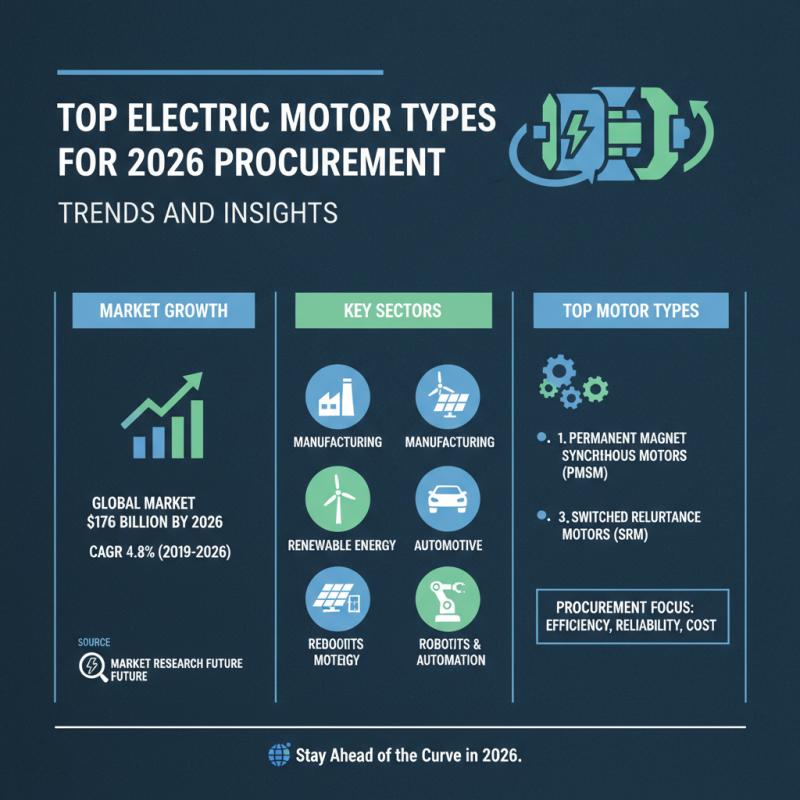
Electric motors are critical for various sectors, from manufacturing to renewable energy. The global electric motor market is projected to reach $176 billion by 2026, growing at a CAGR of 4.8% (Source: Market Research Future). This surge highlights the need for procurement teams to assess their options carefully.
Different types of electric motors are gaining traction. Brushless DC (BLDC) motors are particularly notable for their efficiency and longevity. In contrast, asynchronous motors are favored in industrial applications due to their durability. However, there is a learning curve when integrating newer types of motors. Many businesses face challenges in training staff on advanced technologies, slowing down their adoption rates.
Sustainability is another consideration. According to a McKinsey report, 79% of companies prioritize green technology in their procurement. Although this is positive, the transition isn't effortless. Organizations often struggle with balancing cost and performance when selecting eco-friendly motors. The complexity increases as they work to source components that align with sustainability goals.
Key Considerations for Sizing Motors Based on Industry Standards
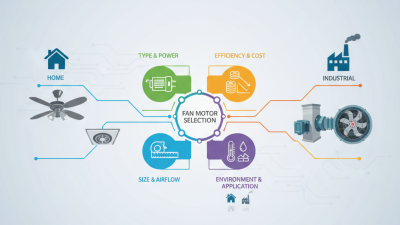
When selecting motors for procurement in 2026, sizing plays a critical role. Industry standards provide guidelines, but each application requires careful assessment. Factors like load requirements, speed, and efficiency must align with intended use. Inadequate sizing may lead to energy waste or operational failures.
Tips: Begin by analyzing the load characteristics. Understand whether the motor will run continuously or intermittently. Misjudgment in this phase can lead to inefficiencies that are costly over time.
Engineers should not overlook environmental factors. Temperature variations can affect motor performance. Motors might require adjustments or different designs for extreme conditions. Ignoring this aspect could yield subpar results.
Tips: Always conduct thorough testing with prototypes. Observe how the motor behaves under actual conditions. This step is vital for identifying any unforeseen issues early on. Be prepared to revisit designs if inconsistencies arise.
Comparative Analysis of AC vs. DC Motors: Performance Metrics
When considering motor types for procurement in 2026, understanding AC and DC motors is essential. AC motors are typically used in industrial applications. They excel in high-speed operations and have lower maintenance needs. However, their initial cost can be higher than that of DC motors. On the other hand, DC motors provide superior torque and speed control, making them ideal for precise applications. They often have a simpler design, leading to easier repairs.
Delving into performance metrics, AC motors have a better efficiency rate overall. They are designed for continuous duty cycles. Yet, their performance can degrade under variable speed conditions. In contrast, DC motors shine in applications requiring rapid changes in speed. This adaptability, however, comes at the cost of a shorter lifespan in some scenarios. Both motor types have their unique advantages and limitations. Understanding these intricacies can lead to better decision-making in procurement strategies.
Top Motor Types to Consider for Your 2026 Procurement Needs? - Comparative Analysis of AC vs. DC Motors: Performance Metrics
| Motor Type |
Efficiency (%) |
Torque (Nm) |
Speed (RPM) |
Cost ($/unit) |
Lifespan (Hours) |
| AC Motor |
85 |
15 |
1800 |
300 |
15000 |
| Brushless DC Motor |
90 |
20 |
3000 |
400 |
20000 |
| Brushed DC Motor |
80 |
25 |
5000 |
250 |
8000 |
| Stepper Motor |
75 |
10 |
1200 |
200 |
10000 |
| Servo Motor |
95 |
30 |
2500 |
500 |
15000 |
Sustainability Impacts: The Shift Towards Energy-Efficient Motor Designs
The shift towards energy-efficient motor designs is crucial for sustainability. Industries are increasingly aware of their carbon footprint. Energy-efficient motors consume less electricity. This means lower operating costs and reduced greenhouse gas emissions. The design of these motors focuses on materials that enhance performance while minimizing energy use.
Motor manufacturers are exploring innovative technologies. These new designs aim to improve efficiency without compromising reliability. However, the challenge lies in balancing efficiency with production costs. Many manufacturers still rely on conventional technologies that may not meet upcoming regulations. This creates a gap between sustainable goals and market realities.
Transitioning to energy-efficient motors is not simple. It requires a commitment to research and development. Industries must invest in training and adaptation. Moreover, consumer education plays a significant role. There’s a need for understanding the long-term benefits of energy-efficient products. The path forward demands both innovation and reflection on current practices.
Energy Efficiency in Motor Types for 2026 Procurement Needs
This chart illustrates the energy efficiency ratings of various motor types that are gaining popularity for procurement in 2026. The focus is on sustainability impacts and the trend towards energy-efficient motor designs.
Emerging Technologies in Motor Drives: What to Expect by 2026
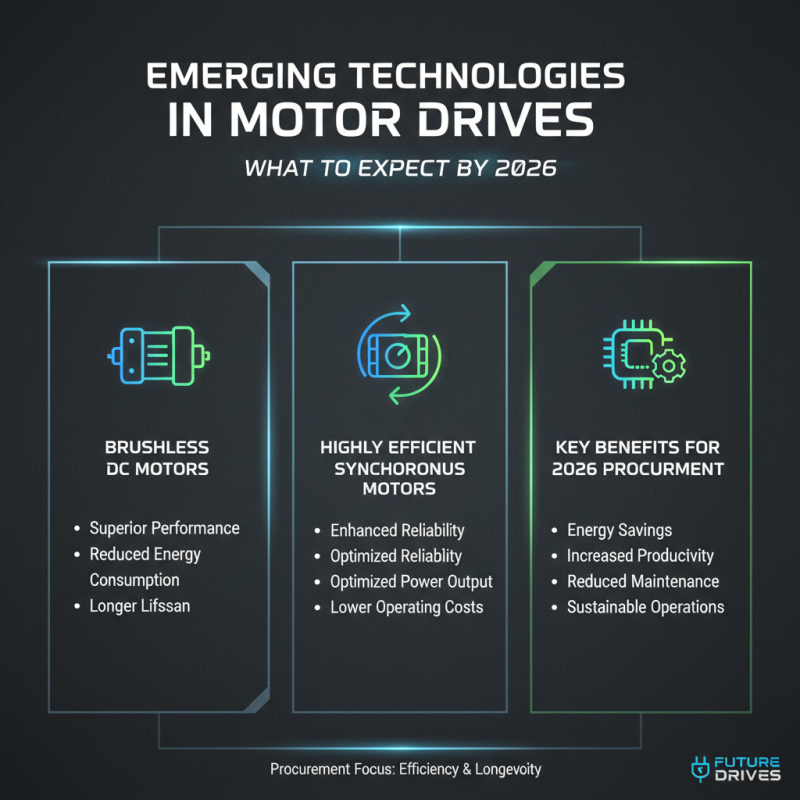
In the rapidly advancing world of motor drives, understanding emerging technologies is crucial for procurement in 2026. Brushless DC motors and highly efficient synchronous motors are on the rise. These types offer superior performance, reduced energy consumption, and longer lifespans compared to traditional options.
As industries embrace automation and electrification, trends in inverter technologies are shifting. Intelligent motor drives equipped with real-time diagnostics will enable predictive maintenance. This innovation reduces downtime and enhances operational efficiency. Companies will benefit from integrating these smart features into their procurement strategy.
Tips: Consider investing in modular motor systems. These systems allow for easy upgrades, adapting to future technological advancements. Embrace openness in supply chains to foster collaboration on sustainable practices. Keep an eye on regulation updates, as they can impact supply availability.
Feedback loops are essential. Gathering insights from users can refine motor selection. Engaging with engineers helps ensure your choices align with industry needs. Embrace experimentation with different motor types. Identifying the optimal fit for your specific application could require multiple trials.