How to Choose the Best Small Motor for Your Project?
Choosing the right small motor for your project can be challenging. With countless options available, it’s easy to feel overwhelmed. Small motors come in various sizes, types, and specifications, each designed for specific functions. Understanding these differences is crucial to make an informed decision.
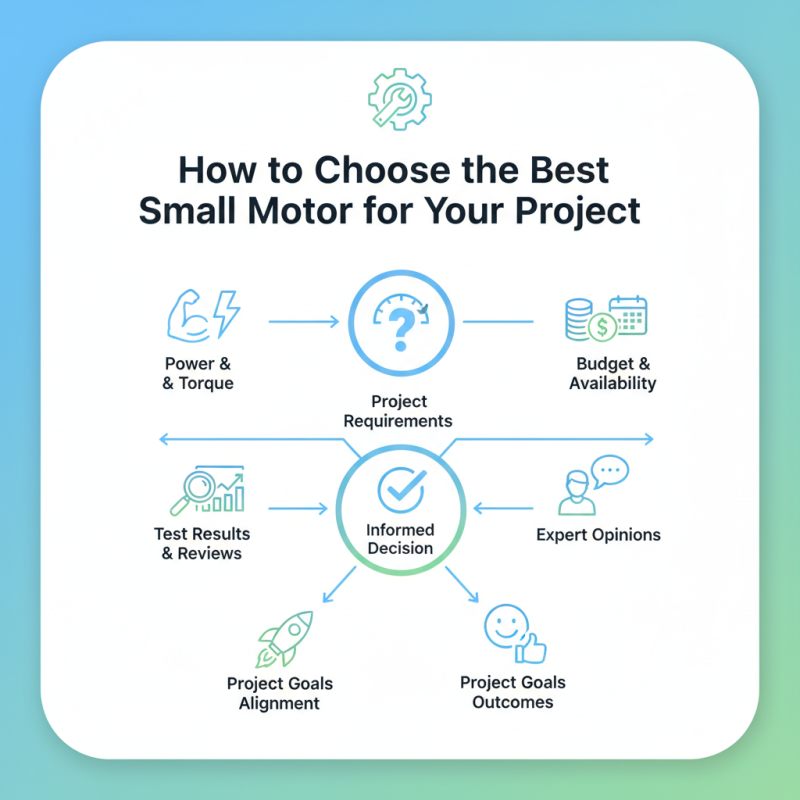
Consider your project’s requirements. Think about power, torque, and speed. Each small motor will perform differently based on these factors. Test results and user reviews can provide valuable insights into reliability and performance.
Don’t forget to factor in budget and availability. Sometimes, a higher price doesn’t guarantee better quality. Seek opinions from experts and reliable sources. Make sure the selected small motor aligns with your project's goals and specifications. This approach will lead to better outcomes and fewer regrets.
Understanding Project Requirements for Small Motors
When selecting a small motor for a project, understanding your specific requirements is crucial. Consider the motor’s power needs. Think about whether the task requires high torque or speed. For applications like robotics, precise speed control and responsiveness are essential. This can impact your choice significantly.
Next, evaluate the size constraints of your project. A compact motor may be necessary for tight spaces, while larger projects can accommodate bulkier options. Don’t overlook voltage requirements. Ensure the motor aligns with your power supply. High voltage motors can be more powerful but might not fit all applications.
Think about the environment where the motor will operate. Will it be exposed to moisture or dust? This aspect can affect the motor's lifespan. Some may think all motors are equal, but they’re not. Reflect on these factors carefully, as they could lead to unexpected challenges or failures in your project. Doing thorough research will save time and resources in the long run.
Identifying Different Types of Small Motors Available
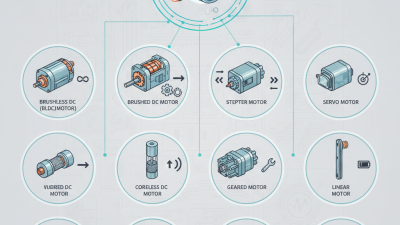
When embarking on a project, selecting the right small motor is crucial. Many types of small motors exist, each with unique characteristics and applications. Understanding these motors helps in making an informed decision that enhances your project’s efficiency.
DC motors are popular for many small applications. They provide consistent speed and torque. They are easy to control and can be used in various projects. However, they may not always be the most efficient choice, especially for projects requiring low power consumption. Take time to consider how often you’ll use the motor and in what conditions.
Another option is stepper motors. These motors are precise and ideal for applications requiring accurate positioning. They excel in robotics and CNC machines. However, they can be complex to drive and control. Their precision comes at the cost of simplicity. You might find more resources available for troubleshooting, but hands-on experience is essential to fully grasp their operation. Each motor type brings strengths and weaknesses. Reflecting on your project goals can guide your choice.
Evaluating Performance Specifications of Small Motors
When selecting a small motor, understanding performance specifications is crucial. These specifications dictate how well the motor will perform in your project. Power, measured in watts, indicates the motor's capability. Torque is another significant factor, defining the rotational force available. Choose a motor with adequate torque for your specific needs to avoid underperformance.
Speed ratings, typically in RPM (rotations per minute), inform how quickly the motor can turn. Higher RPMs may be desirable for some applications, while others require a more controlled speed. Consider your project requirements carefully. Operating voltage is another important specification, as it influences the motor's efficiency and power consumption.
Evaluating these aspects takes time and careful consideration. No single motor suits all projects. You may struggle to balance power and size. Trials may reveal unexpected outcomes. Aim for a motor that aligns closely with your expectations, but be prepared for adjustments. Performance metrics often require real-world testing for accurate assessment.
How to Choose the Best Small Motor for Your Project? - Evaluating Performance Specifications of Small Motors
| Motor Type |
Voltage (V) |
Power (W) |
Speed (RPM) |
Torque (Nm) |
Efficiency (%) |
| DC Brush Motor |
12 |
30 |
5000 |
0.15 |
85 |
| Stepper Motor |
24 |
45 |
2000 |
0.2 |
75 |
| BLDC Motor |
36 |
60 |
3500 |
0.25 |
90 |
| AC Motor |
220 |
100 |
1500 |
0.35 |
80 |
Considering Size and Weight Constraints in Motor Selection
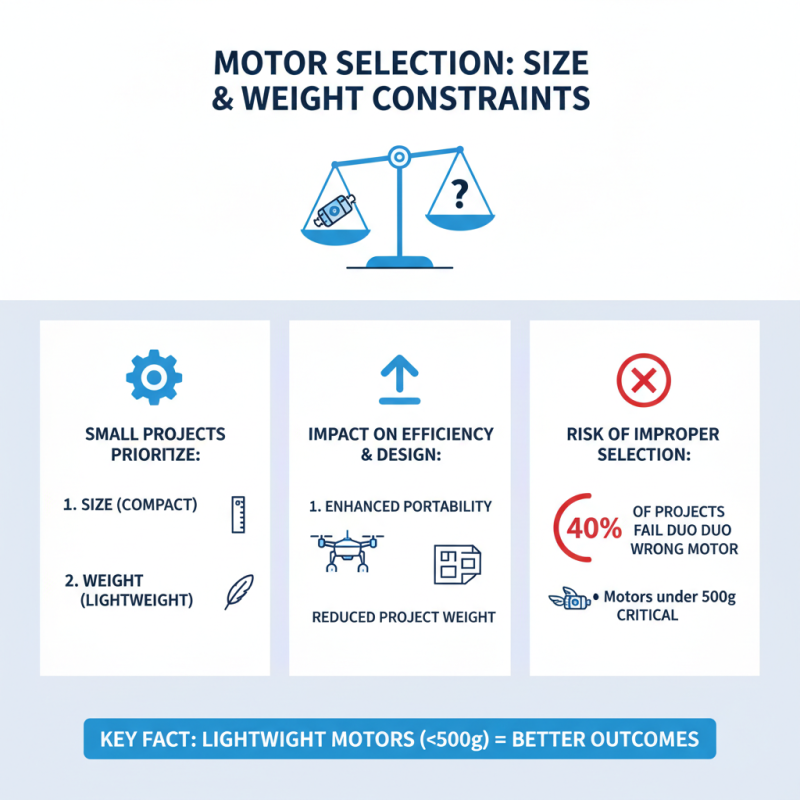
When selecting a motor for small projects, size and weight must be prioritized. The right motor can significantly impact efficiency and design feasibility. Reports indicate that nearly 40% of engineering projects fail due to improper motor selection. Lightweight motors, particularly those weighing under 500 grams, can enhance portability and reduce overall project weight.
Understanding the specifications is crucial. For instance, motors typically operate in a range of sizes, from 10 mm in diameter to over 200 mm. Choosing a smaller diameter can save space, but this often comes at the cost of torque and power. Balancing these factors requires careful consideration of your project's specific requirements and limitations.
Additional studies suggest that motors accounting for size constraints can lead to improved thermal efficiency. Less weight often translates to less energy consumption, contributing to longer operational cycles. However, overlooking the torque needs may result in a motor that cannot perform under load conditions. Evaluating diverse design parameters helps mitigate potential failures.
Ultimately, expertise in motor selection is indispensable. Consulting with professionals or utilizing online calculators can guide you toward the best motor for your unique project's needs. Even minor miscalculations can cascade into larger issues, emphasizing the importance of thorough analysis. Making informed decisions is essential in engineering.
Budgeting and Cost-Effectiveness in Motor Choices
When selecting a small motor for your project, budgeting is crucial. Understanding the cost-effectiveness of different motor types can save you money. A report by the International Energy Agency highlights that electric motors account for about 45% of global electricity consumption in industrial applications. By choosing the right motor, you can reduce both upfront costs and long-term energy expenses.
One tip is to assess your project’s specific needs. Evaluate the required torque and speed to select an appropriate motor. Sometimes, a higher-priced motor provides better efficiency, resulting in lower operational costs over time. A study from the U.S. Department of Energy indicates that high-efficiency motors can reduce energy costs by 5% to 10%. This means investing slightly more can pay off significantly.
Additionally, consider maintenance costs. Cheaper motors may require frequent repairs, negating initial savings. Weigh the upfront price against the estimated lifespan and performance. It's essential to reflect on the trade-offs you may face. Balancing price, quality, and efficiency will help you find the best motor for your project.
Motor Selection Cost-Effectiveness Chart
This chart represents the average costs of different types of small motors. When budgeting for a project, it's essential to weigh the cost against the motor's performance characteristics and application suitability.