How to Choose the Right Small Motor for Your Business Needs?
Choosing the right small motor for your business can be challenging. According to Mark Thompson, an industry expert at MotorTech Solutions, “Selecting the right small motor makes all the difference in efficiency.” This insight highlights the importance of making informed choices.
Small motors are integral to numerous applications, from manufacturing to retail. Different motors serve distinct needs, and understanding your requirements is crucial. Practical details, such as load capacity and energy efficiency, impact long-term costs. Each decision about a small motor requires careful consideration.
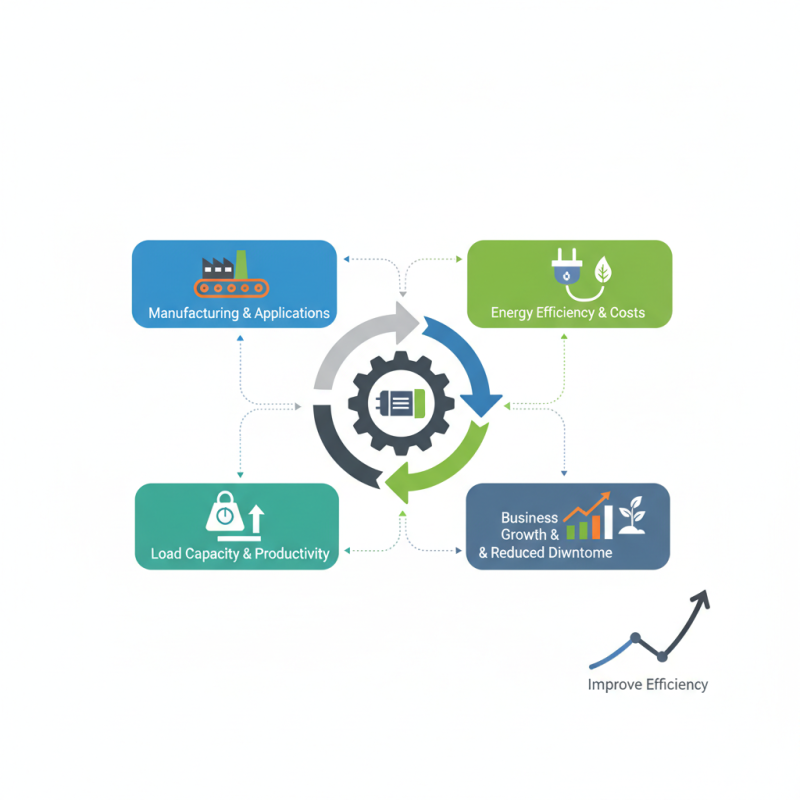
Yet, many businesses overlook key factors, leading to inefficiencies and higher expenses. Reflecting on past choices can uncover gaps in understanding. Choosing the right small motor isn’t merely about specifications; it’s about aligning those specs with your specific operational needs. The right small motor can enhance productivity and reduce downtime, fostering business growth.
Understanding the Different Types of Small Motors Available
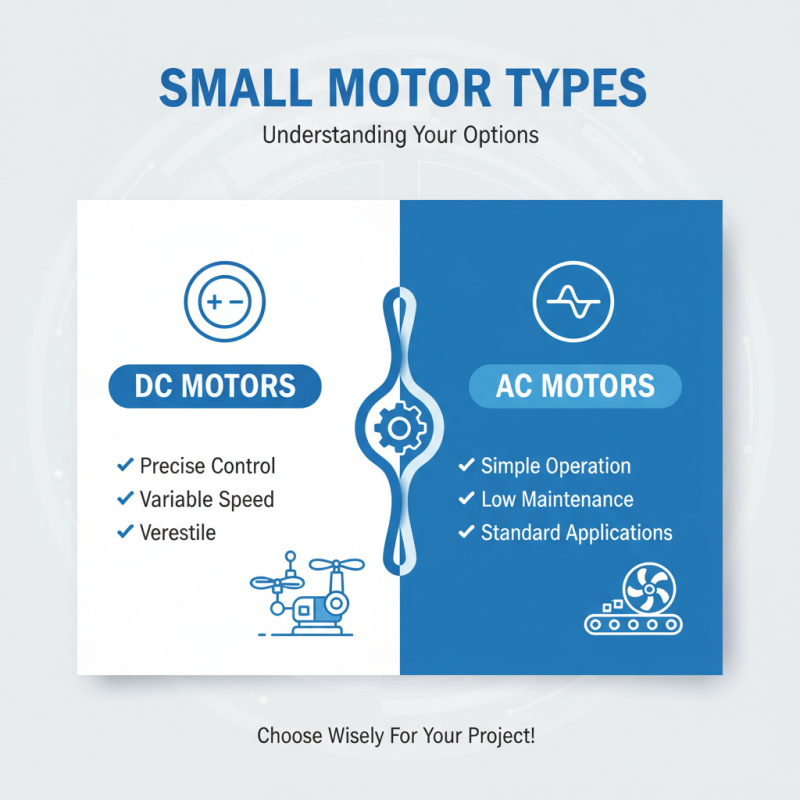
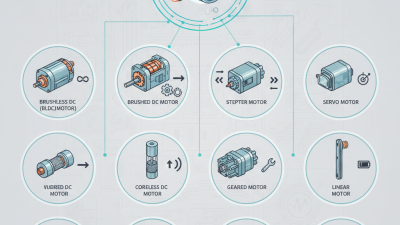
When selecting a small motor, it's crucial to understand the various types available. Different applications require different motors. For example, DC motors are ideal for projects needing precise control and variable speed. They offer versatility but can be complex to operate. In contrast, AC motors are simpler and often have lower maintenance, making them suitable for standard applications.
Another option is stepper motors, which provide excellent torque at low speeds. These are commonly used in 3D printers and robotics. However, they can be less efficient at higher speeds. Each motor type has strengths and weaknesses. Knowing these will help prevent costly mistakes in your project.
Additionally, consider your specific needs. How much torque do you require? What is the power source available? These factors influence your choice. It's also important to reflect on the motor's lifespan and reliability. A cheaper motor might seem appealing, but it could lead to frequent replacements, disrupting your business operations. Understanding the nuances of each motor type can guide you toward a more informed decision.
Identifying Your Specific Business Requirements for Motor Use
When selecting a small motor for your business, it's crucial to identify your specific needs. Start by assessing the environment where the motor will be used. Will it be in a damp area or a clean room? Understanding the conditions can help narrow down your options.
Next, consider the motor's power requirements. What type of load will it drive? Different applications demand varying torque and speed levels. You need a motor that can handle the load efficiently. Evaluating how the motor will fit into your existing systems is also vital.
Don’t overlook factors like noise levels and energy efficiency. A motor that operates quietly may be necessary for a retail environment. Meanwhile, an energy-efficient motor can help reduce costs over time. Remember, improper motor selection can lead to production delays and increased expenses. Reflect on past experiences to avoid repeating mistakes.
Evaluating Performance Metrics: Power, Speed, and Efficiency
When choosing a small motor, evaluating performance metrics is crucial.
Three main metrics stand out: power, speed, and efficiency.
Each one impacts your operations. Power is essential for tasks requiring significant torque. If a motor lacks power, it can struggle under load.
This not only hampers productivity but may also lead to premature failure.
Speed is another critical factor. A motor's speed affects how quickly it can complete tasks.
However, higher speed can mean higher energy consumption. Finding the right balance is key. Sometimes, a slower motor may be more efficient for specific applications.
Reviewing your operational needs helps clarify whether speed or power is more important for your success.
Efficiency should not be overlooked. An efficient motor saves energy and reduces operational costs.
However, not all motors provide clear metrics on efficiency. It's vital to request performance data from manufacturers. This helps ensure you make an informed choice.
Be prepared to reflect on your current motor's performance as well. Identifying areas for improvement can lead to better decision-making in the future.
Assessing Size and Space Constraints for Motor Installation
When selecting a small motor for your business, evaluating size and space constraints is crucial. Measure the installation area to understand the dimensions available. Consider the height, width, and depth of the space. If the motor is too large, it may not fit. On the other hand, a motor that is too small might not perform effectively.
Another aspect is ventilation. Motors generate heat during operation. Ensure the area allows for proper airflow. A cramped installation can lead to overheating and reduced efficiency. Plan for accessible maintenance, too. It’s essential to have room to service the motor without dismantling the entire setup.
Review any potential obstacles nearby. Pipes, wires, or other equipment can complicate installation. Understanding these factors ahead of time makes the process smoother. A poorly executed installation may lead to costly adjustments later. Taking time in this phase can prevent frustration and unexpected expenses down the road.
Comparing Costs and Maintenance Needs of Various Motor Options
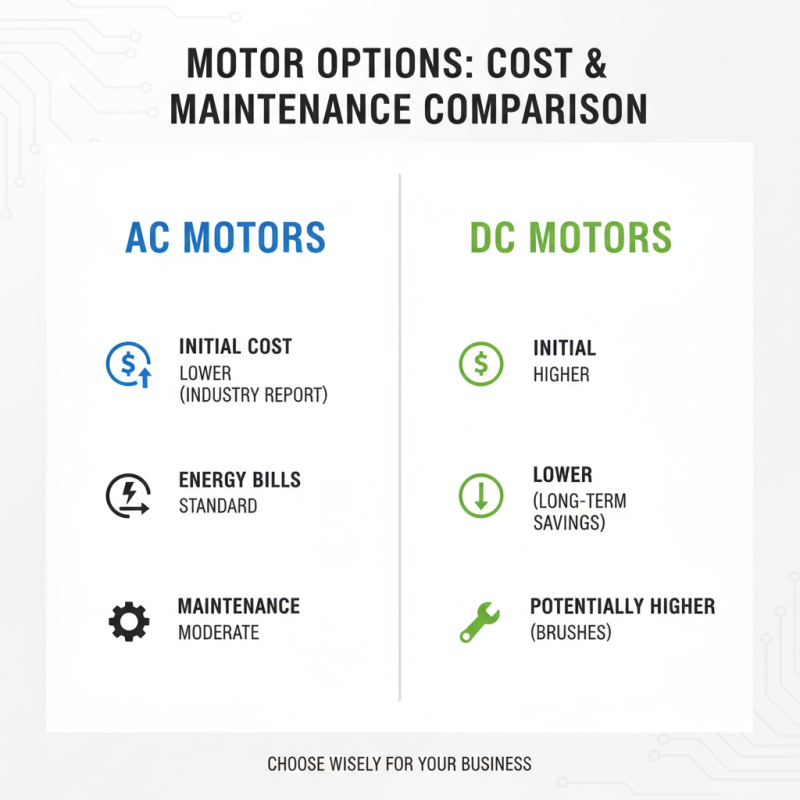
Choosing the right small motor for your business requires a thorough understanding of costs and maintenance needs. Various motor types, like AC and DC motors, come with distinct advantages. According to industry reports, AC motors are often more cost-effective upfront. However, DC motors may reduce energy bills in long-term use.
Maintenance is another crucial aspect. AC motors typically have lower maintenance requirements since they are generally more robust and simple in design. Industry studies indicate that up to 40% of operational costs can stem from maintenance issues. This emphasizes the importance of selecting a motor that aligns with your maintenance capacity.
Tip: Assess your operational environment thoroughly. The right motor must handle factors like dust, moisture, and temperature fluctuations.
When considering costs, think long-term. Energy efficiency ratings matter. A slightly more expensive motor upfront can lead to significant savings down the line. Conducting a total cost of ownership analysis can provide more clarity.
Another tip: don’t overlook the importance of expert consultations. Engaging with a professional can reveal overlooked factors that influence both costs and maintenance.