5 Best 5 RPM Motors for Global Buyers
Choosing a reliable 5 Rpm Motor requires more than comparing prices or browsing attractive product photos. Global buyers need stable torque, accurate speed control, suitable voltage, and dependable supplier support. This guide introduces five motor options selected for practical industrial and commercial applications. It considers gear construction, rated load, operating noise, installation size, efficiency, and expected service life.
Real-world use often reveals details that catalogs overlook. A motor may reach five revolutions per minute without maintaining smooth movement under load. That difference matters in mixers, display systems, dosing equipment, conveyor mechanisms, and automated fixtures. Small errors become visible quickly. Each recommended model should therefore be reviewed through manufacturer datasheets, test records, warranty terms, and technical certifications. Buyers should also confirm plug types, voltage ranges, shaft dimensions, and delivery conditions before placing an international order.
Performance depends on the application.
There is no universal winner. A compact geared motor may suit a lightweight mechanism, while a high-torque unit may better support continuous operation. Some specifications also appear unclear or incomplete, especially when sellers use different testing methods. That weakness deserves attention rather than polite assumptions. This overview combines engineering considerations with practical purchasing experience, helping readers compare five promising 5 Rpm Motor choices more confidently. It also encourages direct questions about overload protection, lubrication, duty cycle, replacement parts, and after-sales service. Reliable decisions come from verified evidence, not marketing language alone.
5 RPM Motor Basics: 5 RPM Equals 0.524 Rad/s Under Rated Conditions
5 RPM Motors for Global Buyers: 5 RPM Equals 0.524 Rad/s
A 5 RPM motor completes one revolution every 12 seconds. Its angular speed is 0.524 rad/s, calculated as 5 × 2π ÷ 60. This value applies under rated conditions, including voltage, frequency, load, and temperature. The calculation is exact. The application rarely is. IEC 60034-1:2022 stresses that motor ratings depend on defined operating conditions, not speed alone. A 5 RPM label may hide speed variation caused by load, gearbox tolerance, or control settings.
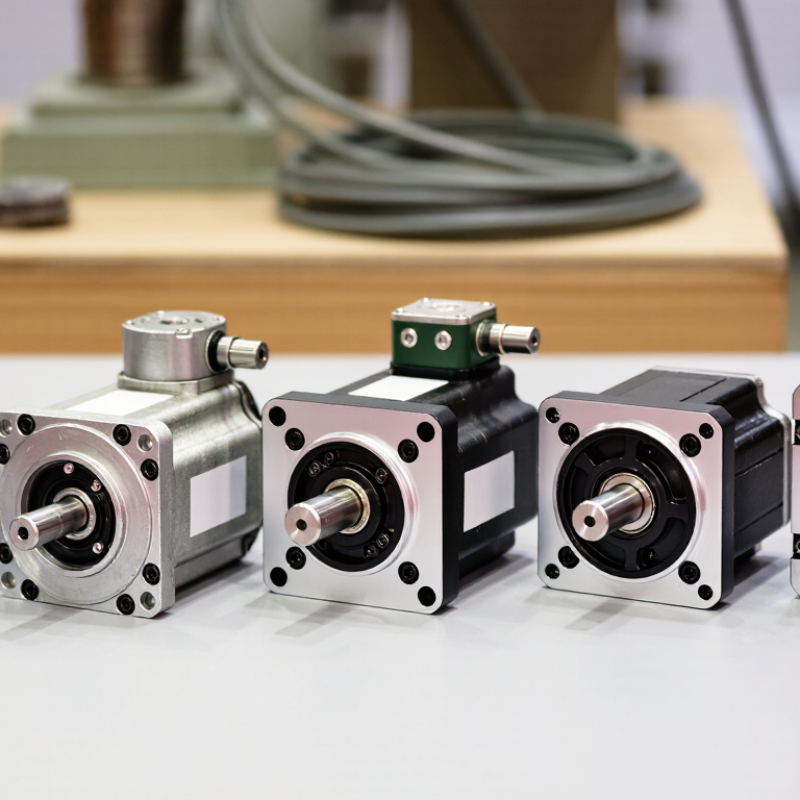
For global buyers, five motor types deserve comparison: geared induction motors, permanent-magnet synchronous motors, BLDC gearmotors, stepper motors, and torque motors. Geared induction units suit continuous conveyor duty. Synchronous motors offer stable low-speed operation. BLDC designs can reduce maintenance. Steppers provide positioning, but may lose torque when overloaded. Direct-drive torque motors avoid gearbox backlash, although their purchase cost can be higher. The U.S. Department of Energy’s Motor Systems Market Assessment highlights system efficiency, showing why gearbox losses and control methods matter. The IEA has reported that motor-driven systems consume roughly half of global electricity, making small efficiency differences commercially important.
Tips: Confirm output speed at the shaft, not the motor body. Request rated torque, startup torque, duty cycle, insulation class, and efficiency data. Check whether 5 RPM means synchronous speed or measured speed. Also verify regional voltage and certification requirements. A useful correction: slower does not automatically mean more efficient. It can mean more gearbox loss. Choose carefully.
5 Best 5 RPM Motors for Global Buyers - 5 RPM Motor Basics: 5 RPM Equals 0.524 Rad/s Under Rated Conditions
| Motor Configuration |
Rated Output Speed |
Typical Rated Torque |
Approx. Output Power* |
Common Input Options |
Best-Suited Applications |
Key Selection Advantage |
| AC Synchronous Gearmotor |
5 RPM |
10 N·m |
5.2 W |
100–240 V AC, 50/60 Hz |
Timers, displays, valves, light-duty indexing |
Stable speed when operated at the rated frequency |
| Brushed DC Gearmotor |
5 RPM |
25 N·m |
13.1 W |
12, 24, or 48 V DC |
Battery equipment, actuators, small conveyors |
Simple speed and direction control with a DC supply |
| Brushless DC Planetary Gearmotor |
5 RPM |
60 N·m |
31.4 W |
24 or 48 V DC with electronic drive |
Robotics, positioning systems, medical mechanisms |
Longer service life and efficient continuous operation |
| Worm-Geared Induction Motor |
5 RPM |
120 N·m |
62.8 W |
200–240 or 380–480 V AC, 50/60 Hz |
Gates, mixers, conveyors, lifting mechanisms |
High reduction ratio and strong resistance to back-driving |
| Servo Motor with Precision Gearhead |
5 RPM command speed |
250 N·m |
131 W |
24–80 V DC bus or 200–240 V AC drive |
Robotic joints, indexing tables, precision positioning |
Closed-loop control, accurate positioning, and adjustable acceleration |
|
Engineering note: At 5 RPM, angular speed is calculated as
ω = 2π × 5 ÷ 60 = 0.524 rad/s. Approximate mechanical output power is calculated using
P = T × ω, where T is torque in N·m. Actual output torque, efficiency, duty cycle, temperature rise, overload capacity, and enclosure rating vary by motor design and operating conditions.
|
IE3/IE4-Efficiency 5 RPM Motor for Continuous Industrial Duty
5 Best 5 RPM Motors for Global Buyers
An IE3 or IE4 5 RPM motor suits equipment that moves slowly for long, uninterrupted periods. Typical applications include rotary tables, mixers, indexing systems, and heavy conveyors. At this speed, the motor usually works with a gearbox or integrated reducer. The gearbox must handle the required torque, shock loads, and operating hours.
Continuous industrial duty requires more than a high efficiency label. Check the S1 duty rating, insulation class, cooling method, bearing arrangement, and enclosure protection. A dusty production floor may require IP55 or higher. In wet areas, corrosion-resistant finishes and suitable cable entries become important. Ask for tested efficiency data at the actual load point, not only the best laboratory result.
IE4 can reduce electrical losses, but the complete drive system still matters. An oversized reducer, poor alignment, or frequent starts can erase those savings. I have seen selection errors caused by focusing only on rated power. That mistake is easy to repeat. Confirm output torque, starting torque, voltage, frequency, ambient temperature, and mounting position before purchasing. Global buyers should also verify local conformity documents and service support. A technically efficient motor is less useful when replacement bearings or compatible controls are difficult to obtain.
5 Best 5 RPM Motors for Global Buyers: IE3 vs IE4 Efficiency
This comparison uses five continuous-duty motor sizes commonly considered for very-low-speed industrial systems. Efficiency values represent IEC 60034-30-1 IE3 and IE4 reference levels for comparable 4-pole motor ratings. The calculated torque assumes direct 5 RPM operation at rated power: torque = 9550 × power in kW ÷ speed in RPM. Actual 5 RPM performance depends on the drive, gearbox, cooling method, duty cycle, and application load.
Global-Voltage 5 RPM Motor: Compare 100–240 V and 50/60 Hz Compatibility
Choosing among the five best 5 RPM motors starts with voltage and frequency compatibility. A “global-voltage” motor usually accepts 100–240 V through an internal power supply. However, that label does not always guarantee stable operation at both 50 and 60 Hz.
For international equipment, compare AC geared motors, DC geared motors, synchronous motors, stepper gearmotors, and brushless gearmotors. AC and synchronous designs may change output speed when frequency changes. A 5 RPM unit rated at 50 Hz could run approximately 20% faster at 60 Hz without proper control. IEC 60038 defines common supply voltages, while IEC 60034-1 emphasizes rated frequency, temperature, and motor performance. These details matter more than the advertised speed.
Voltage is not the whole story. Check rated torque, starting current, gearbox backlash, insulation class, and duty cycle. A compact 100–240 V motor may suit a valve or display mechanism, but it may struggle with repeated starts. The IEA has estimated that motor-driven systems consume about 46% of global electricity, making efficiency and correct sizing practical concerns. In field selection, I would request a test sample and measure speed at both 50 and 60 Hz. Datasheets can be optimistic. That small test often reveals vibration, heat, or a disappointing five RPM.