Leave Your Message

Who Are the Top Motor Drive Manufacturers in China?

China’s motor-drive market is broad, competitive, and closely tied to manufacturing. Its suppliers serve everything from compact packaging lines to heavy-duty pumps and machine-tool spindles. Yet choosing a manufacturer is rarely as simple as comparing catalogue prices.

A useful paraphrase of Professor Robert W. Erickson’s power-electronics teaching is: “A motor drive works best when its converter, motor, and control operate as one system.” This is a paraphrase, not a verbatim quotation. It points to a practical truth: a drive’s performance depends on more than its nameplate rating. Buyers should examine low-speed torque, overload capacity, braking options, control compatibility, and local technical support.

Several Chinese companies deserve close attention, including Inovance, INVT, STEP, Veichi, and Hopewind. Their strengths differ. Some focus on factory automation and servo systems; others compete in general-purpose drives, pumps, or large-scale industrial applications. The best fit depends on the machine, operating conditions, and service expectations. A conveyor running dusty night shifts needs dependable protection and accessible support. A precision spindle needs responsive control and stable speed.

Rankings can be useful, but they can also hide important differences. Market position changes by product category, region, and year. This article compares leading Motor Drive manufacturers through product range, engineering capability, industry experience, and practical support. No single ranking tells the whole story. The details matter.
Who Are the Top Motor Drive Manufacturers in China?

What Motor Drives Are and Their Role in Industry

A motor drive controls how electrical power reaches a motor, adjusting speed and torque to suit the work. In practice, that may mean a pump slowing when water demand drops, or a conveyor starting smoothly instead of jolting into motion. Drives can also help operators monitor current and detect operating changes. They are useful control equipment, not automatic energy-saving devices; results depend on the motor, load, settings, and maintenance.

The International Energy Agency’s 2011 report, Energy-Efficiency Policy Opportunities for Electric Motor-Driven Systems, estimates that these systems use 43–46% of global electricity. The figure covers motor-driven systems broadly, not savings from drives alone, and it is an older estimate. Still, it shows why drive selection matters in factories, water facilities, and commercial buildings. A correctly sized variable-speed drive can reduce energy use when a process often runs below full capacity. But a poorly tuned unit may add losses or create maintenance issues. The calculation is not always tidy.

Tips: Check the load profile before choosing a drive. Compare operating hours, speed demand, and motor compatibility, then measure energy use after installation. A pump running steadily at full speed may offer little benefit from speed control. For reliable comparisons, record the same operating conditions before and after changes.

How Motor Drives Control Motor Speed

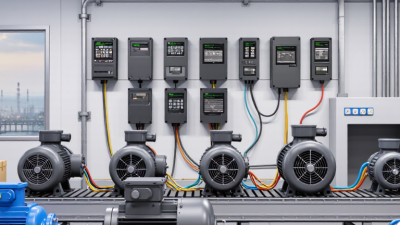
A motor drive adjusts the electrical frequency supplied to a motor to control its speed. For a four-pole motor, synchronous speed is calculated as 120 × frequency ÷ number of poles. Actual induction-motor speed is slightly lower because of slip and varies with load.

How to Assess China’s Leading Motor Drive Manufacturers

Assessing China’s leading motor drive manufacturers takes more than comparing price lists. Start with the application: motor type, supply voltage, speed range, starting torque, and duty cycle. Ask for rated current and overload curves, not just a headline power figure. A drive running a conveyor at steady load faces different demands from one controlling a pump with frequent starts. Look for documented efficiency, protection functions, temperature limits, and test procedures. Practical evidence matters.

Tips: Request a datasheet, wiring diagram, and test report for the exact configuration. Check whether technical staff can explain fault codes and commissioning steps. Small details count.

Then examine production consistency and service readiness. Ask how units are inspected, firmware revisions are tracked, and spare parts are kept available. If possible, review a reference installation with similar load conditions. A factory visit or live technical review can reveal whether answers come from engineering or sales alone. Still, no checklist predicts every failure. I would leave room for a pilot run; buyers can overlook site wiring, ventilation, or harmonic distortion. Compare response times and warranty terms in writing, and confirm the promised support fits your installation schedule.

Who Are the Top Motor Drive Manufacturers in China? - How to Assess China’s Leading Motor Drive Manufacturers

A practical, brand-neutral framework for comparing suppliers of variable-speed electrical power drive systems

Assessment dimension What to examine Evidence to request or verify Relevant reference
Product and application fit Whether the drive’s voltage, power rating, overload capability, control modes, and environmental rating suit the motor and the application. Product datasheets; rated input and output values; overload curves; supported motor types; operating-temperature and altitude limits; enclosure rating; application references. Confirm values against the specific model’s technical documentation and project requirements.
Electrical safety Protection against electrical, thermal, mechanical, and energy-related hazards in the power drive system. Applicable conformity documents, test reports, installation instructions, protective-device requirements, and safety-function documentation where relevant. IEC 61800-5-1, Adjustable speed electrical power drive systems — Safety requirements.
EMC performance Electromagnetic emissions and immunity, including the installation conditions and filtering or cabling needed to meet requirements. EMC test reports for the relevant model and configuration; filter specifications; cable and grounding guidance; installation limitations. IEC 61800-3, Adjustable speed electrical power drive systems — EMC requirements and specific test methods.
Energy efficiency Efficiency of the power drive system across operating points, rather than relying only on a single rated-point figure. Declared losses or efficiency data, test conditions, and part-load performance information for the applicable drive and motor combination. IEC 61800-9-2, Ecodesign for power drive systems, motor starters, power electronics and their driven applications.
Reliability and quality control Consistency of manufacturing, traceability, product-change control, and documented reliability testing. Quality-management certificates with valid scope; inspection and test records; serial-number traceability; warranty terms; failure-analysis and corrective-action procedures. Check certificate validity and scope directly with the issuing body; request model-specific evidence.
Control, communications, and integration Compatibility with the site’s control architecture, motor feedback, communication protocols, and commissioning workflow. Supported protocol list and option requirements; interface manuals; control-mode descriptions; software tools; sample configuration and interoperability test results. Verify protocol implementation and options on the exact drive model and firmware version.
Technical support and service Availability of application engineering, commissioning assistance, spare parts, repair services, and clear response processes. Service coverage for the buyer’s location; response-time commitments; escalation contacts; spare-parts policy; training and repair arrangements. Validate coverage and commitments in writing for the destination market.
Documentation and change management Clarity and availability of manuals, drawings, software versions, product notices, and revision histories. Current manuals in the required language; wiring diagrams; firmware and parameter documentation; formal notification process for product changes. Confirm documentation matches the supplied hardware and firmware revision.
Total cost and delivery risk Total installed and lifecycle cost, including accessories, engineering, commissioning, energy use, maintenance, and lead time. Comparable quotations with stated scope; delivery schedule; accessory list; warranty and service costs; lifecycle assumptions. Compare equivalent configurations and operating conditions, not purchase price alone.

Note: This table is an assessment framework, not a ranked list or a claim about any particular manufacturer. Standards and certification requirements should be checked for the product, installation, and destination market.

Major Chinese Motor Drive Manufacturers and Their Profiles

China’s motor-drive market includes several distinct manufacturer profiles, rather than one clear leader. Large automation groups typically offer drives alongside motors, controllers, and factory software. Specialist manufacturers focus more narrowly on variable-frequency drives for pumps, fans, compressors, or machine tools. Contract and private-label producers often compete on customization, delivery time, and cost. These categories are not rankings.

The engineering stakes are substantial. The International Energy Agency’s 2011 report, Energy-Efficiency Policy Opportunities for Electric Motor-Driven Systems, estimated that motor-driven systems consumed about 46% of global electricity. That figure helps explain why buyers compare more than purchase price. Check rated power, overload capacity, speed-control range, and compatibility with the motor and load. On a factory floor, a drive that handles frequent starts without overheating can matter more than a polished specification sheet.

Profiles should also distinguish domestic service capability from product breadth. Some manufacturers support commissioning and fault diagnosis through local engineering teams; others rely on distributors or equipment integrators. Ask for efficiency-test documentation, operating limits, and references from similar duty cycles. A catalogue alone is weak evidence. Still, comparisons are imperfect: public performance data may be sparse, and product quality can vary across ranges. A careful shortlist should assess the specific drive model, not assume every product shares the manufacturer’s strongest capabilities.

Key Technologies and Applications Across the Industry

Motor drives convert incoming electrical power into controlled torque and speed. Their value is clearest on a factory floor: a pump slows when demand drops, while a conveyor starts without a hard mechanical jolt. The IEA’s 2011 report, Energy-Efficiency Policy Opportunities for Electric Motor-Driven Systems, estimated that motor-driven systems use about 45% of global electricity. Even modest efficiency gains can matter at that scale.

Key technologies include variable-frequency control, vector control, and sensorless feedback. Variable-frequency drives adjust motor speed to match changing loads; vector control helps maintain torque at low speeds. In practice, tuning matters. A poorly configured drive can waste energy or cause unwanted vibration. Applications range from fans, pumps, and compressors to machine tools and production lines. Different loads need different control strategies.

China’s motor-drive sector serves manufacturing, building services, water treatment, and renewable-energy equipment. In a pumping station, for example, pressure sensors can signal drives to reduce speed as demand falls. The resulting savings depend on operating hours, system design, and maintenance. Not every upgrade pays back quickly. That limitation deserves attention, especially when buyers compare equipment using headline efficiency figures alone.

How to Compare Manufacturers for Different Project Needs

Compare Chinese motor drive manufacturers against the project’s actual duty cycle, not a brochure’s headline rating. Record motor power, voltage, speed range, overload duration, braking needs, and ambient temperature. Ask for efficiency maps across the operating range, not just one rated-point figure. For a pump running steadily, part-load efficiency may matter most. For a crane, overload capacity and braking control deserve closer checks. Shortlist only suppliers that can provide traceable test reports, clear warranty terms, and documented firmware and communication support. Small details count.

Energy use can outweigh purchase price. The IEA’s 2011 analysis estimated that motor-driven systems consume about 45% of global electricity; UNIDO’s motor-systems assessment reported a similar share, near 46%. The U.S. Department of Energy’s 2014 United States Industrial Motor Systems Market Assessment estimated that motors used about 68% of U.S. manufacturing electricity. These figures are broad benchmarks, not a forecast for one factory. Compare lifetime costs using your own load profile, local energy prices, and expected operating hours. Check response time for commissioning support and spare parts, too. A polished datasheet is not proof of field reliability. That gap is easy to miss. Ask for references from projects with similar loads, then verify what those systems actually run.