Top 10 BLDC Motor Manufacturers for Global Buyers
Choosing the right Bldc Motor manufacturer can shape a product’s efficiency, service life, and total operating cost. Global buyers need more than attractive catalog images or low factory prices. They need evidence.
This guide examines ten established BLDC motor manufacturers serving international markets. It considers production capability, motor customization, quality control, certifications, delivery performance, and after-sales support. These factors matter when a motor drives a medical pump, warehouse robot, cooling fan, or electric vehicle. A motor that sounds quiet in a showroom may behave differently under continuous load, heat, dust, or voltage variation.
The evaluation also reflects practical sourcing experience. Supplier communication, sample testing, winding quality, bearing selection, and documentation often reveal more than marketing claims. Buyers should request test reports, rated-load data, efficiency curves, and realistic lead times. Small details matter.
No ranking is perfect.
Manufacturers serve different applications, regions, and purchasing volumes. A company suitable for industrial automation may not fit a compact consumer device. Pricing can change with copper costs, order quantities, exchange rates, and shipping conditions. Therefore, this list should support due diligence rather than replace it.
Each featured manufacturer is assessed through a buyer-focused lens, combining technical knowledge with publicly available business information. We also recognize an uncomfortable point: supplier data is not always equally transparent. Some firms publish detailed specifications, while others require direct verification. Smart buyers should compare samples, audit communication, and test performance before signing a large contract.
BLDC Motor Market Overview: Growth, Efficiency, and Global Demand Data
The BLDC motor market is expanding as industries seek higher efficiency, lower maintenance, and precise speed control. Demand is strongest in electric mobility, HVAC systems, factory automation, appliances, and medical equipment. Industry forecasts commonly estimate annual market growth of roughly 8% to 10% through 2030. However, projections vary by region, application, and research method. Buyers should check the data source carefully. Not every report measures the same market.
Efficiency often reaches 80% to 95% under suitable operating conditions. Real results depend on load, controller quality, heat removal, and duty cycle. A 48-volt motor may perform well in a compact vehicle, while a 24-volt unit may suit a small pump. Small details matter. Poor ventilation can raise winding temperature and shorten service life. Rated efficiency alone can mislead. Testing under the actual load is more reliable.
Global buyers also examine production capacity, rotor balance, insulation quality, testing records, and supply stability. A capable manufacturer should provide torque curves, thermal data, vibration limits, and traceable inspection reports. Sample testing can reveal noise, startup behavior, and controller compatibility before volume orders. I have seen promising specifications fail during continuous operation. That is a useful warning. Regional voltage standards, customs rules, spare-part access, and technical support can also affect the true purchase cost.
How to Evaluate BLDC Manufacturers: Power Range, Efficiency, and Certification
Choosing a BLDC motor manufacturer requires more than comparing catalog prices. Start with the actual power range, from low-power pumps to high-torque industrial drives. Ask whether the supplier can maintain stable output across your voltage and speed requirements. A motor rated for 500 watts may not deliver reliable torque under continuous heat or frequent starts.
Efficiency figures need careful reading. Request test conditions, including load, temperature, controller type, and measurement method. A claimed 92% efficiency can change in real equipment. Look for thermal test data, winding details, bearing life, noise levels, and protection ratings. Certification documents should match the exact motor model, factory, and production date. Check applicable safety, electromagnetic compatibility, and environmental requirements for your target markets. Documents without traceable test reports deserve caution.
Tips:
Send a sample duty cycle, not only a power number. Ask for a complete drawing, test report, and quality-control plan. Confirm whether customization affects certification. Factory audits can reveal useful details, such as loose connectors or inconsistent labeling. These small issues matter. Leave room for doubt, too; laboratory efficiency may not represent field performance. A pilot order with incoming inspection is often safer than a large first purchase. Also review warranty terms, spare-part access, response time, and technical support before signing. Reliability is built through evidence, not confident promises.
Top 10 BLDC Motor Manufacturers Ranked by Technology, Capacity, and Reach
Top 10 BLDC Motor Manufacturers for Global Buyers
Top 10 BLDC Motor Manufacturers Ranked by Technology, Capacity, and Reach
A serious BLDC ranking needs more than catalog claims. I score technology at 40%, manufacturing capacity at 35%, and international reach at 25%. Technology includes sensorless control, integrated electronics, thermal design, and efficiency testing. Capacity covers automated winding lines, monthly output, quality systems, and customization speed. Reach measures regional service, export experience, documentation, and spare-parts support.
The International Energy Agency estimates that electric motor systems consume about 40% of global electricity. That figure explains why small efficiency gains matter in pumps, robotics, fans, and electric mobility. MarketsandMarkets projects strong BLDC market growth through 2028, driven by automation and electrification. However, forecasts differ between reports. They should guide research, not replace it.
Top-ranked suppliers usually combine precise rotor balancing with stable production at scale. Ask for measured efficiency curves, noise data, thermal limits, and endurance-test results. A motor that performs well in a laboratory may struggle inside a dusty factory cabinet. Public capacity figures can also be incomplete or unaudited. That is a weakness. My ranking therefore gives extra weight to traceable testing, regional engineering support, and consistent delivery records. Price alone receives limited influence, because a cheaper motor can create higher system costs through heat, downtime, and redesign. Specification sheets rarely tell the whole story.
Regional Manufacturing Strength: Asia-Pacific, Europe, and North America Compared
Regional strength often determines more than a BLDC motor’s catalog specifications.
Grand View Research’s 2024 brushless DC motor assessment identifies Asia-Pacific as the largest regional market, supported by dense electronics supply chains and high-volume automation. China accounted for over 70% of global electric vehicle production in 2023, according to the International Energy Agency. That scale supports competitive pricing, rapid tooling, and broad component access. However, quality consistency can vary between factories.
Europe offers tighter engineering integration.
Manufacturers there often focus on robotics, medical equipment, industrial drives, and energy efficiency. The European Commission’s Ecodesign framework continues to push higher motor-system efficiency. This benefits suppliers with strong testing records and traceable documentation. Production costs are usually higher. Delivery reliability may still justify them for regulated applications. North America remains important for aerospace systems, warehouse automation, pumps, and specialized motion control. Reports from the U.S. Department of Energy highlight the large energy impact of industrial motor systems, making efficiency and serviceability practical buying priorities.
Tips:
Compare regional strengths, not only unit prices. Ask for rotor-balance data, thermal-cycle results, IP ratings, and failure-rate evidence. Check whether spare parts are stocked nearby. A low quote can become expensive after customs, redesigns, or field repairs. Buyers should also examine certification scope, because a certificate may cover only one motor series. This is where rankings become imperfect. The “best” manufacturer depends on load profile, annual volume, noise limits, and after-sales capability. Personally, I would request sample testing before signing a long-term contract.
Buyer Selection Guide: Duty Cycles, IP Ratings, Torque, and Compliance Standards
Top 10 BLDC Motor Manufacturers for Global Buyers
Buyer Selection Guide: Duty Cycles, IP Ratings, Torque, and Compliance Standards
Selecting a BLDC motor requires more than comparing rated speed and price. The IEA reports that motor-driven systems consume more than half of global electricity. Efficiency, therefore, affects both operating cost and emissions. Start with the duty cycle: continuous, intermittent, or repeated peak loads. Duty cycle matters. A motor running for ten minutes every hour may need less thermal capacity than one operating continuously, even at the same power rating.
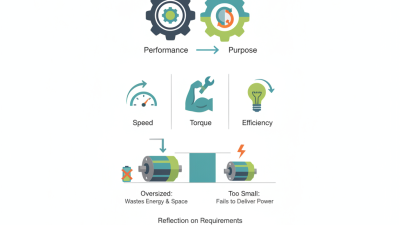
Torque data deserves careful inspection. Separate continuous torque, peak torque, starting torque, and speed-dependent torque. A catalogue value can mislead when it excludes gearbox losses, acceleration time, or ambient temperature. Calculate the load inertia and include a practical safety margin. Not too much. Oversizing can reduce efficiency and increase system cost. Field testing should confirm winding temperature, vibration, acoustic noise, and controller compatibility.
IP ratings describe enclosure protection under IEC 60529, not complete environmental durability. IP65 may resist dust and water jets, while condensation, salt spray, chemicals, and cable-entry weaknesses still create failures. Ask for test conditions and mounting details. Compliance checks should cover IEC 60034 requirements, applicable efficiency classes under IEC 60034-30-1, electromagnetic compatibility, and regional requirements such as CE, UL, RoHS, or REACH. Requirements vary by application and market. A certificate without traceable test records is weak evidence. That point is easy to overlook.
Top 10 BLDC Motor Manufacturers for Global Buyers — Buyer Selection Guide
This chart presents typical engineering reference ranges for BLDC motor selection by application. Continuous duty cycle indicates the expected percentage of operating time under normal load, while continuous torque represents a practical sizing reference. Verify the final motor against the required IP rating, thermal limits, overload profile, EMC requirements, and applicable compliance standards such as CE, UL, RoHS, and REACH.