Top Types of DC DC Motor Explained in Detail?
DC DC motors are an integral part of modern electronic systems. They provide reliable performance across various applications, from robotics to automotive technology. Understanding the different types of DC DC motors can enhance design decisions significantly.
Each motor type has unique characteristics. The choice often depends on efficiency, torque requirements, and power supply. Some motors excel in specific tasks, while others adapt better to diverse conditions. There are brushed and brushless options, each with advantages and limitations.
Exploring these motors in detail reveals their complexities. Many factors influence a motor's effectiveness. High-quality materials improve performance but can increase costs. An informed choice is crucial. Knowing your needs helps in selecting the right DC DC motor for your project.
Introduction to DC Motors and Their Applications
DC motors play a pivotal role in various industries due to their versatility and efficiency. Common applications include robotics, automotive systems, and conveyor belts. According to a report by MarketsandMarkets, the global DC motor market is expected to reach $16.19 billion by 2025. This growth highlights the increasing reliance on DC motors for automation and precision control.
The appeal of DC motors lies in their ability to provide high torque and speed control. Furthermore, they are compact and easy to maintain, making them ideal for both consumer and industrial applications. However, potential users should consider the challenges of choosing the right type of DC motor for their needs. Different designs offer distinct advantages. It’s essential to assess factors like load requirements and environmental conditions.
Tip: Always evaluate the motor specifications carefully.
Some users face difficulties in understanding the nuances of different motor types. For example, brushed motors are typically easier to control but tend to wear out faster than brushless motors. This trade-off is crucial in making an informed decision for long-term applications.
Tip: Research and compare motor types extensively.
Investing time in understanding these details can save both money and time in the long run. In conclusion, by being mindful of the unique characteristics and potential drawbacks of DC motors, users can optimize their operations effectively.
Types of DC Motors: An Overview of Different Designs
DC motors come in various designs, each serving unique functions in different applications. The most common types include brushed and brushless DC motors. Brushed DC motors feature a simple design, making them cost-effective and easy to control. They are widely used in toys and household appliances. According to industry reports, brushed motors account for about 40% of the DC motor market.
On the other hand, brushless DC motors are gaining popularity due to their efficiency and longevity. They have a more complex design with electronic commutation. This allows for greater precision in speed and torque control. Industry studies indicate that brushless motors have a 20% higher efficiency compared to their brushed counterparts. They are preferred in aerospace and automotive industries. However, the initial cost can be a deterrent for some applications.
Another fascinating type is the stepper motor, which is crucial for precise positional control. Stepper motors divide a full rotation into smaller steps, allowing for accurate movement in robotics and CNC machines. Recent data show that the global stepper motor market is projected to grow by 8% annually. Despite their advantages, stepper motors can experience issues with accuracy under high speeds, necessitating careful application consideration.
Brushed DC Motors: Features and Advantages Explained
Brushed DC motors are widely used due to their simplicity and effectiveness. These motors have carbon brushes that maintain contact with a rotating commutator. This design allows for smooth operation and precise control. Brushed DC motors can be found in various applications, from toys to industrial machinery. They are not just user-friendly but also cost-effective.
However, it's important to consider their limitations. The brushes can wear out over time. This wear can lead to maintenance issues and decreased performance. Additionally, brushed motors may not be suitable for applications requiring high efficiency or precision.
Tip: Regular maintenance can extend the life of brushed DC motors. Inspecting the brushes and commutator periodically is essential. Monitor motor performance to identify any degradation. Early intervention can prevent costly repairs.
Another key point to note is that brushed motors can generate electrical noise. This can interfere with sensitive electronic devices. Engineers often need to implement strategies to mitigate these effects when used in certain environments.
Tip: Consider the environment when selecting a motor. Dust, humidity, and vibrations can affect performance. Evaluating the setting can help ensure optimal functionality.
Top Types of DC DC Motor Explained in Detail
This chart illustrates the advantages rating of different types of DC motors based on their key features. The ratings range from 1 to 10, assessing the performance and efficiency of each motor type.
Brushless DC Motors: Working Principles and Benefits
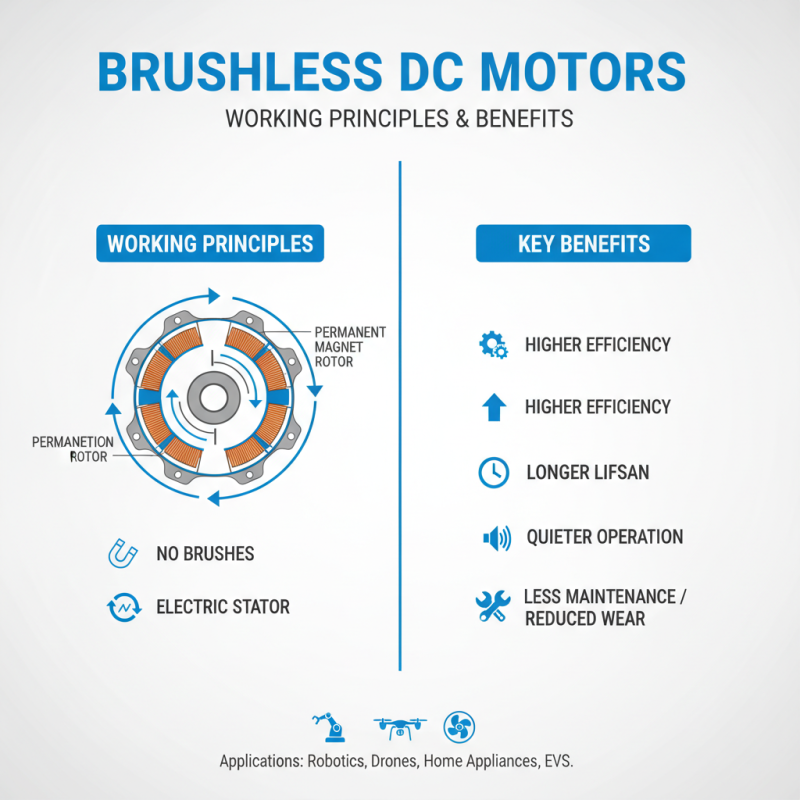
Brushless DC motors (BLDC) are increasingly popular in various applications, from robotics to consumer electronics. Their working principle is based on an electric stator and a rotating magnetic field, eliminating the need for brushes. This design leads to several advantages, including improved efficiency and a longer lifespan. The absence of brushes reduces wear and tear, allowing for quieter operation and less maintenance.
One notable benefit of BLDC motors is their precise control over speed and torque. This capability enables seamless operation in diverse environments. However, the complexity of their controller can be a downside. Not every application requires such advanced features, making it essential to assess your specific needs.
Tips: When choosing a motor, consider both performance and application requirements. A less complex motor may suit basic tasks efficiently. Additionally, always verify compatibility with your existing systems to prevent integration issues. Remember that not all high-performance motors are the best choice for every project.
Specialized DC Motors: Applications in Industry and Robotics
Specialized DC motors play a crucial role in various industries, particularly in robotics. These motors are designed to provide precise control and efficiency. According to industry reports, the global DC motor market is projected to reach $20 billion by 2026, growing at a CAGR of 6.5%. This growth highlights the increasing demand for efficient automation solutions.
In industrial applications, DC motors are often used in conveyor systems, robotic arms, and automated tools. Their ability to maintain speed under varying loads makes them ideal for such tasks. For instance, a robotic arm may rely on a DC motor to achieve accurate positioning during assembly. Users reported that DC motors outperform AC motors in applications requiring variable speed and torque.
However, challenges exist. The need for compatible drivers can complicate integration into existing systems. Moreover, insufficient cooling can lead to overheating in continuous operations. It's vital to address these issues to maximize efficiency and lifespan. Continual analysis of performance data can help refine motor selection for specific applications. By staying informed about advancements, industries can enhance their robotics capabilities.