How to Choose the Best DC Motor for Your Project?
Choosing the right DC motor for your project can be challenging. According to Dr. Emily Chen, a leading expert in the field, "Selecting the right DC motor is crucial for efficiency and performance." Her insights emphasize the importance of understanding your specific application and requirements.
DC motors are widely used in robotics, automotive, and industrial automation. Each application might demand varying torque, speed, or size. For instance, in a robotics project, a high torque motor could ensure smooth movement. However, it's essential to balance power with battery life. This often leads to tough decisions and compromises.
Many engineers overlook the importance of environmental factors. Temperature, humidity, and mounting conditions can affect performance. Choosing a DC motor without considering these elements might lead to unexpected failures. Thus, careful evaluation and planning are vital in the selection process. Every project deserves a thorough approach to ensure reliability and success.

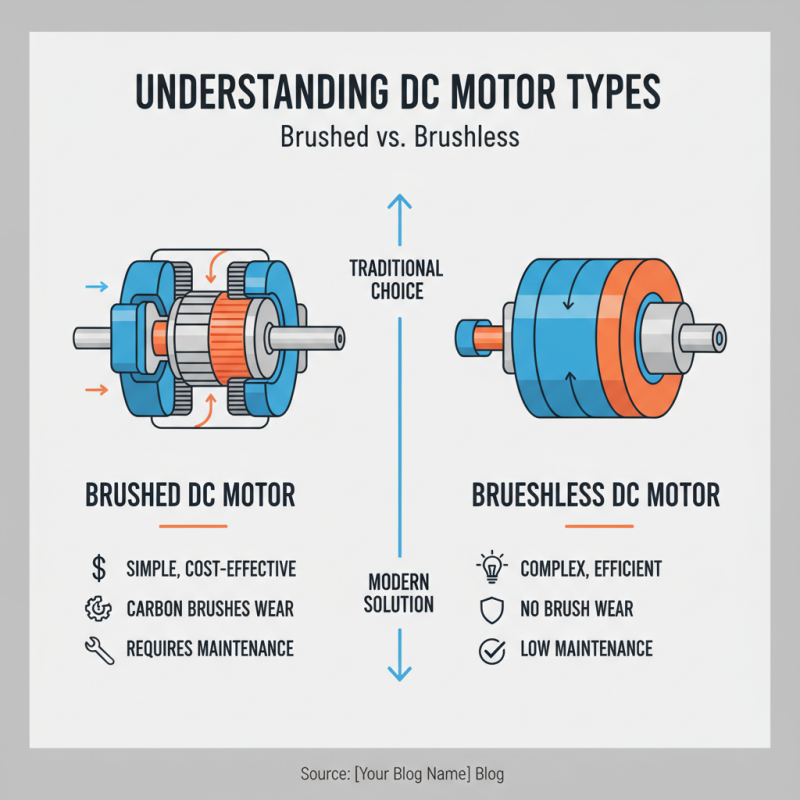
Understanding DC Motor Types: Brushed vs. Brushless Motors
When selecting a DC motor, it's essential to understand the differences between brushed and brushless motors. Brushed motors have been the traditional choice for many projects. They use carbon brushes to conduct electricity to the rotor. This design is simple and cost-effective. However, brushed motors wear out over time and require regular maintenance. This can be a concern for long-term projects.
On the other hand, brushless motors provide several advantages. They have no brushes, which reduces wear and tear. This design allows brushless motors to run cooler and last longer. They also deliver higher efficiency and performance. However, they can be more complex and expensive to implement. Understanding your project’s power requirements is crucial. It will help you decide which motor suits your needs better.
Ultimately, the choice depends on the specific application. If your project requires reliability and longevity, brushless may be the way to go. For quick prototypes or low-cost applications, brushed motors might suffice. Think about your design goals. Reflect on what trade-offs you're willing to accept to achieve those objectives.
Key Specifications: Voltage, Torque, and Speed Considerations
When selecting a DC motor, several key specifications must be evaluated. Voltage, torque, and speed play crucial roles in determining the motor's suitability for your project. For instance, voltage affects performance and efficiency. A motor with the right voltage can prevent overheating while maximizing power output. The industry standard suggests that operating within a 10% margin of the rated voltage optimizes performance.
Torque is equally important. It reflects the motor's ability to do work. A higher torque is necessary for applications requiring heavy lifting or fast acceleration. According to reports from industry experts, a motor’s torque rating is often undervalued in design phases. Many projects fail because torque requirements are miscalculated, leading to inadequate motor selection.
Speed considerations also influence your choice. Each project has a specific speed requirement. Balancing speed and torque can be challenging. A motor designed for high speed may compromise torque, or vice versa. It's essential to refer to performance curves provided by manufacturers. They reveal the relationship between speed and torque.
Tip: Always account for the load the motor will face. Consider potential fluctuations during operation. Tip: Isolate your project parameters and run simulations. This can reveal any inconsistencies. Finally, ensure your selected motor meets safety standards and reliability benchmarks.
Application Requirements: Matching Motor Performance to Project Needs
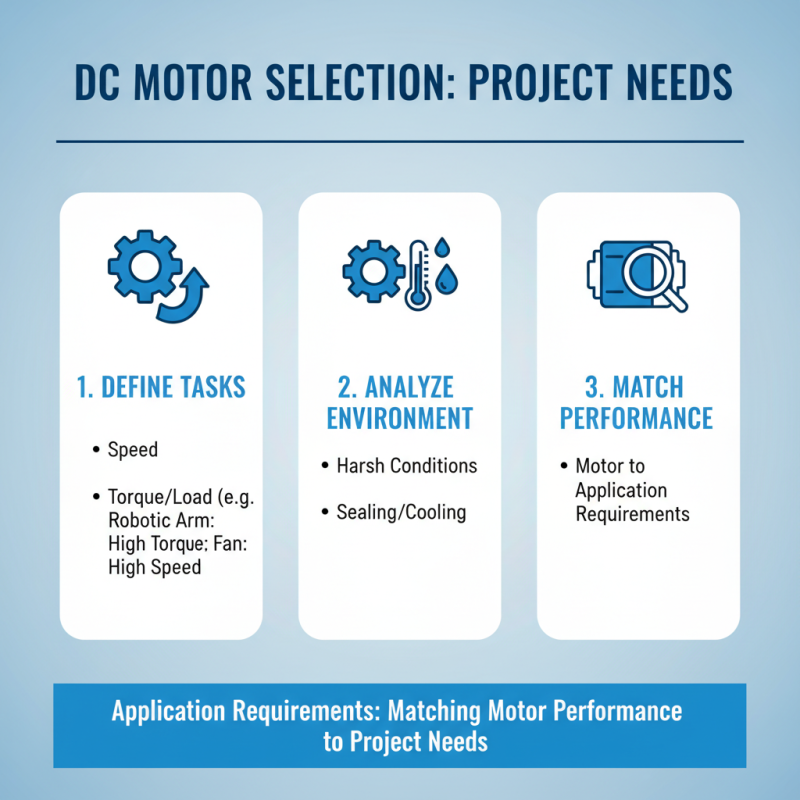
When selecting a DC motor, understanding your application requirements is vital. Define the specific tasks the motor will perform. Consider factors such as speed, torque, and load. For instance, a robotic arm may need high torque for lifting, while a small fan requires high speed. Analyze the environment too. Harsh conditions may demand motors with better sealing or cooling mechanisms.
Selecting a motor goes beyond specifications. Experimentation can reveal unexpected challenges. A motor that meets initial criteria might falter under real-world stresses. Testing different models helps identify the best fit. It's essential to remain open-minded about adjustments. Sometimes, modifications to your project might be necessary based on performance feedback. Always prioritize reliability, as a failure in a crucial component can halt an entire project.
Efficiency Ratings and Their Impact on Overall System Performance
When selecting a DC motor, efficiency ratings are crucial. A high efficiency rating indicates that more electrical energy is converted into mechanical energy. For example, a motor with an efficiency of 85% produces less waste heat and consumes less energy compared to one at 70%. This can significantly affect your project’s energy use over time.
Consider the impact on the overall system performance. A report from the Electric Power Research Institute shows that even small inefficiencies can lead to increased operational costs. A 10% drop in efficiency can raise energy expenses by up to 15%. Additionally, inefficiency in motors can decrease lifespan due to overheating, becoming a long-term concern.
Choosing the right motor goes beyond efficiency numbers. It's essential to consider load requirements and application-specific conditions. A motor suited for high torque may operate efficiently at low speeds, but in high-speed applications, it can underperform. Real-life projects often face these intricate trade-offs, highlighting the importance of thorough analysis in motor selection.
Cost vs. Performance: Budgeting for Optimal Motor Selection
When choosing a DC motor, cost and performance often battle for your attention. Balancing these two aspects is crucial for project success. It's important to assess your budget and understand that cheaper motors may compromise quality. Higher-cost motors usually offer better efficiency and durability. They can handle more demanding tasks without frequent failures. However, remember that price does not always guarantee top performance.
Consider not only the initial cost but also long-term expenses. Cheap motors could lead to higher maintenance costs down the line. Assess how often you expect to use the motor and in what conditions. For light tasks, a budget-friendly motor might suffice. But for intense applications, investing in a reliable motor pays off.
Experimentation can reveal surprising results. Sometimes, opting for a middle-range motor leads to better performance for your specific needs. It’s wise to request samples and test different motors before committing. Reflecting on past projects can guide your choices, but don’t shy away from trying new options.