How to Choose the Right DC Motor for Your Application?
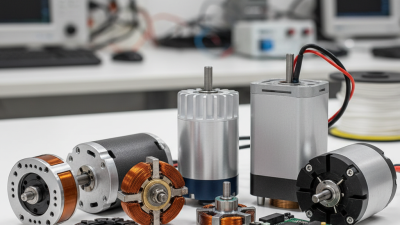
Selecting the right DC motor for your application can be challenging. As Michael Anderson, an expert in the DC motor industry, once said, "Choosing the right motor is crucial for the success of your project." DC motors play a vital role in various industries, from automation to robotics.
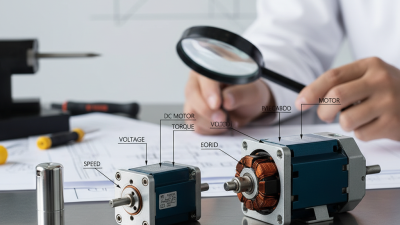
Understanding your specific needs is key. Consider factors like torque, speed, and voltage. These elements directly impact performance and efficiency. The choice can enhance productivity or lead to failures. For instance, the wrong motor may overheat or underperform. This careful selection process should not be rushed.
Additionally, it’s essential to evaluate reliability and quality. Not all DC motors in the market are created equal. Some may promise high performance but fail in real-world applications. Engaging with industry experts can provide valuable insights. Their experiences offer guidance that written materials may lack. Always remember, the right DC motor in your project shapes the outcome significantly.

Understanding the Basics of DC Motors and Their Functionality
DC motors are vital in a wide range of applications, from robotics to automotive systems. Understanding how they function is essential for selecting the right motor. In simple terms, a DC motor converts electrical energy into mechanical energy. It operates based on the interaction between magnetic fields and electric current. The motor's efficiency and torque affect its performance in practical applications.
Data from industry reports indicate that over 50% of automated systems rely on DC motors. This reliance highlights their flexibility in different environments. However, users must consider several factors, such as voltage, speed, and torque. Operating a motor outside its optimal range leads to inefficiencies. For example, a motor running at a higher voltage than its rating may overheat or fail early.
Precision in choosing a DC motor enhances functionality. Pay close attention to the specifications and performance ratings provided by manufacturers. Misunderstanding these characteristics can lead to costly mistakes. Selecting a motor that meets specific requirements can greatly improve the efficiency of an entire system. Optimization leads to better energy consumption and reduced operational costs. Always verify the credibility of data sources and technical documents during the selection process.
How to Choose the Right DC Motor for Your Application?
| Parameter |
Description |
Importance |
| Voltage Rating |
The electrical potential needed to operate the motor effectively. |
Critical for ensuring the motor receives adequate power. |
| Current Rating |
Maximum current the motor can handle without overheating. |
Important to avoid damage and maintain efficiency. |
| Speed (RPM) |
The rotational speed of the motor measured in revolutions per minute. |
Essential for applications requiring specific movement rates. |
| Torque |
The rotational force the motor can exert, usually measured in Nm. |
Crucial for applications needing particular force to start or maintain movement. |
| Duty Cycle |
The amount of time the motor can run continuously versus resting time. |
Important for applications with prolonged operation to prevent overheating. |
| Size and Weight |
Physical dimensions and mass of the motor. |
Relevant for space-constrained applications. |
| Price |
Cost of the motor, which can vary widely. |
A key factor in budget-sensitive projects. |
Identifying Key Specifications for Your Application Needs
When selecting the right DC motor, the specifications matter greatly. Different applications have different requirements. Power output is crucial. Evaluate the torque needed for your application. Torque for a small drone differs from that for an electric vehicle. A mismatch can lead to underperformance or damage.
Speed control is another key aspect. How fast does your application need to operate? Not all motors provide the same speed range. Consider the load conditions. A motor may perform poorly under high loads. It's vital to analyze operational environments. Temperature, humidity, and vibrations can influence performance.
Furthermore, efficiency plays a significant role in long-term costs. A motor that consumes less power may save money over time. Reflect on your application's size and weight constraints. Compact designs might limit choices. Sometimes, a perfect fit can be elusive. Understanding these specifications is essential. Review them thoroughly.
Evaluating Torque and Speed Requirements for Optimal Performance
Understanding torque and speed requirements is essential when choosing a DC motor. Torque refers to the rotational force the motor can exert. Speed concerns how fast the motor can complete rotations. Both factors directly affect the efficiency and performance of your application.
When assessing torque, consider the load the motor will handle. A heavier load demands more torque for effective operation. For instance, a conveyor belt might need a motor that provides high torque at low speeds. Conversely, a small fan may need less torque but higher speed. Aligning these requirements is crucial for optimal performance.
Speed requirements can vary based on the application. Some tasks require quick responses, while others benefit from steady, controlled movements. It’s important to remember that high speed often comes at the expense of torque. Experimenting with different motor specifications may reveal misalignments in your choice. Planning for adjustments can lead to better outcomes but requires patience and diligence.
Assessing Power Supply Options and Compatibility Considerations
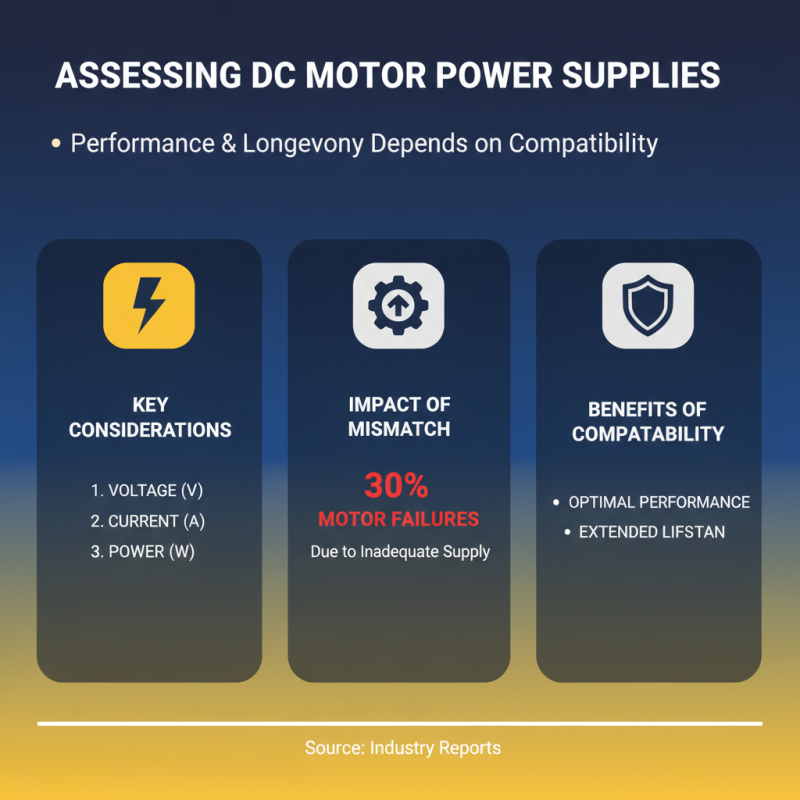
Choosing the right power supply for a DC motor is crucial. It directly impacts performance and longevity. When assessing compatibility, consider voltage, current, and power ratings. Industry reports indicate that nearly 30% of motor failures relate to inadequate power supply.
Compatibility issues arise from mismatched voltage levels. Using a power supply with the incorrect voltage can lead to overheating. Moreover, excessive current can damage both the motor and power supply. Monitoring these parameters ensures reliability and efficiency.
**Tips:** Always cross-check specifications before making a purchase. Take note of the power supply's capacity relative to your motor's requirements. Ensure the supply can handle peak loads, as this prevents potential failures.
Also, consider environmental conditions. High temperatures or humidity can affect performance. Industry data shows that 15% of users overlook this aspect. Prioritize flexibility in your design to accommodate future upgrades or changes in application conditions.
Comparing Different Types of DC Motors for Specific Applications
Choosing the right DC motor involves understanding different types and their applications. For instance, brushed DC motors are simple and cost-effective. Their design makes them easy to control. They are suitable for applications requiring precise speed control, such as robotics. According to a 2022 industry report, brushed motors account for about 45% of the DC motor market, primarily due to their efficiency in low-power applications.
On the other hand, brushless DC motors are more efficient and have a longer lifespan. They are increasingly used in high-performance applications. These motors reduce maintenance costs significantly. A recent study highlights that brushless motors have an efficiency rating of over 90%. However, their complexity can pose challenges in implementation. Notably, users may face higher initial costs due to advanced control systems.
Another option is stepper motors, which provide precise control over position and speed. They are prevalent in 3D printing and CNC machines. With a market share of around 20%, the demand for stepper motors continues to grow. However, achieving the desired performance requires careful calibration. It’s crucial to consider torque requirements and load types when making a choice. Each motor type has its trade-offs, which need thorough analysis before selection.