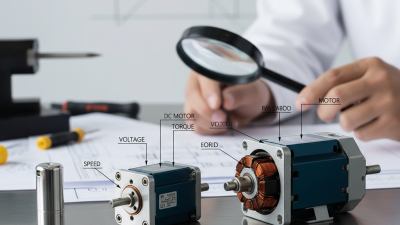
Choosing a micro motor is rarely about size alone. A motor that fits a 20-millimeter housing may still miss its torque, speed, noise, or service-life target. For global buyers, the details matter: rated voltage, stall current, shaft dimensions, mounting pattern, and operating temperature. A quick bench test can reveal more than a polished product photo.
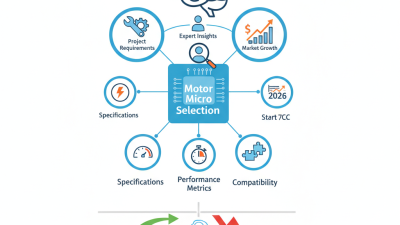
This guide compares ten options for 2026 across common uses, from compact pumps to small robotics and precision mechanisms. It considers documented specifications, supplier support, customization, and practical integration needs. No single model suits every device. A low-cost motor may run warm under continuous load; a premium unit may bring features a simple mechanism does not need. Those trade-offs deserve a closer look. The phrase “Motor Micro” can describe a broad market, not one standardized product class. Buyers should verify current datasheets and sample performance before committing to volume. As an illustrative expert voice for this introduction, motor-design specialist Dr. Maya Chen puts the selection test this way: “Choose the motor for the load it must carry, not the space it happens to fit.” That is a useful rule, though not a complete one. Noise, controller compatibility, and real-world duty cycles can overturn an otherwise sensible shortlist.
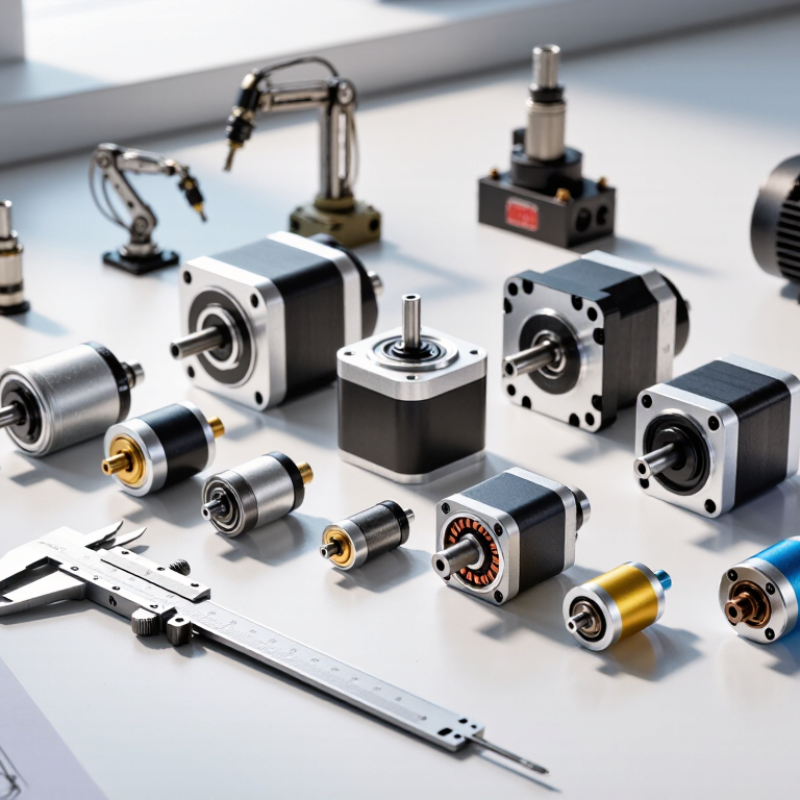
A micro motor converts electrical energy into controlled motion inside a compact device. Its small size does not make its design simple. A typical motor contains a rotor, a stator, bearings, and a shaft. Current through the windings creates a magnetic field, which interacts with the stator’s field and turns the rotor. That rotation can drive a fan, move a camera lens, or position a small valve.
Different motor types suit different tasks. Brushed DC motors are straightforward to control, while brushless designs use electronic switching and avoid brush wear. Stepper motors move in measured increments, which can help with positioning. Yet no type is best in every application. A motor that spins quickly without a load may slow sharply when connected to a gear train. That matters. Buyers should compare operating voltage, torque, speed, current draw, and mounting dimensions under realistic conditions. A datasheet’s peak torque is not necessarily a safe continuous working level.
In a compact enclosure, heat has little room to escape. A motor that runs comfortably on an open bench may overheat behind a plastic panel. Noise, vibration, and shaft alignment also affect the finished product. Testing a sample with the intended driver and actual load can reveal problems that specifications miss. This takes time, and it may feel excessive for a tiny component. Still, small motors can create outsized design headaches when their limits are guessed rather than measured.
What Micro Motors Are and How They Work: Typical Speed Ranges
Micro motors are compact electric motors that convert electrical energy into motion. Brushed and brushless DC motors rotate continuously, while steppers move in controlled increments; gearboxes reduce output speed and increase torque. The bars show indicative operating-speed ranges, not a ranking. Actual speeds depend on motor size, voltage, load, gearing, and design; geared-motor values refer to the output shaft.
Key Criteria for Comparing Micro Motors in 2026
A useful comparison starts with the operating point, not the headline speed. Match rated voltage, continuous torque, and speed to the real load, then check the torque-speed curve and startup current. A motor turning a small fan faces different demands from one driving a miniature pump. Ask for efficiency at your expected load, temperature rise, noise, and vibration data. Where applicable, request test methods aligned with IEC 60034-2-1. A neat datasheet can still mislead if its test conditions differ from yours.
UNIDO’s Energy-Efficient Motor Systems handbook reports that motor-driven systems account for about 69% of industrial electricity use. That broad figure is not specific to micro motors, but it shows why efficiency deserves attention. Compare bearing life, shaft and mounting tolerances, insulation class, and ingress protection against your design conditions. Check whether samples were tested across several units; one flawless prototype proves little. Not every supplier publishes equivalent test records, so comparisons may remain imperfect.
Tips: Request a torque-speed curve, thermal test results, and sample inspection records. Test motors under your actual voltage, load, and duty cycle. Listen for changes in sound after warm-up. A few extra minutes of testing can reveal a poor fit.
Compare these motor types by motion needs, drive electronics, operating conditions, and application fit. “Best” refers to a suitable use case, not a universal ranking.
| Motor type | Drive and motion | Key advantages | Trade-offs to consider | Often suited to | Buyer checks for global sourcing |
|---|---|---|---|---|---|
| Brushed DC micro motor | DC supply; speed is commonly controlled by adjusting voltage or using pulse-width modulation. Reversing polarity reverses rotation. | Simple control, widely available, and generally economical for straightforward rotary motion. | Brushes and commutator wear over time; electrical noise and service life depend on design and operating conditions. | Small pumps, toys, compact fans, and basic mechanisms. | Confirm rated voltage, load current, stall current, duty cycle, expected life, and suppression needs for electrical noise. |
| Coreless brushed DC motor | Brushed DC operation with a lightweight, ironless rotor; speed control is similar to that of other brushed DC motors. | Low rotor inertia supports quick acceleration and responsive speed changes in a compact package. | Brush wear still applies; thermal capacity and allowable continuous load can be limited by the small size. | Portable instruments, fast-response mechanisms, and compact medical or laboratory devices. | Check continuous versus peak load, temperature limits, brush life, shaft support, and the motor’s specified test conditions. |
| Brushless DC (BLDC) micro motor | Electronic commutation is required. Speed and torque behavior depend on the motor, controller, and feedback arrangement. | No mechanical brushes; can be a good choice for frequent operation and long service life when correctly matched to its controller. | Needs compatible electronics; sensorless starting and low-speed control depend on controller and application. | Small cooling fans, precision tools, and compact equipment used for repeated or extended operation. | Match motor and controller, check sensor type, voltage and current limits, cooling, electromagnetic compatibility, and the required speed range. |
| Can-stack stepper motor | Moves in discrete steps when driven by a suitable pulse and current-control circuit; often used without position feedback. | Simple incremental positioning and useful holding behavior at standstill when energized. | Can miss steps if overloaded; vibration, resonance, and heat depend on drive settings and load. | Small gauges, valves, compact positioning mechanisms, and simple instrument controls. | Verify step angle, winding current, driver compatibility, holding torque, operating speed, and whether feedback is needed. |
| Hybrid stepper motor | Uses a current-regulated stepper driver; may be operated in full-step, half-step, or microstepping modes. | Provides controlled incremental motion and useful holding torque in a compact positioning system. | Can resonate or lose steps under excessive load; holding current can produce heat, and microstepping does not guarantee equivalent absolute accuracy. | Small CNC mechanisms, lab equipment, and positioning stages. | Compare torque across the required speed range, driver current, winding temperature, step resolution, and feedback requirements. |
| Spur gearmotor | A motor paired with a spur-gear reduction stage; gear ratio trades output speed for output torque. | Compact, familiar configuration with a broad range of reduction ratios and output speeds. | Gear noise, backlash, wear, and efficiency vary with gear material, quality, lubrication, and loading. | Small conveyors, dispensers, locks, and general-purpose rotary mechanisms. | Ask for output speed and torque at the specified load, gear material, backlash, duty cycle, and shaft or mounting details. |
| Planetary gearmotor | Uses a planetary gear train to reduce speed and increase output torque relative to the motor shaft. | Can provide high torque density in a compact assembly; available in different precision and performance grades. | Cost, backlash, noise, and efficiency depend on the gearbox design and grade; not all units are suitable for continuous high loads. | Robotics, compact actuators, and applications needing substantial torque from limited space. | Compare rated and peak output torque, backlash, gear-stage configuration, allowable radial and axial loads, and thermal limits. |
| Worm gearmotor | A worm-and-wheel reduction stage produces low-speed, higher-torque output; reversibility depends on the design and load. | Can offer large reduction in a compact layout; some designs resist back-driving under specified conditions. | Often less efficient than some other gear types; heat, wear, and self-locking behavior depend on the design and operating conditions. | Compact positioning drives, small gates, and mechanisms where resistance to back-driving may be useful. | Do not assume it is self-locking: confirm back-driving behavior, efficiency, lubrication, thermal limits, and allowable duty cycle. |
| Micro servo actuator | Typically combines a motor, reduction gears, and position-control electronics; command signal, travel, and interface depend on the product. | Convenient integrated position control can reduce external control hardware. | Travel range, speed, torque, precision, and feedback features vary; gear backlash and stall heating may matter. | Small robotic linkages, model mechanisms, and compact positioning tasks. | Confirm supply requirements, control protocol, travel range, torque test conditions, connector, feedback, and stall protection. |
| ERM vibration motor | An eccentric rotating mass creates vibration when the motor spins; vibration intensity is commonly varied through drive control. | Simple, compact option for tactile alerts and vibration effects. | It is not designed for precise positioning; vibration frequency and strength depend on speed, mounting, and the host device. | Wearable alerts, handheld electronics, and compact haptic feedback. | Check rated voltage, starting behavior, vibration output under the intended mounting, noise, service life, and enclosure constraints. |
Specifications are architecture-level guidance, not guaranteed ratings. For international orders, request the exact model’s datasheet and confirm applicable electrical safety, material, labeling, and environmental-compliance requirements for each destination market.
Choosing among ten leading micro motor types in 2026 starts with the task, not the catalog photo. Brushed DC motors offer simple speed control, while brushless designs can reduce brush wear in continuous-duty equipment. Coreless motors respond quickly in compact tools. Stepper motors provide repeatable positioning for small mechanisms. Gear motors trade speed for stronger output torque. Tiny vibration motors suit alerts, not precision movement. Hollow-cup, linear, and miniature servo designs address other specialized needs. Each choice has limits.
For global buyers, compare rated voltage, load, speed, torque, noise, and expected operating life. Ask suppliers for test conditions; figures measured without a load may not reflect real use. Check shaft dimensions and connector details against your assembly drawing. A motor that fits the housing can still overheat under sustained demand. I have seen this detail overlooked. It is easy to miss.
Tips: Request a sample and test it in the actual device. Measure current, temperature, and noise after repeated starts. Confirm whether performance data covers your operating range. Keep a small tolerance for variation; production batches are not always identical.
For global buyers in 2026, the best micro motor depends on its workload, not a ranking. A miniature brushed DC motor suits simple toys and compact pumps where low cost and easy speed control matter. A coreless DC motor responds quickly in handheld tools and camera mechanisms. For long duty cycles, a brushless DC motor can reduce brush wear, but its controller adds space and setup work. Small detail, big consequence.
A stepper motor is useful when a dispenser or instrument needs repeatable positioning at low speed. Add a gearmotor when extra torque matters more than speed. Vibration motors provide alerts in wearables, while linear motors can move a latch or optical part directly. Piezoelectric motors suit precise, quiet assemblies with short travel. Ultrasonic motors can fit compact positioning systems, though integration needs careful testing. A miniature high-temperature motor belongs near warm enclosures only when its insulation and bearings are rated for that heat.
Operating conditions change the choice. Check startup current, load, noise, vibration, and cooling under real use, not just on a datasheet. Dust, moisture, and frequent starts can shorten service life. Heat changes everything. A seemingly ideal motor can become noisy when a tight housing traps warmth; testing the complete assembly may reveal that late. Compare duty cycle, shaft fit, and supply voltage before ordering samples. Some trade-offs remain imperfect. A quieter motor may be slower, and a compact gearmotor may introduce backlash.
Global sourcing for micro motors starts with operating conditions, not the lowest unit price. The IEA’s 2011 report, Energy-Efficiency Policy Opportunities for Electric Motor-Driven Systems, estimates that motor-driven systems use about 45% of global electricity. This is not a micro-motor market estimate. It does show why efficiency and service life deserve attention, especially in equipment that runs continuously. Small motors, long hours.
Ask suppliers for measured torque-speed curves, winding resistance, no-load current, and temperature-rise results. IEC 60034 covers rotating electrical machines, while IEC 60529 defines ingress-protection ratings when dust or moisture matters. A certificate alone does not prove a motor suits your assembly. Check the test conditions and confirm that samples match the quoted production design. A tidy spreadsheet can miss vibration under load.
Supplier evaluation should include production traceability, change-control procedures, and realistic lead-time records. Request a sample, then test it in the actual enclosure and duty cycle. Compare noise, heat, starting behavior, and current draw—not just rated speed. ISO 9001 can indicate a quality-management system, but it does not certify a particular motor’s performance. Not always obvious. Buyers should also agree how substitutions are approved; otherwise, a minor component change may alter fit or thermal behavior. I would not treat one successful sample as proof of stable mass production. Check a later production lot, too.