Leave Your Message

What Is a Mini Motor and How Do Global Buyers Choose One?

Mini Motor technology sits behind many products that buyers rarely notice: camera lenses, medical pumps, smart locks, laboratory instruments, and compact robots. Small does not mean simple. A motor only a few centimeters wide must still deliver stable torque, controlled speed, low noise, and dependable service life. Global Industry Analysts and Grand View Research both identify continued growth in compact motor applications, driven by automation, medical equipment, consumer electronics, and intelligent devices. Their market estimates differ because “mini motor” lacks one universally accepted size definition.

That uncertainty matters to international buyers. A supplier may call a 20-millimeter brushed DC unit a Mini Motor, while another refers to a gearmotor assembly with encoder feedback. Buyers should compare measurable specifications, not attractive product labels. Rated voltage, starting torque, continuous duty, stall limits, gearbox efficiency, operating temperature, vibration, and acoustic output deserve careful review. IEC 60034 guidance can support motor performance discussions, while ISO 9001 certification may indicate controlled production processes. Certification alone proves little.

The practical choice begins with the real operating scene. Will the motor lift a valve, rotate a lens, or move a 300-gram mechanism? A warm enclosure, restricted airflow, or repeated starts can change the selection completely. Reports from MarketsandMarkets and Allied Market Research show strong demand for automation and precision motion, yet their forecasts should not replace engineering tests. No report can predict every shaft load or assembly error. Buyers still need samples, endurance testing, traceable inspection records, and clear warranty terms. The cheapest quotation may become the most expensive decision. This guide explains how global buyers can evaluate Mini Motor options with evidence, technical discipline, and a willingness to question convenient assumptions.
What Is a Mini Motor and How Do Global Buyers Choose One?

What Is a Mini Motor? Definition, Structure, and Core Functions

What Is a Mini Motor and How Do Global Buyers Choose One?

A mini motor is a compact electric motor that converts electrical energy into controlled mechanical movement. It can drive a small fan, valve, pump, gear system, or positioning mechanism. The word “mini” describes its size, not necessarily its performance. Some small motors deliver surprisingly high speed or torque.

Inside the housing, a stator creates a magnetic field around a rotating rotor. Bearings support the shaft and reduce friction. A commutator, sensor, or electronic controller may regulate rotation, depending on the motor design. The housing protects these parts from dust, vibration, and accidental contact.

Small frame. Precise work.

In practical purchasing, global buyers should match the motor to the actual working load. Check rated voltage, operating current, speed, torque, shaft size, and duty cycle. Noise, heat, starting behavior, and mounting holes also matter. For international shipments, request dimensional drawings, test records, material details, and applicable electrical documentation.

My first motor selection focused too heavily on speed. That was a mistake. The motor stalled under load, despite having an impressive no-load specification. A neat data sheet can still mislead.

Ask how performance changes during continuous operation. Request samples when possible. Test them at the expected voltage, load, temperature, and running time. Specifications help, but real application testing reveals the uncomfortable details.

How Mini Motors Work: From Electrical Input to Mechanical Motion

What Is a Mini Motor and How Do Global Buyers Choose One?

A mini motor converts electrical input into controlled mechanical motion. Current enters the windings and creates a magnetic field around the rotor. The rotor responds to this field and begins turning. In brushed designs, a commutator repeatedly changes current direction. Brushless designs use electronic switching instead. The result is smoother control, longer service life, and often lower maintenance. Small details matter.

The International Energy Agency reports that motor-driven systems use more than 40% of global electricity. This makes efficiency important, even for compact equipment. Buyers should compare voltage, current, rated speed, torque, noise, and thermal limits. A gearbox can increase torque while reducing output speed. However, it also adds friction, weight, and possible backlash. Engineers should test the motor under real load, not only at no-load speed. A neat calculation can still mislead. The U.S. Department of Energy notes that motor efficiency depends strongly on operating conditions and system design. Therefore, a motor with a higher catalogue efficiency may perform poorly when overloaded or poorly ventilated. Practical evaluation should include startup current, continuous temperature rise, duty cycle, vibration, and expected lifetime. IEC 60034 efficiency classifications can support comparisons, but they do not replace application testing. Global buyers also need consistent inspection records and traceable technical data. That part is sometimes overlooked.

Which Types of Mini Motors Exist and Where Are They Used?

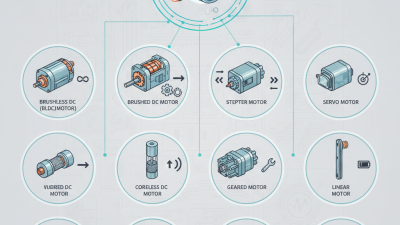
Mini motors come in several practical forms, each suited to a different movement problem. Brushed DC motors offer simple speed control and low initial cost. They appear in small pumps, toys, fans, valves, and portable tools. Their brushes wear over time, especially under heavy loads or continuous operation. That limitation is easy to underestimate.

Brushless DC motors use electronic commutation instead of physical brushes. They provide longer service life, quieter operation, and better efficiency. Designers often install them in medical equipment, cooling systems, cameras, and compact automation devices. However, they require a suitable controller, which adds wiring and design complexity. Stepper motors move in controlled increments. They are useful in printers, laboratory instruments, camera sliders, and positioning systems. Their accuracy depends on load, speed, and control settings. A missed step can remain unnoticed.

Gear motors combine a motor with a gearbox. They deliver higher torque at lower speed, making them suitable for robotic joints, small conveyors, electric locks, and adjustable mechanisms. Coreless motors respond quickly because their lightweight rotor reduces inertia. They work well in miniature pumps, precision instruments, and handheld equipment. Vibration motors create controlled oscillation for alerts, massage devices, and compact user interfaces. Field testing matters here. A motor that sounds smooth on a workbench may vibrate badly inside a finished product. Global buyers should check voltage, torque, duty cycle, noise, temperature rise, shaft size, and testing records. Specifications help, but they never tell the whole story.

How Global Buyers Compare Mini Motor Performance and Quality

What Is a Mini Motor and How Do Global Buyers Choose One?

Global buyers compare mini motors through measurable performance, not appearance alone. Rated voltage, speed, torque, and current should match the actual machine load. A motor running at 12,000 rpm may still fail under continuous resistance. No-load speed can mislead.

Quality becomes clearer during testing. Buyers should check temperature rise after extended operation, startup response, vibration, and operating noise. Shaft alignment matters, especially in pumps, valves, and compact automation equipment. Small errors may create uneven wear. Protection against dust and moisture also deserves attention in changing climates.

Tips: Request test data from the same production batch. Compare efficiency at the working load, not only at maximum speed. Ask about winding consistency, bearing life, inspection frequency, and traceable quality records. Sample testing is useful, but one successful sample proves little. A motor may perform well in a cool laboratory and struggle inside a warm enclosure. Buyers should also review tolerance ranges, since perfect specifications rarely exist. That part is easy to overlook. Reliable suppliers explain limits clearly and support independent verification before large-volume purchasing.

What to Check Before Choosing a Mini Motor Supplier

A mini motor looks simple, but supplier selection is rarely simple. Global buyers should check torque, speed, voltage, duty cycle, noise, heat, and expected service life. A motor that fits a drawing may still fail inside a small pump or medical instrument.

The IEA estimates that electric motor systems consume about 50% of global electricity. Efficiency is therefore more than a technical detail. Ask suppliers for measured efficiency, load-point data, thermal test results, and test conditions. IEC 60034 test methods can improve comparison between factories. Do not accept “high efficiency” without numbers. That phrase is too vague.

Quality systems matter. The ISO Survey 2023 recorded more than 1.2 million ISO 9001 certificates worldwide. Certification does not guarantee perfect motors, but it shows whether documented controls exist. Request process flow charts, incoming inspection records, winding resistance limits, and sample failure reports. Check traceability from copper wire to final inspection. Ask how many samples are tested per batch.

Supplier audits should also review tooling, calibration dates, spare-parts planning, and change-control procedures. Confirm the supplier can support small trial orders before accepting large volumes. Cost is important, but unstable lead times can damage production schedules. I have seen buyers focus too heavily on unit price. That is a mistake worth admitting. A quieter motor, stronger documentation, and repeatable testing may cost more, yet reduce total ownership risk. Allow room for doubt. Performance claims still need independent verification.

What Is a Mini Motor and How Do Global Buyers Choose One? - What to Check Before Choosing a Mini Motor Supplier

Practical comparison data for evaluating miniature motor suppliers and product suitability

Reference note: The figures below are typical engineering ranges for miniature DC, gear, brushless, stepper, and vibration motors. Actual performance depends on motor size, load, duty cycle, operating temperature, and design validation.
Evaluation Dimension Typical Mini-Motor Data Why Global Buyers Check It Supplier Evidence to Request
Motor Type Brushed DC, brushless DC, planetary or spur gear motor, stepper motor, or vibration motor The motor type determines control complexity, service life, noise, torque, and cost. Technical datasheet, motor drawings, operating principle, and recommended application range
Rated Voltage Common miniature motor ratings include 3 V, 6 V, 12 V, 24 V, and 48 V DC Voltage must match the battery, power supply, controller, and safety requirements of the end product. Rated voltage, allowable voltage range, reverse-polarity guidance, and start-up current data
Motor Diameter and Length Typical outer diameters range from approximately 6 mm to 42 mm; length varies by winding, gearbox, and output configuration. Compact dimensions are essential when the motor must fit inside handheld devices, pumps, valves, toys, tools, or medical equipment. 2D dimensional drawing, 3D CAD file, shaft tolerances, mounting dimensions, and keep-out zones
No-Load Speed Many small DC motors operate from approximately 3,000 to 30,000 rpm without a gearbox; geared output speed is commonly about 5 to 1,000 rpm. Speed affects cycle time, noise, heat generation, and the need for electronic speed control or gearing. Speed-torque curves, no-load current, speed tolerance, and test conditions
Rated Torque Small direct-drive motors may provide roughly 0.1 to 30 mN·m; compact geared motors can provide approximately 10 to 1,000 mN·m depending on gear ratio and size. The motor must deliver sufficient continuous torque without overheating or stalling. Continuous torque, peak torque, stall torque, duty cycle, and gearbox efficiency data
Current Consumption No-load current may be below 100 mA for some small motors; operating current can range from several hundred mA to several amperes under load. Current determines battery life, connector selection, driver capacity, wiring size, and thermal design. No-load, rated-load, peak, and stall-current measurements taken at defined voltage and temperature
Operating Life Brushed motors may be designed for hundreds to several thousand operating hours; brushless motors can often achieve longer life when bearings and electronics are properly rated. Expected life affects warranty exposure, maintenance planning, replacement cost, and product reliability. Life-test method, load profile, bearing specification, brush material, commutator design, and failure criteria
Noise and Vibration Miniature motor noise commonly varies from about 35 to 70 dBA depending on speed, gearbox, mounting, and measurement distance. Low noise is important for consumer electronics, office equipment, medical devices, and indoor appliances. dBA test report, vibration measurement, test distance, test fixture, and sample operating condition
Gearbox Selection Spur gears are economical and efficient; planetary gears provide higher torque density; worm gears offer high reduction and may provide self-locking behavior. The gear system influences backlash, efficiency, torque capacity, output speed, noise, and positioning accuracy. Gear ratio, backlash, efficiency, radial and axial load limits, lubricant specification, and service life
Position and Speed Feedback Optional feedback may include Hall sensors, optical encoders, magnetic encoders, or limit switches. Feedback is required when the application needs accurate speed regulation, position control, or stall detection. Sensor resolution, pulse count, electrical interface, wiring diagram, and controller compatibility
Thermal Performance Typical operating environments are approximately −20 °C to 60 °C; selected designs may support wider temperature ranges. Temperature affects winding resistance, magnet strength, lubricant performance, electronics reliability, and service life. Temperature-rise test, insulation class, maximum winding temperature, derating curve, and storage limits
Ingress Protection Open-frame miniature motors may have limited environmental protection; sealed versions may be specified with an IP rating when tested accordingly. Dust, water, oil, and cleaning exposure can cause corrosion, bearing failure, or electrical faults. IP test report, sealing design, corrosion test results, and approved environmental limitations
Electrical Safety Key controls include insulation resistance, dielectric withstand, creepage and clearance, wire insulation, and protection against abnormal operation. Safety documentation supports regulatory approval and reduces risks during certification and mass production. Electrical safety test records, material declarations, insulation specifications, and compliance documentation
Quality Consistency Important control points include winding resistance, current, speed, torque, noise, dimensions, and visual defects. Stable lot-to-lot performance reduces assembly problems, field failures, and incoming inspection costs. Inspection plan, sampling standard, calibration records, traceability process, and nonconformance procedure
Prototype and Customization Common customization areas include voltage, winding, shaft, connector, mounting flange, gearbox ratio, encoder, and cable length. A supplier capable of engineering changes can reduce redesign time and improve product integration. Prototype lead time, engineering-change process, sample approval record, tooling ownership, and minimum order quantity
Supply Capacity Capacity should be evaluated by monthly output, assembly lines, critical component availability, and backup production arrangements. A technically capable supplier may still be unsuitable if it cannot support forecast increases or maintain delivery reliability. Capacity statement, production-flow chart, lead-time commitment, continuity plan, and shipment performance records
Total Cost of Ownership Purchase price is only one element; energy use, driver cost, tooling, inspection, maintenance, failure rate, freight, and warranty cost should also be considered. The lowest unit price may create higher system cost if the motor requires extra controls, frequent replacement, or extensive incoming inspection. Complete quotation, tooling and sample charges, packaging details, warranty terms, replacement policy, and delivery terms
Buyer decision rule: Select a mini motor only after confirming the required speed, continuous torque, peak load, duty cycle, temperature range, dimensions, noise limit, life target, and supplier quality evidence with representative samples.