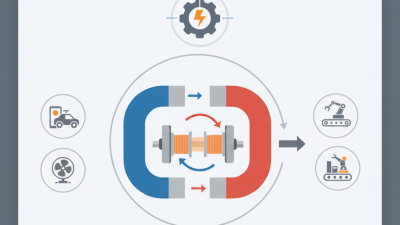
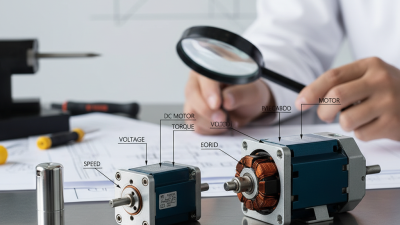
China is a major sourcing option for global buyers seeking DC motors for automation, mobility, appliances, and industrial equipment. Yet a long supplier list does not make the choice simple. Motor designs can look similar online while differing in winding materials, bearing quality, control options, and service life. Small details matter.
This guide introduces notable DC motor manufacturers in China and explains how buyers can assess them beyond a polished catalog. It considers product range, customization, production capabilities, quality controls, export experience, and communication. Buyers searching “Dc Motor In China” should also compare the motor’s rated voltage, torque, speed, duty cycle, and operating environment with their actual application. A sample test can reveal noise, heat, vibration, or fit issues that product photos cannot show.
A company’s claims deserve careful checking. Request technical datasheets, inspection records, and clear answers about lead times, warranty terms, and spare parts. Where relevant, verify certifications against the specific model and target market rather than assuming they cover every product. Factory audits or independent testing may help with larger orders, though they add time and cost. No ranking can replace application-specific evaluation. Even experienced buyers may find that samples perform differently from expectations, so confirm acceptance criteria before production begins. This overview offers a practical starting point, not a substitute for engineering review or direct supplier due diligence.
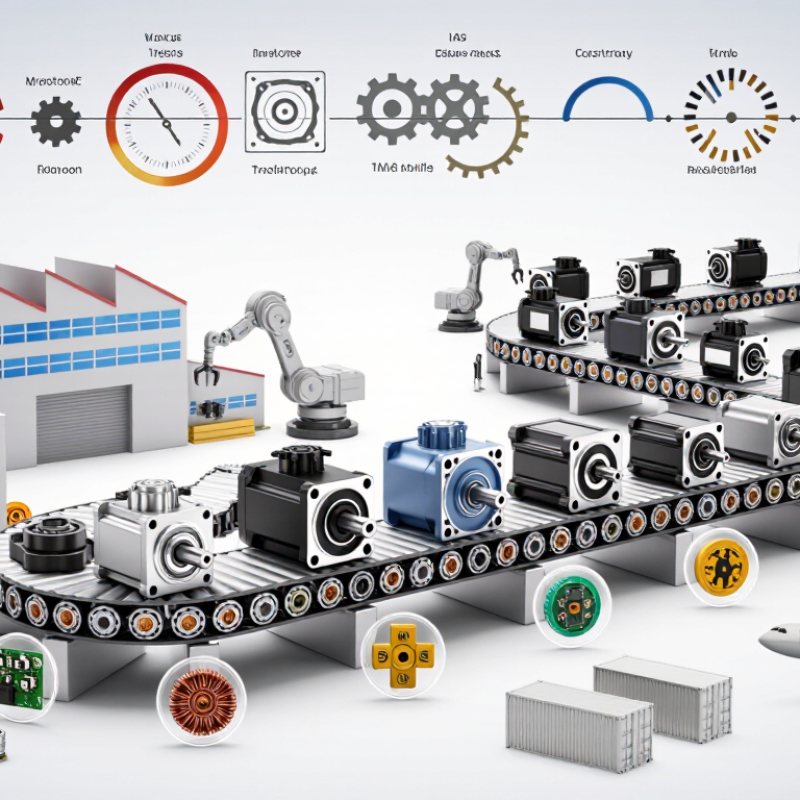
China’s DC motor suppliers commonly offer brushed and brushless designs, but the right choice depends on load behavior, control needs, and maintenance access. Brushed motors use a commutator and carbon brushes, making speed control straightforward and drive electronics relatively simple. Brush wear adds service intervals. Brushless DC motors switch electronically, reducing contact wear and supporting precise speed control, though they need a compatible controller. Small details matter. On a compact conveyor, repeated starts and a heavy belt can reveal weak starting torque before the catalog’s no-load speed becomes useful.
Compare rated voltage, continuous torque, speed range, efficiency, stall current, insulation class, and thermal limits. Ask whether figures apply at the shaft or motor terminals. The IEA’s 2011 report, Energy-Efficiency Policy Opportunities for Electric Motor-Driven Systems, estimated that motor-driven systems consume about 45% of global electricity. This covers motor systems broadly, not DC motors alone. For comparable efficiency claims, request test conditions and check measurement methods against IEC 60034-2-1. Also verify duty cycle, ambient temperature, enclosure protection, and controller losses. A published efficiency number can mislead when cooling, gearing, or actual loads differ. Treat it as a starting point, not a promise.

The chart shows broad, indicative efficiency ranges at rated operating conditions—not China-specific market averages or manufacturer data. Actual efficiency varies with motor size, design, speed, load, and controller. When comparing suppliers, check rated voltage, speed, torque, output power, current, and efficiency under the same test conditions.
Chinese DC motor manufacturers are easier to compare by specialization than by catalog size. Brushed permanent-magnet motors suit simple, cost-sensitive equipment. Brushless DC designs fit applications needing quieter operation, speed control, and longer service life. Gear motors add torque in compact spaces, while coreless designs prioritize low inertia and quick response. Different jobs, different trade-offs.
The International Energy Agency’s 2011 report, Energy-Efficiency Policy Opportunities for Electric Motor-Driven Systems, estimates that motor-driven systems use about 45% of global electricity. That figure covers many motor types, not DC motors alone, but it highlights why efficiency matters. The U.S. Department of Energy’s motor-system sourcebook also recommends assessing the full drive system, including controls and the driven load. A motor’s rated efficiency cannot tell the whole story.
For sourcing, request curves for torque, speed, current, and temperature rise—not just a headline wattage. Ask whether the supplier can test samples under your actual duty cycle. A small conveyor may need steady torque; a handheld device may need low weight and rapid starts. Catalog specifications can look precise. They still may not reflect real operating conditions. Verify noise, mounting dimensions, winding options, and sample-to-production consistency before approving a design.
When comparing DC motor manufacturers in China, match each quotation to the actual load, not just the motor’s headline rating. Ask for continuous and starting torque, then check whether the required torque is available at your operating speed. A conveyor may need steady torque for hours, while a small actuator may face brief, repeated peaks. Different jobs, different stresses.
Request speed data under load, not only the no-load figure. Confirm nominal voltage and allowable variation against your power supply, including voltage drop in long cables. Duty matters too: share operating hours, rest periods, starts per hour, and ambient temperature. A motor rated for intermittent use may overheat in continuous service. Ask how the supplier tested it.
Compare suppliers using the same operating conditions and configuration. Request test records showing current, temperature rise, speed, and torque; confirm gearboxes or controllers are included in the quoted setup. Check shaft dimensions and mounting details against your drawings. Small mismatches can delay assembly. If a supplier cannot provide a clear test basis, the comparison is incomplete. It may still be a capable factory, but the evidence needs another look. The first quote is rarely the whole story.
Use this specification checklist to compare motor quotations on an equivalent basis. The technical references below are general engineering guidance, not ratings for any specific manufacturer or product.
| Comparison dimension | What to specify | Useful technical reference | Evidence to request from the supplier |
|---|---|---|---|
| Continuous torque | Required shaft torque at the operating speed, including the load profile and any transmission losses. | For a rotating motor, estimated rated torque in N·m can be calculated as: Torque = 9550 × power (kW) ÷ speed (rpm). For example, 0.75 kW at 1,500 rpm is approximately 4.77 N·m. | Rated torque and rated operating point on the datasheet; confirm whether torque is specified at the motor shaft or after a gearbox. |
| Peak and starting torque | Maximum torque needed for starting, acceleration, overcoming breakaway load, or short-duration overloads. | Peak or stall torque is not the same as continuous rated torque. A motor’s permitted peak duration depends on its thermal limits and controller. | Starting, peak, or stall torque values; allowable duration and repetition rate; current required; and any controller limitations. |
| Operating speed | Normal loaded speed, required adjustment range, acceleration time, and any minimum or maximum speed. | Rated speed is generally a loaded operating value. No-load speed is a different condition and should not be used as the expected operating speed under load. | Rated speed and its test conditions; speed-torque curve; operating range; and speed regulation or feedback details where relevant. |
| Supply voltage | Nominal DC bus or armature voltage, allowable voltage range, polarity, and power-supply or controller type. | 12 V, 24 V, and 48 V are common low-voltage DC system values. The appropriate motor voltage depends on the application and available supply; these values are not interchangeable without checking the motor and controller ratings. | Rated voltage, permitted operating range, rated current, wiring diagram, and confirmation that the motor is compatible with the intended controller and supply. |
| Current and power | Continuous current, startup or peak current, rated output power, and the supply’s ability to support transient demand. | Electrical input power and mechanical output power are different because of motor losses. Current at startup or stall can be substantially higher than normal operating current. | Rated current, peak or stall current, output power, efficiency data, and recommended fuse or controller current capacity. |
| Duty rating | Whether the motor runs continuously, for timed operating periods, or in repeated on/off cycles; specify run time, rest time, and starts per hour. | IEC 60034-1 includes duty types such as S1 (continuous duty), S2 (short-time duty), and S3 (intermittent periodic duty). For periodic operation, duty cycle is commonly expressed as on-time ÷ total cycle time × 100%. | Declared duty type and the exact operating cycle used for the rating. Do not assume a motor rated for intermittent operation can provide the same torque continuously. |
| Thermal and ambient conditions | Ambient temperature, cooling method, installation orientation, enclosure, and any altitude or ventilation constraints. | Allowable output can depend on cooling and ambient conditions. Insulation thermal class and winding temperature limits should be stated in the applicable motor documentation. | Insulation class, temperature limits, cooling arrangement, derating guidance, and the stated conditions for the rated output. |
| Protection and environment | Exposure to dust, water, chemicals, vibration, or outdoor conditions; specify the required enclosure protection. | IP code classifications are defined by IEC 60529. The required IP rating should match the actual installation and exposure; an IP code alone does not describe every environmental capability. | Declared IP rating and test or conformity documentation; confirm whether the rating applies to the motor as supplied and with its connectors installed. |
| Configuration and documentation | Brushed or brushless DC design, shaft dimensions, mounting, connectors, feedback devices, and any gearbox requirements. | Motor type and mechanical configuration affect controller compatibility, maintenance needs, dimensions, and the torque and speed available at the output. | Dimensioned drawing, datasheet, wiring information, performance curves, inspection records, and written confirmation of the quoted configuration. |
Comparison tip: Ask every supplier to quote against the same voltage, load torque, operating speed, duty cycle, ambient conditions, and mounting requirements. Compare continuous ratings separately from short-duration or stall values.
For global buyers sourcing DC motors in China, duty and enclosure ratings deserve close inspection. IEC 60034-1 defines ten duty types, from S1 continuous operation to S10 operation at discrete constant loads and speeds. A motor marked S1 may suit a steady conveyor, but not necessarily a machine that starts and stops every few seconds. For cyclic loads, ask for the declared duty type, load cycle, starting frequency, and thermal limits. Small details matter.
The International Energy Agency’s 2011 report, Energy-Efficiency Policy Opportunities for Electric Motor-Driven Systems, estimated that such systems used about 46% of global electricity. That figure covers motor-driven systems, not DC motors alone, but it shows why correct sizing matters.
IEC 60529 IP codes describe protection against solid objects and water. In IP55, the first digit indicates dust protection; the second indicates protection against water jets. It is not a waterproof guarantee.
Ask suppliers for test documentation matching the actual enclosure and installation conditions, especially near washdown areas or exposed machinery. A catalog code alone is thin evidence. Check the nameplate, duty-cycle data, and test records together; even then, site conditions can surprise you.
When comparing DC motor manufacturers in China, export readiness is more than a polished catalogue. Ask for recent inspection records covering winding resistance, no-load current, noise, vibration, and temperature rise. Request a sample from the production line, not only a hand-selected showroom unit. Check that batch codes connect each motor to its test results. Small details matter. A loose terminal screw may signal a process issue, though one sample cannot prove a pattern.
Confirm lead times in writing for sample approval, production, and packing. Clarify whether quoted dates begin after deposit, drawing approval, or final specification approval. Ask how the supplier handles shortages in components such as bearings or magnets. A realistic schedule may be less attractive than a fast promise. Still, plans can slip, so allow buffer time and confirm shipping documents before dispatch.
Warranty terms should state the coverage period, exclusions, evidence required, and who pays freight for replacement parts. Ask for a technical contact, response hours, and troubleshooting guidance for issues such as overheating or brush wear in brushed motors. Test the support process before ordering at scale. A quick, useful reply is reassuring; vague answers deserve another question.