A DC motor can earn its place on an industrial floor through controllable speed, useful starting torque, and a straightforward response to changing loads. Picture a conveyor starting with a heavy, uneven batch. The operator may need smooth acceleration rather than a sudden jolt. In suitable systems, a DC drive can provide that control and support precise adjustment across operating conditions. That matters.
Stephen J. Chapman, author of Electric Machinery Fundamentals, provides a useful engineering perspective. Paraphrased, not quoted verbatim: “Choose a motor for the load and its operating conditions, not its nameplate alone.” This is a practical starting point, not a universal rule. A Dc Motor In a production line may suit applications that need adjustable speed or responsive torque, but engineers must also consider maintenance, efficiency, controls, and the plant’s power supply. Brush wear can add service needs in brushed designs. Brushless DC options avoid that specific issue, yet require compatible electronic control. The details count.
This article examines where DC motors perform well, how their control characteristics affect industrial work, and what trade-offs deserve attention. It also considers selection factors such as duty cycle, load profile, and environment. A motor that looks ideal on a specification sheet may disappoint under real operating conditions. That gap is worth questioning. Careful application review helps teams make a more reliable choice.

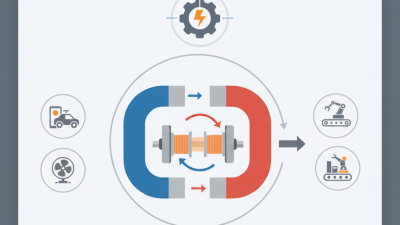
A DC motor converts electrical energy into rotation using the interaction between magnetic fields and current-carrying conductors. Current in the armature creates a magnetic force, producing torque at the shaft. As the rotor turns, a commutator switches the current direction so the torque continues. That matters. The result is controlled motion that can start, stop, and change speed as a machine’s task requires.
Changing the supplied voltage can adjust motor speed, while pulse-width modulation offers precise control without continuously reducing power as heat. For applications that need repeatable positioning, a controller can use encoder feedback to compare actual shaft movement with the target. A conveyor, for example, may slow near a transfer point instead of relying on a fixed-speed drive. But feedback adds setup and tuning work; it is not automatically better.
Load conditions still shape performance. A motor lifting a heavy fixture needs enough starting torque, while sudden load changes can cause speed to dip. Brushes and commutators also wear, especially under frequent starts, so inspection matters. Not perfectly. A DC motor is not the right answer for every plant: maintenance, operating environment, and control needs all deserve a close look before selection.
Why Use a DC Motor in Industrial Applications?
Operating Features That Support Industrial Work
Industrial work often asks a motor to start under load, hold a steady speed, and respond quickly when conditions change. A DC motor can suit these duties because its speed is readily adjusted by changing armature voltage, while useful torque is available at low speeds. This can help on conveyors, small hoists, and positioning tables, where a heavy load needs to move without a sharp lurch. Good control matters.
In practice, operators may use a drive to set acceleration and limit current during startup. This can reduce mechanical shock and help protect gears, belts, and couplings. A technician can monitor current and temperature at the motor housing; rising readings may point to excess load, poor ventilation, or worn components. Details count. Performance still depends on motor design, cooling, and drive settings.
There is a trade-off. Brushed DC motors need periodic inspection of their brushes and commutators, especially in dusty or high-duty environments. Brushless DC designs avoid that wear point, but need compatible electronic controls and careful setup. A DC motor is not automatically the easiest choice. Before specifying one, plant teams should check load cycles, available power, enclosure rating, and service access. A missed maintenance interval can still cause an unplanned stop.
Operating Features That Support Industrial Work
This illustrative normalized model shows speed decreasing as load torque rises, assuming a 20% speed drop between no load and rated torque. Actual motor performance varies by design. DC motors are useful where controllable speed and responsive torque are important.
Why Use a DC Motor in Industrial Applications?
DC motors are useful where equipment needs responsive speed control or strong starting torque. On a packaging line, an operator may need a conveyor to creep forward while aligning a carton, then run faster during production. A DC drive can make those adjustments smoothly. The fit is practical. DC motors also suit battery-powered industrial vehicles, such as floor-cleaning machines and material-handling carts, where the power source is already direct current. In lifting equipment, controlled low-speed movement can help position a load without abrupt starts. Actual performance depends on the motor, drive, load, and operating conditions.
They can also make sense when a facility already has DC equipment and replacing the whole system would add cost or downtime. A maintenance team may know how the existing motor behaves and have spare parts available. That familiarity has value, though it should not excuse ignoring wear. Brushed motors need periodic inspection because brushes and commutators can degrade, especially in dusty or heavily used settings. A DC motor is not automatically the simplest choice. Engineers should compare control needs, maintenance access, duty cycle, and energy use before selecting one. Sometimes the older setup works well; sometimes its service history tells a different story.
| Industrial Application | Why a DC Motor Can Be Practical | Typical Operating Benefit | Important Consideration |
|---|---|---|---|
| Battery-powered material-handling equipment | DC motors can operate directly from a DC battery supply, which can simplify the power system. | Useful for mobile equipment such as powered carts and some material-handling vehicles. | Motor and controller must suit the battery voltage, current capacity, and duty cycle. |
| Conveyors with variable-speed requirements | Motor speed can be controlled by adjusting the applied voltage or using an appropriate drive. | Supports speed adjustment for processes that handle different products or operating rates. | Choose a motor and drive rated for the required load, starting conditions, and operating hours. |
| Hoists and lifting equipment | DC motor systems can provide controllable starting and braking when paired with suitable controls. | Can help manage acceleration and stopping during lifting and lowering cycles. | Safe lifting depends on the complete system, including brakes, controls, and mechanical components. |
| Machine tools and positioning systems | DC drives can offer adjustable speed and reversible rotation, depending on the motor and control setup. | Useful where operators need to change direction or adjust motion during a process. | Applications requiring precise positioning may need feedback devices and a suitable control system. |
| Auxiliary drives and pumps | DC motors can be a convenient option where a compatible DC supply is already available. | May reduce the need for power conversion in systems designed around DC power. | Check the pump load curve, starting current, cooling, and enclosure requirements. |
| Legacy industrial machinery | Replacing a DC motor with a compatible unit can preserve an existing DC drive arrangement. | Can avoid redesigning machinery when the original system remains suitable and maintainable. | Assess component condition, spare-part availability, safety requirements, and lifecycle costs. |
Why Use a DC Motor in Industrial Applications?
DC motors offer direct, responsive control of speed and torque. Operators can adjust output to match changing loads, from a slow conveyor belt to a lifting mechanism starting under weight. They also provide strong starting torque and straightforward direction reversal. That matters on the floor. In systems requiring frequent starts, stops, or speed changes, these traits can simplify operation and reduce the need for complex mechanical adjustments.
The International Energy Agency’s report Energy Efficiency Policy Opportunities for Electric Motor-Driven Systems estimates that motor-driven systems account for about 45% of global electricity use. This figure covers many motor types, not DC motors alone, but it highlights why efficient motor selection matters. DC motors can pair well with variable-speed processes, while brushless designs avoid brush wear and suit applications needing lower maintenance. The right choice still depends on load, duty cycle, controls, and operating environment.
There are trade-offs. Brushed DC motors require inspection as brushes wear, and poorly matched controls can waste energy or cause uneven motion. A motor that performs smoothly in a test may behave differently under dusty conditions or repeated heavy starts. It is not always the neatest choice. Engineers should compare lifecycle maintenance and efficiency, not just purchase price, before specifying one.
Selecting a DC motor starts with the machine’s real operating conditions, not its peak rating. Record the required speed, starting torque, load inertia, and daily duty cycle. A conveyor that starts under load needs different torque from a fan that accelerates gradually. Do not size the motor from steady running power alone. Brief current peaks can trip an undersized drive. Check the motor’s torque-speed curve against the full operating range, and allow a practical margin without oversizing. Too much margin can reduce efficiency and make control less responsive. A little margin matters.
Integration deserves equal attention. Match the motor voltage to the supply and select a drive that can handle startup current and expected braking loads. Confirm that the mounting face, shaft, and coupling fit the machine; even small misalignment can cause vibration and bearing wear. Consider ambient temperature, dust, moisture, and available cooling when choosing an enclosure. Keep wiring secure and route control signals away from noisy power cables where practical. For brushed motors, include brush inspection in the maintenance plan. For brushless designs, check controller compatibility and feedback requirements. Field measurements may still challenge the original estimates. That is worth admitting. A short test under actual load can reveal heat buildup, speed variation, or unexpected starts before the motor enters routine service.