How to Choose the Best 7 RPM Motor in 2026?
Choosing the best 7 Rpm Motor in 2026 is not simply a matter of matching a number on a product page. Seven revolutions per minute sounds precise, but actual speed can change with load, voltage, and gearbox design. A motor that turns a display slowly may struggle to move a loaded platform. The difference matters.
Start by defining the job. Note the required torque, operating time, available power supply, mounting space, and surrounding conditions. Then compare motor type, gearbox materials, shaft dimensions, and control options. Check the manufacturer’s datasheet for rated speed and torque under stated conditions, not just unloaded speed. If those details are missing, ask for clarification or test a sample before committing to a larger order. That step can feel inconvenient. It can also prevent a costly mismatch.
This guide explains how to evaluate these factors without treating one specification as a complete answer. It also looks at noise, heat, service life, and practical installation details, such as whether the shaft aligns with your mechanism. No single motor is best for every application. Even a well-documented selection may need adjustment after real-world testing. Use the criteria here to build a shortlist, verify the claims that matter, and choose a 7 Rpm Motor suited to the work it must actually perform.
Define What a 7 RPM Motor Is and Identify Its Intended Use
A 7 RPM motor turns its output shaft about seven times per minute, or once every 8.6 seconds. That is slow. The rating describes speed, not strength: motors running at 7 RPM can still differ greatly in torque, startup behavior, and duty life. Many are geared motor assemblies, combining a faster electric motor with a reduction gearbox. Check whether the stated speed is nominal or measured under load. A lightly loaded shaft may run differently once attached to a mechanism. Small details matter.
Define the job before comparing motors. A slow rotating display, feed roller, or positioning mechanism may need steady motion, while a lifting application demands careful attention to load, holding behavior, and safety margins. Measure the force at the shaft, estimate how often the motor will start and stop, and note the available space and power supply. A paper calculation can still miss friction or uneven loading. Test with the real mechanism when possible. Watch for stalling, excess heat, and speed changes under load; seven RPM alone does not guarantee a suitable fit.
Choose the Motor Type for Your Application
How to Choose the Best 7 RPM Motor in 2026?
Choose the Motor Type for Your Application
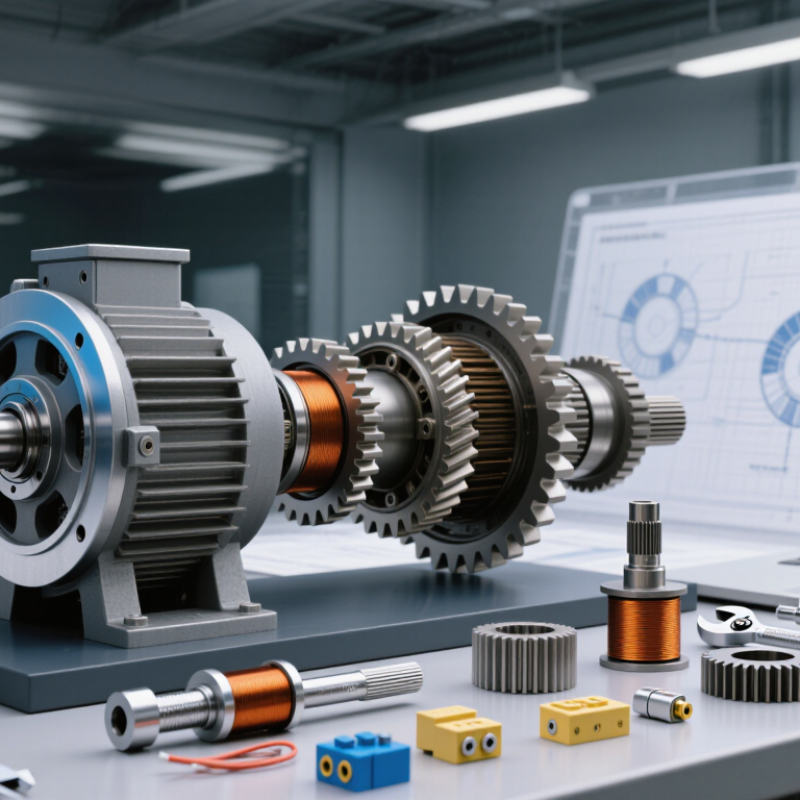
A 7 RPM output usually comes from a motor paired with a gearbox. Choose the motor type around the load, control method, and operating pattern—not speed alone. A slow conveyor that starts under load needs different behavior from a small display turntable. Measure the torque required at startup, not only during steady movement. A little overlooked detail: friction changes as equipment wears.
For steady operation, an AC induction gearmotor is often a practical choice. It suits conveyors, mixers, and other equipment that runs for long periods. A brushed DC motor offers straightforward speed control, but brush wear may mean more maintenance. Brushless DC motors can provide efficient, responsive control, though their electronic drives add setup complexity. Stepper motors suit applications needing repeatable positioning at low speed, but may lose steps if the load exceeds their available torque.
The U.S. Department of Energy’s 2014 Improving Motor and Drive System Performance sourcebook reports that motor-driven systems account for about 68% of electricity use in U.S. manufacturing. That figure covers many motor types, but it highlights why matching motor and load matters. Check duty cycle, supply voltage, gearbox rating, and heat buildup. Then test the assembly with the real load. Bench results can mislead. A motor that reaches 7 RPM unloaded may slow, overheat, or stall when connected to the actual mechanism.
Calculate Torque, Load, and Operating Requirements
A 7 RPM motor turns slowly, but that does not guarantee enough usable torque. Start by measuring the load at the output shaft. For a drum, multiply the force at its rim by the drum’s radius to estimate the required torque. Keep units consistent, such as newtons and metres. Add the weight of attached parts, friction, and any force needed to start moving the load. Starting can demand more torque than steady operation.
Allow some margin. A real mechanism is rarely as smooth as a calculation. This estimate is only a starting point; friction can change with wear, alignment, and temperature. Check the motor’s rated output torque, not just its speed, and confirm that it can handle startup loads without overheating. Then review operating requirements: supply voltage, available current, duty cycle, mounting space, and ambient conditions. If the motor runs continuously, compare its continuous torque rating with the actual load. For intermittent use, note how long each run lasts and how often it repeats. Test with the assembled mechanism when possible, and measure current and temperature during a representative cycle. A brief bench test may miss problems that appear after an hour.
How to Choose the Best 7 RPM Motor in 2026? - Calculate Torque, Load, and Operating Requirements
Selection notes: These are illustrative engineering examples, not universal motor specifications. At 7 RPM, angular speed is approximately 0.733 rad/s, so mechanical output power is P = torque × 0.733; 1 N·m corresponds to approximately 0.733 W. Choose a motor or geared motor whose rated output torque is available at the required output speed. Allow for gearbox losses when sizing input power, and check supply voltage, duty cycle, ambient temperature, mounting, radial and axial loads, and starting or peak torque.
Check Power, Mounting, and Environmental Compatibility
A 7 RPM rating describes speed, not useful output. Check torque and duty cycle before comparing motors. At 7 rpm, a 10 N·m load needs about 7.3 watts of mechanical power, before gearbox and electrical losses. Startup torque may be much higher, especially with a heavy gate, mixer, or conveyor. The U.S. Department of Energy’s motor systems sourcebook reports that motor-driven systems use about 69% of U.S. industrial electricity. That figure is a reminder: matching power and load matters beyond the purchase price. Not enough. Allow for heat, starts per hour, and real operating loads; a neat calculation can still miss a jam or a cold start.
Mounting and surroundings need equal attention. Confirm shaft diameter, foot or flange pattern, orientation, and allowable radial and axial loads against the equipment drawing. A few millimeters of misalignment can add vibration and bearing wear. Then check the enclosure rating. IEC 60529 defines IP protection codes; IP54 offers dust protection and protection against water splashes, while IP65 is dust-tight and resists water jets. Neither rating makes a motor suitable for every washdown chemical or temperature. Check ambient temperature, humidity, corrosion, and ventilation against the motor documentation. This is easy to overlook. I would verify the actual site conditions, not just the rating on a purchase sheet.
How to Choose the Best 7 RPM Motor in 2026?
Compare the mechanical output power required at different load torques. At a constant speed of 7 RPM, output power is calculated as torque × angular speed.
How to use this chart: These are calculated examples, not motor ratings. Choose a motor with sufficient continuous torque and power for your application, then verify shaft and mounting compatibility, duty cycle, and environmental protection requirements.
Compare Specifications and Verify Performance Before Buying
How to Choose the Best 7 RPM Motor in 2026?
Compare Specifications and Verify Performance Before Buying
A 7 RPM rating describes output speed, but it does not tell you how the motor behaves under load. Compare rated torque, operating voltage, current draw, shaft size, and duty cycle across candidate models. Check whether the stated speed is measured without a load or at a specified torque. That detail can change your choice. A motor that turns at seven revolutions per minute on a workbench may slow noticeably when connected to a heavy mechanism.
Before buying, test the motor with your intended load and power supply. Use a tachometer to check output speed, and record current after the motor runs for several minutes. Listen for grinding or irregular pulses, then check the housing for unusual heat. Small details matter. A datasheet may omit useful test conditions, so ask for clarification rather than assuming two ratings are directly comparable. It is easy to focus on speed and overlook mounting alignment; even a small mismatch can add noise and wear. Compare the measurements with your application’s needs, not just the headline RPM.