For global buyers, selecting among the Top 7 RPM Motor Manufacturers requires more than comparing catalog prices. “RPM” describes rotational speed, not a complete motor technology. A 7 Rpm Motor may suit a conveyor, mixer, valve actuator, or gear-reduced machine. Its real value depends on torque, duty cycle, efficiency, protection rating, and control compatibility.
The International Energy Agency has reported that electric motor systems consume roughly half of global electricity. The U.S. Department of Energy also identifies motor-driven equipment as a major share of industrial electricity demand. These figures make motor selection an energy decision, not merely a purchasing task. A motor that runs continuously in a dusty factory can create significant lifetime costs through losses, maintenance, and unplanned downtime.
This guide compares seven notable manufacturers for international buyers. It considers product range, efficiency data, certification practices, customization, service coverage, and application experience. Standards such as IEC 60034, IE efficiency classes, and ingress protection ratings deserve close attention. So do voltage frequency, shaft dimensions, bearing design, and spare-part availability. Small details matter.
Performance claims still need verification.
Supplier websites often present ideal test conditions. Actual results may vary with load, installation, ambient temperature, and drive settings. Buyers should request datasheets, test reports, warranty terms, and reference projects before approval. This comparison aims to provide a practical starting point, not an unquestionable verdict. The best manufacturer may differ for every project. Cost, reliability, and technical support must be judged together.
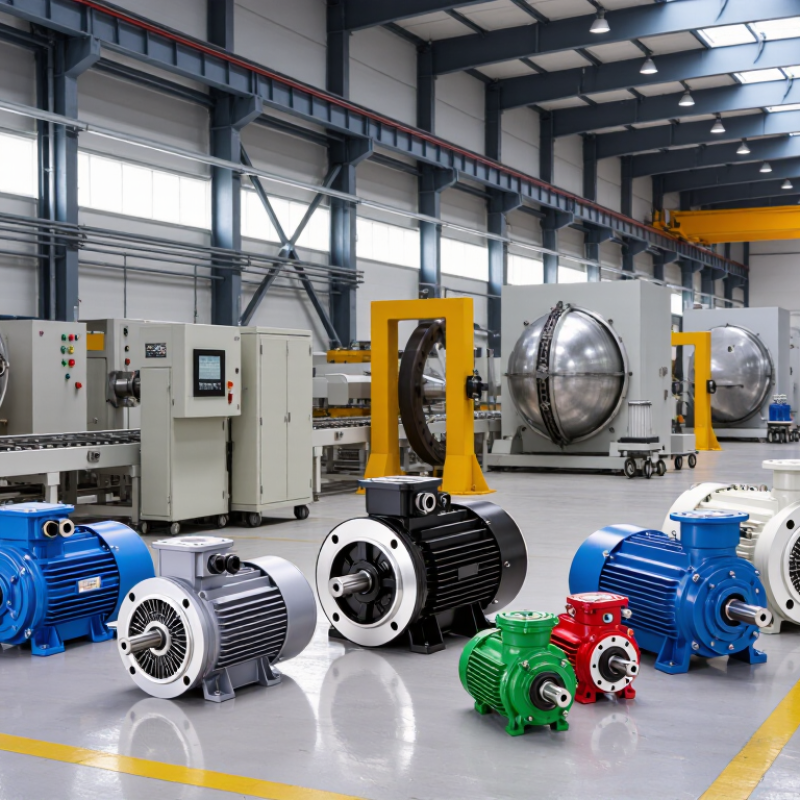
RPM motors convert electrical energy into controlled mechanical motion, measured by revolutions per minute. Their speed affects torque, noise, heat, and energy consumption. A motor running at 1,500 RPM behaves differently from one operating at 3,000 RPM, even with similar power ratings.
Global buyers use these motors in conveyors, pumps, fans, machine tools, agricultural equipment, and automated production lines. In my experience, application details matter more than catalog numbers. Load changes, ambient temperature, duty cycle, voltage, and local maintenance skills can change the correct choice. Seven leading manufacturers may offer reliable options, but performance depends on proper matching and installation. A technically impressive motor can still fail early when ventilation is poor or the gearbox is undersized.
Tips: Confirm rated RPM, starting torque, efficiency class, insulation rating, and protection level. Check whether replacement parts are available near the installation site. Ask for test records and clear warranty terms. Do not trust efficiency claims without operating conditions. Measure the real load when possible. This step is often skipped. That can be costly. Also, variable-speed applications may require an inverter-compatible motor and suitable bearings. Standards differ between markets, so verify voltage, frequency, certification, and mounting dimensions before ordering. One detail is easy to miss: a motor’s stated maximum speed may not be its safe continuous speed.

Top 7 RPM Motor Manufacturers for Global Buyers
How to Evaluate RPM Motor Manufacturers
Choosing an RPM motor manufacturer requires more than comparing catalog prices. Start by checking technical experience with your required speed range, torque, voltage, duty cycle, and operating environment. A reliable supplier should provide performance curves, thermal data, efficiency results, and tolerance limits. Ask for test records from recent production batches, not only laboratory samples.
Inspect the manufacturing process where possible. Review winding equipment, balancing procedures, insulation testing, rotor inspection, and final load testing. Quality systems matter, but actual traceability matters more. Each motor should have a clear production record, serial identification, and documented inspection points. Request evidence of relevant international standards and verified certificates. Unclear documents deserve careful questioning.
Communication can reveal practical competence. Send a detailed application sheet and compare the accuracy of each response. Strong manufacturers will identify missing information instead of making quick promises. Ask about replacement parts, warranty handling, delivery controls, and technical support across time zones. A small pilot order can expose packaging weaknesses, vibration issues, or inconsistent speed control. Do not judge everything from one successful sample. No checklist is perfect. I have learned that a low quote may hide testing, service, or customization costs. Independent inspection adds expense, but it can prevent a much larger failure after installation.
| Rank | Evaluation Dimension | Verified Technical Reference | What Global Buyers Should Check | Why It Matters |
|---|---|---|---|---|
| 1 | Rated Speed and Pole Configuration | For induction motors, synchronous speed is calculated as Ns = 120 × f ÷ p. At 50 Hz, typical synchronous speeds are 3,000 rpm for 2 poles, 1,500 rpm for 4 poles, and 1,000 rpm for 6 poles. | Confirm rated rpm, pole count, operating frequency, slip, load torque, and permissible speed range. 2/4/6/8 pole options 50/60 Hz | The correct speed profile ensures compatibility with pumps, fans, compressors, conveyors, and machine tools. |
| 2 | Efficiency and Energy Performance | IEC 60034-30-1 defines international efficiency classes for many line-operated AC motors, including IE1, IE2, IE3, and IE4. Efficiency requirements may vary by market and motor category. | Request certified efficiency data at 25%, 50%, 75%, and 100% load, along with test conditions and loss data. IE3 IE4 Load test report | Higher efficiency can reduce lifecycle electricity costs, especially in continuously operating equipment. |
| 3 | Variable-Speed Drive Compatibility | Motors operated with variable frequency drives require suitable insulation systems, bearing protection, cooling performance, and speed limits. IEC 60034-17 and IEC 60034-25 provide guidance for converter-fed motor applications. | Check inverter-duty insulation, dv/dt capability, minimum cooling speed, maximum overspeed, encoder options, and insulated bearings where required. VFD-ready Inverter duty | Proper compatibility helps reduce insulation stress, bearing currents, overheating, and premature motor failure. |
| 4 | Enclosure and Environmental Protection | IEC 60034-5 uses IP codes to classify protection against solid objects and water. IP55 commonly indicates protection against dust ingress that could interfere with operation and water jets from any direction. | Verify IP rating, cooling method, ambient temperature, altitude limits, humidity resistance, corrosion protection, and hazardous-area certification when applicable. IP55 TEFC Harsh environment | Correct enclosure selection protects the motor in dusty, wet, corrosive, outdoor, or washdown environments. |
| 5 | Electrical and Mechanical Standards | IEC 60034 covers rotating electrical machines, while NEMA MG 1 provides requirements and guidance for motors and generators commonly used in North American applications. These systems are not identical and should not be assumed interchangeable. | Confirm voltage, frequency, mounting dimensions, shaft tolerances, terminal-box position, insulation class, duty rating, and applicable regional standards. IEC 60034 NEMA MG 1 S1 duty | Standards alignment prevents installation problems and supports acceptance by consultants, inspectors, and end users. |
| 6 | Quality Management and Testing | ISO 9001 specifies requirements for a quality management system; it does not by itself certify a motor's performance. Routine tests and type tests should be supported by traceable records. | Ask for ISO 9001 certification scope, routine-test procedures, balancing records, vibration results, temperature-rise data, no-load current, and dielectric-strength test results. ISO 9001 Routine testing Traceability | Documented quality controls reduce variation between production batches and improve confidence in long-term reliability. |
| 7 | Global Service, Documentation, and Supply Capability | International buyers typically need product documentation, spare-parts support, warranty terms, export packaging, and compliance records. Delivery performance should be evaluated using documented historical evidence rather than advertising claims. | Evaluate technical drawings, datasheets, manuals, certificates, spare-parts availability, warranty response time, lead-time history, packaging standards, and after-sales coverage. Technical files Spare parts Export support | Strong documentation and service infrastructure lowers commissioning risk and simplifies maintenance across different countries. |
Profiles of the Top 7 RPM Motor Manufacturers should focus on capabilities, not polished claims. The high-speed specialist serves compressors, pumps, and test equipment. The heavy-duty producer builds motors for conveyors, mixers, and continuous factory use. A compact OEM manufacturer focuses on limited spaces and repeatable dimensions. Another supplier develops servo motors for accurate positioning. An energy-efficiency specialist reduces heat, noise, and operating costs. A custom engineering company adapts shafts, bearings, insulation, and control interfaces. The seventh profile represents a regional export manufacturer with flexible production and practical after-sales support.
Real experience matters during supplier evaluation. Ask for rated speed, torque curves, efficiency data, vibration limits, and thermal test results. Request samples when the motor will operate near its maximum RPM. A clean workshop, traceable inspection records, and consistent packaging often reveal more than sales language. Check whether the manufacturer can provide replacement bearings and technical drawings for future maintenance. A catalog may look complete, yet one missing test report can change the purchasing decision. No supplier is perfect. Even capable factories may underestimate delivery risks or communicate poorly across time zones.
Tips: Compare identical specifications. Confirm voltage, frequency, duty cycle, shaft size, and mounting dimensions in writing. Review warranty terms before negotiating price. Test noise and temperature after several operating hours, not only during a short demonstration. If the application is unusual, involve an electrical engineer early. That extra review may feel slow, but it can prevent costly redesigns, unexpected downtime, and unsuitable inventory.
Profiles of the Top 7 RPM Motor Manufacturers
This comparison uses seven standardized motor configurations commonly offered by global industrial motor manufacturers. The values show theoretical synchronous speed calculated from frequency and pole count: RPM = 120 × frequency ÷ poles. Actual operating speed is typically lower because of motor slip, especially in induction motors.
Choosing among the top seven RPM motor manufacturers requires more than comparing catalog prices. The International Energy Agency reports that motor-driven systems consume roughly half of global electricity. Therefore, efficiency can matter more than the initial purchase cost.
Check rated speed, torque curves, thermal class, vibration limits, and efficiency under partial load. IEC 60034-30-1 defines IE efficiency classes, giving buyers a reliable comparison framework. In real projects, an IE4 motor may reduce operating costs, but the payback depends on duty cycle and local energy prices.
Quality evidence should be practical and traceable. Request test reports, insulation details, bearing specifications, and production inspection records. The U.S. Department of Energy has repeatedly highlighted motor systems as a major industrial electricity user. This supports careful lifecycle analysis, not simple price shopping.
Support also matters. Ask about spare-part availability, response times, installation guidance, and warranty exclusions. A cheap motor with six weeks of downtime is not cheap. I have seen buyers overlook this uncomfortable detail.
Tips: Compare total cost over five years. Require a guaranteed efficiency value, not a marketing claim. Confirm whether quoted pricing includes testing, delivery, duties, and commissioning. Supplier rankings can change by region, voltage standard, and application. That is easy to forget. A manufacturer with excellent laboratory results may still provide weak field support. Record every assumption before selecting a supplier.
When comparing the seven shortlisted RPM motor manufacturers, global buyers should test supplier capability, not brochure claims. Motor efficiency affects both cost and emissions. The International Energy Agency reports that electric motor systems consume about half of global electricity. That scale makes small efficiency gaps expensive. Ask each supplier for tested efficiency curves, thermal-rise results, vibration limits, and load data across the required RPM range. IEC 60034-30-1 efficiency classes provide a useful comparison, but operating conditions still matter.
Speed stability matters in pumps, conveyors, compressors, and precision equipment. Request evidence from applications with similar torque, duty cycles, ambient temperatures, and voltage conditions. A motor that performs well at 1,500 RPM may behave differently under frequent starts or variable-frequency control. Confirm bearing design, insulation class, IP protection, noise levels, and harmonic tolerance. Short test videos help, though they are not enough.
Supplier reliability also depends on service after delivery. The U.S. Department of Energy identifies motor systems as a major share of industrial electricity use, making downtime costly. Check production capacity, quality records, spare-part availability, warranty terms, and regional response times. ISO 9001 certification supports process control, but it cannot replace factory audits or sample inspections. I would still leave room for doubt. Published data may reflect ideal laboratory conditions. A small pilot order can reveal packaging weaknesses, documentation gaps, and inconsistent RPM performance before a global contract is signed.