Why Choose a DC Motor for Your Industrial Applications?
Choosing the right motor for industrial applications is crucial. DC motors are increasingly recognized for their advantages. According to a recent market report by ResearchAndMarkets, the global DC motor market is projected to grow significantly, highlighting their rising importance in automation and robotics.
DC motors provide precise speed control and high torque at low speeds. They are efficient and have a longer lifespan than their AC counterparts. However, industries face challenges. For instance, while DC motors are versatile, they may require maintenance due to brushes. Understanding these nuances can help optimize performance.
In sectors like manufacturing and automotive, the benefits of a DC motor are clear. The flexibility of these motors allows for a variety of applications. Despite their advantages, careful consideration of specific use cases is essential. Embracing technology is vital for industrial success.
The Basics of DC Motors: An Overview for Industrial Use
DC motors are widely used in various industrial applications due to their unique design and functionality. They can provide precise control over speed and torque, making them suitable for tasks requiring accuracy. For instance, in conveyor systems, DC motors can adjust their speed based on the load, ensuring efficient material handling. This adaptability is one of their core strengths.
Another key aspect of DC motors is their simplicity in control. They work well with basic electronic components, allowing easy integration into existing systems. Maintenance is straightforward, with fewer parts exposed to wear and tear. However, this does not eliminate the need for regular checks and calibration. Over time, brushes may wear down, impacting performance.
The efficiency of DC motors is significant in energy management. They can reduce energy consumption in applications like robotics and automated machinery. But, it's essential to monitor their performance continuously. A decline in efficiency can indicate underlying issues. Understanding these aspects ensures optimal use of DC motors in industrial settings.
Key Advantages of Using DC Motors in Industrial Applications
DC motors are often the go-to choice for various industrial applications due to their unique benefits. One key advantage is their precise speed control. Industrial machinery frequently requires different speeds for different tasks. DC motors allow for easy adjustments, making them ideal for conveyor belts or robotic arms. This adaptability enhances efficiency in production lines.
Another advantage is the simplicity of their design. DC motors are generally smaller and lighter than their AC counterparts. This compactness is beneficial for applications with limited space. Moreover, their design contributes to lower maintenance requirements. Less wear and tear on components can lead to longer operational lifespans.
Despite their many benefits, DC motors do come with challenges. They may require more frequent servicing, particularly brushes and commutators. Operators must be vigilant to manage these elements effectively. This need for maintenance can sometimes impact productivity. Yet, with proper knowledge and experience, these drawbacks can be mitigated, ensuring that the advantages outweigh the disadvantages for many users.
Why Choose a DC Motor for Your Industrial Applications? - Key Advantages of Using DC Motors in Industrial Applications
| Advantage |
Description |
Application Example |
| Precise Speed Control |
DC motors offer excellent speed control through voltage adjustment, allowing for precise operation in various applications. |
Conveyor systems in manufacturing. |
| High Torque at Low Speed |
DC motors provide high torque even at low speeds, making them ideal for tasks requiring strong initial force. |
Robotics and automated assembly line mechanisms. |
| Simple Control System |
The control systems for DC motors are simpler and less expensive than those for AC motors, facilitating easier integration. |
Small warehousing equipment like automated guided vehicles (AGVs). |
| Compact Size |
Many DC motors are smaller and lighter compared to their AC counterparts, making them suitable for space-constrained applications. |
Portable power tools and handheld devices. |
| Easy Maintenance |
DC motors typically have a straightforward design with fewer components, leading to easier maintenance and longer lifespans. |
Applications in HVAC systems and industrial ventilation. |
Comparing DC Motors with Other Motor Types in Industry
DC motors are a popular choice in various industrial applications due to their unique advantages. When comparing them with AC motors and stepper motors, DC motors shine in terms of speed control and torque delivery. According to a report by the International Energy Agency, DC motors can provide up to 90% efficiency in specific applications, making them a reliable option for industries focused on energy savings.
In contrast, AC motors are limited in speed control, often requiring complex systems for variable speed operations. This complexity can lead to higher costs and maintenance. Additionally, stepper motors, while suitable for precision tasks, can struggle with torque at higher speeds. Many industries need robust torque and consistent performance, which often makes DC motors the preferred choice.
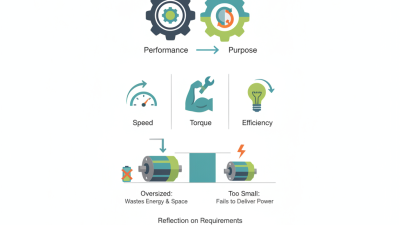
For optimal performance, ensure proper sizing of your DC motor. An undersized motor may lead to overheating and reduced lifespan. Conversely, an oversized motor could result in wasted energy. It's also vital to consider the specific application requirements when selecting a motor type. Regular maintenance checks can further extend the lifespan of your chosen motor, reflecting best practices in machinery management.
Applications of DC Motors in Various Industrial Sectors
DC motors play a pivotal role in various industrial sectors, thanks to their efficiency and versatility. In manufacturing, they are widely used in conveyor systems, ensuring smooth and adjustable speed control. This adaptability is crucial when handling fragile materials or changing product sizes. Industries report that DC motors can increase production efficiency by up to 30%, highlighting their significance.
In the automotive sector, the demand for electric vehicles (EVs) drives the need for reliable DC motors. According to industry reports, the global DC motor market is expected to grow at a CAGR of 5.3% from 2022 to 2030. This growth reflects the increasing importance of DC motors in advanced driver-assistance systems (ADAS) and electric power steering. Their compact design and high torque capabilities make them ideal for space-constrained applications.
However, challenges remain. DC motors can produce more noise than their AC counterparts, which may hinder their use in certain applications. Additionally, maintenance is essential to avoid wear and ensure longevity. As industries adopt automation and seek sustainable solutions, understanding the pros and cons of DC motors becomes critical for informed decision-making. This balance of reliability, efficiency, and ongoing maintenance needs shapes their application landscape in industrial settings.
Factors to Consider When Selecting a DC Motor for Your Needs
When selecting a DC motor for industrial applications, consider several crucial factors. The first is torque requirements. Ensure the motor can deliver the necessary torque to meet your operational needs. This directly affects performance and efficiency.
Speed control is another important aspect. DC motors excel in speed regulation and can easily adjust to varying load conditions. The ability to fine-tune speed enhances operational flexibility. Look for a motor with a suitable speed range for your tasks.
Tips: Evaluate your environmental conditions. Some motors perform poorly under extreme temperatures or humidity. Choose a motor designed to handle such environments.
Power supply also matters. Ensure compatibility with your existing systems. Consider voltage and current ratings to prevent operational issues.
Lastly, maintenance needs should not be overlooked. Some DC motors require more frequent servicing. Weigh this against your available resources. This will help you avoid unexpected downtime.
Comparison of DC Motor Types for Industrial Applications
This chart illustrates the torque output of different types of DC motors commonly used in industrial applications. Brushed DC motors offer decent torque, while brushless types provide greater efficiency. Stepper motors cater to precise positioning, and servo motors are known for their high performance and control.