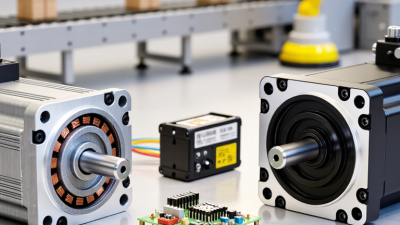
Top 5 RPM Motors for Industrial Applications
Industrial systems often depend on slow, controlled rotation rather than high speed. A Motor 5 Rpm unit may suit turntables, dosing equipment, display platforms, and compact conveyors, where steady movement matters more than rapid output. Picture a loaded platform turning beside a packaging line: even rotation can reduce jolts, but only if the motor can handle the actual load. Low speed alone does not guarantee adequate torque.
This guide introduces five RPM motor options for industrial applications and explains what distinguishes them. It considers rated torque, gear type, duty cycle, power supply, mounting, and expected operating conditions. These details matter. A motor that performs well on a light indexing table may struggle with a continuously loaded conveyor. The comparisons should therefore be treated as a starting point, not a universal ranking; specifications and availability can vary by manufacturer and configuration.
Before selecting a model, check its datasheet and confirm the required output speed under load. Allow for startup demands, ambient temperature, and the drive system’s efficiency. Real installations are rarely as tidy as catalog examples. That deserves attention. A careful match between motor, gearbox, and application can support dependable operation, while a speed rating by itself can lead to an expensive mismatch.

How RPM Ratings Define Industrial Motor Speed and Performance
Industrial motor speed is often discussed as a single RPM figure, but that number needs context. It usually describes rated speed under specified electrical conditions, not the exact speed at every moment. Under load, an induction motor typically runs slightly below its synchronous speed. Frequency, pole count, voltage, and the driven equipment all matter.
Five common speed choices are 600, 900, 1,200, 1,800, and 3,600 RPM. Lower-speed motors suit applications such as mixers or conveyors that need controlled movement and strong starting torque. Around 1,800 RPM is a frequent choice for pumps, fans, and general machinery. A 3,600 RPM motor can move air or fluid quickly, but may bring more noise and demand careful balancing. These figures are common reference points, not a ranking of quality.
Match speed to the task, then check the motor’s torque curve, duty rating, cooling method, and load profile. A variable-frequency drive can adjust speed, but operating far below rated speed may reduce fan cooling. That detail is easy to miss. A motor turning at the right RPM can still overheat or waste energy if it is poorly matched to the load. RPM alone is an incomplete, sometimes misleading shortcut; real operating conditions deserve a closer look.
Top 5 RPM Motors for Industrial Applications - How RPM Ratings Define Industrial Motor Speed and Performance
| Motor Speed Class |
Typical Pole Count |
Synchronous Speed at 50 Hz |
Synchronous Speed at 60 Hz |
Typical Full-Load Speed at 50 Hz |
Typical Full-Load Speed at 60 Hz |
Common Industrial Applications |
| High speed |
2 poles |
3,000 RPM |
3,600 RPM |
Approximately 2,850–2,980 RPM |
Approximately 3,450–3,580 RPM |
Centrifugal pumps, fans, compressors, and high-speed process equipment |
| General-purpose speed |
4 poles |
1,500 RPM |
1,800 RPM |
Approximately 1,425–1,490 RPM |
Approximately 1,725–1,785 RPM |
Conveyors, machine tools, mixers, and general-purpose pumps |
| Medium-low speed |
6 poles |
1,000 RPM |
1,200 RPM |
Approximately 950–990 RPM |
Approximately 1,140–1,190 RPM |
Heavy-duty conveyors, agitators, crushers, and larger pumps |
| Low speed |
8 poles |
750 RPM |
900 RPM |
Approximately 710–745 RPM |
Approximately 850–890 RPM |
Slow-speed mixers, material-handling equipment, and applications requiring higher torque at lower speed |
| Very low speed |
10 poles |
600 RPM |
720 RPM |
Approximately 570–595 RPM |
Approximately 685–710 RPM |
Low-speed process drives, specialized mixers, and equipment designed to reduce or avoid mechanical gearing |
Synchronous speed is calculated as RPM = 120 × frequency (Hz) ÷ number of poles. The full-load speeds shown are approximate examples for AC induction motors; actual speed varies with motor design, load, and slip. A variable-frequency drive can adjust motor speed within the motor’s operating limits.
Five Key Types: Induction, Synchronous, Servo, DC, and BLDC Motors
Industrial RPM selection starts with the load, not a preferred speed rating.
Induction motors suit pumps and conveyors needing rugged, steady operation. Synchronous motors hold speed closely, even as loads change. Servo motors pair feedback with precise control for positioning and rapid starts. DC motors offer straightforward speed adjustment, though brushed designs need brush maintenance. BLDC motors use electronic commutation and avoid brush wear.
Not interchangeable. A small fan and a loaded conveyor can demand very different torque at the same RPM.
The U.S. Department of Energy’s 2014 report, Improving Motor and Drive System Performance: A Sourcebook for Industry, estimates that motor-driven systems account for about
68%
of electricity used in U.S. manufacturing.
That makes speed selection an energy decision, not just a nameplate detail. Match motor and drive to the actual duty cycle, startup load, and required speed range. A servo can be excessive for a steady pump; an induction motor may not provide the positioning accuracy a machine needs.
Check the operating conditions on site. Real plants are messier than selection charts.
Comparing RPM Ranges, Torque, Efficiency, and Control
Industrial speed selection is not a race to the highest RPM. Representative ranges vary by design: induction motors commonly run near 900–3,600 rpm; synchronous motors suit fixed-speed duties; servo motors offer precise, low-speed control and can reach several thousand rpm. Brushless DC motors support broad speed ranges, while switched-reluctance designs can serve high-speed applications. These are indicative ranges, not selection limits.
Torque matters. At a given power, higher speed generally means less torque, so a conveyor or loaded mixer may need different gearing than a fan. Induction motors are robust, but speed control usually requires a drive. Synchronous and brushless designs can provide strong efficiency and precise control, while servos excel at rapid acceleration and positioning. Switched-reluctance motors tolerate demanding speed changes, though noise and torque ripple may require attention. The U.S. Department of Energy reports that motor-driven systems account for about 68% of industrial electricity use. The IEA’s 2011 report, Energy-Efficiency Policy Opportunities for Electric Motor-Driven Systems, estimates roughly 46% of global electricity use. These figures make efficiency more than a nameplate detail. Compare performance across the real load cycle, including starts, stops, and partial-load operation. RPM alone is an imperfect guide; that limitation is easy to overlook.
Matching Motor Speed and Design to Industrial Applications
Selecting an industrial motor by RPM alone can create trouble. A conveyor may need steady, low-speed torque, while a centrifugal fan usually benefits from higher speed and smooth airflow. For slow, heavy loads, a geared motor can reduce output speed and increase usable torque. Check the gearbox rating, though; a large ratio cannot compensate for an undersized motor.
Standard-speed induction motors suit many pumps and general-purpose machines, especially where fixed-speed operation is acceptable. Variable-speed designs can adjust output to changing process demands, but the drive, motor insulation, cooling, and controls must work together. Heat matters. A motor running slowly under heavy load may cool less effectively, depending on its design. High-speed motors fit applications such as spindles, but require careful attention to balance, bearings, and vibration.
Match the motor’s rated speed to the machine’s actual operating point, not just its nameplate maximum. Consider starting torque, load changes, duty cycle, mounting, and dust or moisture exposure. A mixer that starts full can behave differently from one that accelerates gradually. It happens. Site measurements and manufacturer performance curves help verify the choice; assumptions based only on equipment labels can miss real operating conditions.
Top 5 RPM Motors for Industrial Applications
These speeds are synchronous speeds at 60 Hz. Induction motors typically run slightly slower under load because of slip. The application examples are common uses, not fixed rules.
Installation, Speed Regulation, and Maintenance for High-RPM Motors
High-RPM motors need careful installation because small alignment errors can create large vibration loads. Mount the motor on a rigid, level base, then check shaft alignment after the connected equipment is secured. Confirm the coupling, guards, and lubrication match the motor’s rated speed. Do not rely on a quick visual check. Use suitable instruments to record alignment and baseline vibration before commissioning.
Speed regulation should follow the motor and driven equipment’s operating limits. A variable-speed drive can help match output to demand, but acceleration ramps and minimum operating speeds need review. Sudden changes may stress couplings, bearings, and insulation. The International Energy Agency’s 2011 report, Energy-Efficiency Policy Opportunities for Electric Motor-Driven Systems, estimates these systems use about 45% of global electricity. Efficient control matters. Yet a drive alone does not guarantee efficient operation; settings must reflect the actual load.
For maintenance, trend bearing temperature, vibration, and noise under comparable loads. Keep cooling passages clear, and follow specified lubrication intervals rather than adding grease by habit. Check fasteners and alignment after unusual vibration or a process change. Records are easy to neglect. That is a weakness in many maintenance plans: readings are taken, but not compared over time. Establishing simple limits and documenting corrective work can make early warning signs easier to spot.