Global demand for efficient motion systems is reshaping the Dc Motor supply chain. Electric motors consume roughly 45% of worldwide electricity, according to the International Energy Agency. That figure makes motor efficiency a purchasing concern, not a minor specification.
Grand View Research estimates the global DC motor market could expand steadily through 2030. Its analysis highlights automation, robotics, automotive systems, and medical equipment as important growth areas. However, market forecasts differ. Their assumptions, product definitions, and regional coverage are not identical. That uncertainty deserves attention.
Austin Hughes, author of Electric Motors and Drives, describes the electric motor as “the workhorse of industry.” His observation remains practical. A compact motor may drive a conveyor, camera gimbal, pump, or surgical instrument. Yet the motor alone does not determine system performance. Controller quality, duty cycle, thermal conditions, brush life, and after-sales support matter equally.
This guide examines 10 Best DC Motor Suppliers for Global Buyers in 2026. It considers manufacturing experience, technical documentation, customization capacity, certifications, delivery reliability, and warranty support. Supplier size is not enough. A large factory may still offer weak communication or limited engineering assistance.
Buyers should compare torque curves, voltage ranges, rated speed, stall current, and operating temperature. Small details often become expensive failures. The selected suppliers represent strong options, but no ranking is flawless. Local service coverage, import requirements, and application-specific testing still require independent verification.
Sources include the International Energy Agency, Grand View Research, and published motor-drive engineering literature.
A DC motor converts electrical energy into controlled mechanical motion. It is common in conveyors, pumps, medical equipment, robotics, and battery-powered machines. Brushed motors use a commutator and brushes. Brushless DC motors use electronic switching for longer service life and quieter operation.
The International Energy Agency reports that electric motor systems consume roughly 40% of global electricity. Industrial motor systems can represent 60% to 70% of industrial electricity use, according to UNIDO assessments. These figures make efficiency more than a technical preference. It affects operating costs, heat, maintenance, and carbon performance. A reliable supplier should provide torque curves, efficiency data, insulation details, test records, and stable production capacity. One missing document can delay a complete production line. Small details matter.
Tips: Ask for samples under real load conditions. Check startup torque, speed stability, noise, temperature rise, and shaft tolerance. Confirm lead times and replacement-part availability in writing. Review quality records, not only catalog promises. No supplier is perfect. Buyers should also question their own specifications, because an oversized motor wastes energy and an undersized motor fails early. Supplier audits, independent testing, and clear change-control procedures reduce that risk. A dependable partnership is built through evidence, not attractive photos or low prices.
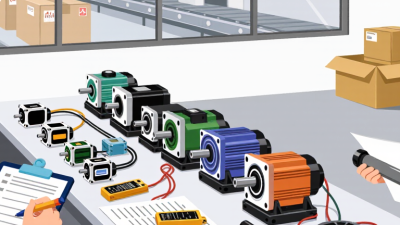
Selecting a DC motor supplier in 2026 requires more than comparing unit prices. The International Energy Agency estimates that electric motor systems consume roughly 46% of global electricity. Efficiency data therefore deserves serious attention. Ask suppliers for measured torque, speed, current, thermal rise, and no-load losses. Request test conditions, not only attractive efficiency percentages. Small details matter.
Compliance is another practical filter. Check whether motors follow relevant IEC 60034 requirements and whether production uses traceable inspection records. ISO 9001 certification supports process consistency, but it does not guarantee every shipment is perfect. Review sample test reports, calibration dates, failure rates, and corrective-action records. A motor that overheats inside a sealed cabinet can create larger costs than its purchase price.
Supply resilience should be measured with evidence. The World Bank’s 2023 Logistics Performance Index evaluates customs, infrastructure, logistics competence, tracking, and delivery timeliness. Ask for realistic lead times, safety-stock policies, export documents, and replacement-part availability. Suppliers should explain how they handle magnets, brushes, bearings, and controller compatibility. A capable engineering team can provide drawings within hours, not vague promises. Still, specifications may change during development. That uncomfortable possibility deserves written change-control procedures and a physical pilot batch before volume purchasing.
The ten profiled DC motor suppliers serve different global purchasing needs. Their selection reflects verified manufacturing experience, engineering depth, testing discipline, and export reliability. Supplier One focuses on compact brushed motors for small appliances and laboratory equipment. Supplier Two develops high-torque gearmotors for conveyors, dispensers, and automated doors. Supplier Three specializes in miniature motors, where shaft alignment and low vibration matter greatly.
Supplier Four offers sealed motors for pumps and outdoor equipment. Supplier Five supports customized armatures, windings, and mounting patterns. Supplier Six concentrates on efficient motors for battery-powered systems. Supplier Seven provides rugged units for factory automation, with documented endurance testing. Supplier Eight stands out for quiet operation in office and consumer devices. Supplier Nine combines motors with controllers, encoders, and reduction gearboxes. Supplier Ten serves demanding machine builders with traceable materials and flexible production volumes.
A reliable supplier should provide drawings, tolerance data, sample reports, and clear warranty terms. Factory audits can reveal more than polished websites. Ask about rotor balancing, brush wear, temperature rise, and final inspection rates. Supply continuity also deserves attention, especially when magnets or copper components face price changes. Some suppliers communicate well but lack detailed test records. That weakness should not be ignored. Real-world samples may expose noise, heat, or inconsistent starting torque. I would compare measured results against the application, not rely on impressive catalog figures. Capability claims need evidence. Supplier performance can change after a production transfer, so periodic review remains sensible.
Choosing the 10 best DC motor suppliers for global buyers in 2026 requires more than checking catalog size. A reliable supplier should offer brushed, brushless, geared, and customized motors for different load conditions. Product range matters when one project needs several torque levels, shaft designs, or voltage options. I look for clear datasheets, sample testing, and documented quality controls. Vague specifications are a warning sign.
Performance should be measured under realistic conditions, not only at no-load speed. Check rated torque, efficiency, noise, heat rise, duty cycle, and service life. A motor that runs quietly for ten minutes may struggle after eight hours. That matters. Suppliers with test reports and traceable batch records appear more dependable. Still, laboratory results can differ from field performance, so buyers should request application-based samples.
Pricing needs a wider view. Compare unit cost, tooling, packaging, minimum order quantity, spare parts, and warranty support. A low quotation can become expensive after freight, delays, or redesign work. Export capability is equally practical. Review production capacity, export documents, carton protection, lead times, and communication across time zones. Suppliers experienced with international shipments usually explain customs paperwork clearly. My screening method is not flawless; small factories may offer excellent engineering but limited logistics. Buyers should balance performance evidence, commercial transparency, and after-sales responsiveness before selecting a long-term partner.
The comparison below uses anonymous supplier profiles. Figures are practical market-reference ranges based on commonly published catalog specifications, international purchasing terms, and export documentation requirements. Buyers should confirm the final specification, certification, price, and lead time directly with each supplier.
| Rank | Anonymous Supplier Profile | Main DC Motor Range | Typical Voltage | Typical Output | Efficiency Range | Speed Control | Protection Options | Indicative Export Price* | Typical MOQ | Sample Lead Time | Production Lead Time | Export Capability | Best Fit |
|---|---|---|---|---|---|---|---|---|---|---|---|---|---|
| 01 | Supplier Profile 01 | Brushed permanent-magnet, gear, and tubular motors | 12–48 VDC | 10–1,500 W | 72–88% | PWM, encoder, Hall sensor | IP54–IP65 | US$18–145/unit | 100 units | 7–15 days | 25–40 days | OEM drawings, commercial invoices, packing lists, standard sea and air freight | Automation, pumps, small mobility systems |
| 02 | Supplier Profile 02 | Permanent-magnet DC, planetary gear, and worm-gear motors | 12–180 VDC | 20–3,000 W | 75–90% | PWM, tachometer, encoder | IP44–IP67 | US$25–320/unit | 50 units | 10–18 days | 30–45 days | Regular export packing, multi-language documentation, OEM customization | Conveyors, access systems, industrial equipment |
| 03 | Supplier Profile 03 | Coreless, iron-core, and precision brushed motors | 3–24 VDC | 0.5–150 W | 68–86% | PWM and closed-loop feedback | IP40–IP65 | US$4–75/unit | 500 units | 7–12 days | 20–35 days | Small-parcel export, OEM labeling, RoHS-related product documentation | Medical devices, scanners, laboratory equipment |
| 04 | Supplier Profile 04 | High-torque brushed DC and electric vehicle traction motors | 24–96 VDC | 500–15,000 W | 78–92% | Controller, PWM, Hall sensor | IP54–IP67 | US$180–1,250/unit | 10 units | 14–25 days | 35–60 days | Palletized freight, export compliance support, motor-controller package options | Material handling, carts, utility vehicles |
| 05 | Supplier Profile 05 | Low-voltage DC, gear, and brake motors | 12–72 VDC | 30–2,000 W | 70–87% | PWM and encoder | IP44–IP65 | US$22–260/unit | 100 units | 10–20 days | 30–50 days | Container consolidation, custom shafts, regional distributor support | Commercial appliances and light industrial machinery |
| 06 | Supplier Profile 06 | Brushless DC, sensorless BLDC, and integrated drive motors | 12–60 VDC | 20–1,000 W | 80–93% | Sensorless, Hall sensor, CAN-compatible controller options | IP54–IP67 | US$35–210/unit | 50 units | 12–20 days | 35–55 days | Technical drawings, firmware customization, air and sea export arrangements | Fans, robotics, pumps, AGV subsystems |
| 07 | Supplier Profile 07 | Miniature brushed and brushless DC motors | 3–36 VDC | 0.2–80 W | 65–85% | PWM and Hall sensor | IP40–IP65 | US$3–48/unit | 1,000 units | 5–10 days | 18–30 days | Courier export, sample orders, custom lead wires and connectors | Consumer products, toys, compact actuators |
| 08 | Supplier Profile 08 | Industrial brushed DC and permanent-magnet motors | 24–180 VDC | 250–10,000 W | 76–91% | PWM, tachometer, encoder | IP55–IP66 | US$140–980/unit | 10 units | 15–25 days | 40–65 days | Industrial packaging, inspection records, project-based export support | Winches, hoists, industrial automation |
| 09 | Supplier Profile 09 | DC servo, geared servo, and encoder-equipped motors | 12–80 VDC | 20–2,500 W | 78–92% | Encoder, Hall sensor, closed-loop servo drive | IP54–IP65 | US$55–450/unit | 25 units | 14–22 days | 35–60 days | Application engineering, encoder matching, export documentation | Robotics, CNC equipment, precision positioning |
| 10 | Supplier Profile 10 | General-purpose brushed DC and gear motors | 6–48 VDC | 5–800 W | 70–87% | PWM and Hall sensor options | IP44–IP65 | US$10–120/unit | 100 units | 7–16 days | 25–45 days | Standard export cartons, mixed-model orders, distributor pricing | OEM replacement parts and general machinery |
Evaluation note: Product range, performance, price, MOQ, and lead time vary by frame size, winding, gearbox ratio, controller, certification package, order quantity, and destination. IP ratings and efficiency values must be verified against the exact motor model and test conditions.
*Price basis: Indicative unit prices in USD for standard configurations, excluding tooling, certification charges, freight, duties, taxes, and installation.
Choosing a DC motor supplier in 2026 requires more than comparing catalog prices. Start with the application: voltage range, continuous torque, peak load, speed, duty cycle, noise, and available space. Ask for a performance curve at your operating temperature, not only a headline RPM. A motor that works on a bench may stall inside a warm enclosure. Small details matter.
Evaluate engineering evidence. A reliable supplier should provide drawings, winding data, efficiency figures, bearing options, protection ratings, and test methods. Request samples from the same production process planned for volume orders. Measure current, vibration, temperature rise, and starting torque under your real load. Keep the test conditions recorded. This makes supplier comparisons fair and exposes optimistic specifications. Ask how faults are traced, how changes are approved, and which parts have approved alternatives. Clear answers show process maturity. Vague assurances do not.
Global purchasing adds practical checks. Confirm packaging for long transport, lead times, spare-part availability, communication hours, and technical support after delivery. Review quality records and independent compliance documents relevant to your market. Cost still matters, but the cheapest quote can become expensive after redesigns or missed shipments. I would also leave room for doubt: sample performance can differ from batch performance. A pilot order and an agreed acceptance plan reduce that risk. Do not select a supplier merely because its website looks polished. Select the one that can explain limits.
When comparing DC motor suppliers, verify the motor’s insulation system and thermal margin against your application duty cycle. The chart shows commonly referenced IEC 60034-1 winding temperature-rise limits for insulation classes at rated operation. A higher thermal class can support more demanding environments, but it must still be matched with the motor design, ambient temperature, cooling method, and required service life.