Buying a Dc Motor across borders is not merely a catalog exercise. It is a decision about torque, heat, noise, duty cycle, and service life. A motor that performs smoothly on a test bench may stall beside a conveyor after eight hours. Global buyers therefore need more than a low unit price. They need evidence, clear specifications, and a supplier who answers difficult questions. This guide introduces ten practical buying tips for comparing motors across international markets. It focuses on real operating conditions, not attractive product photographs.
Before requesting quotations, record voltage, current, rated speed, starting torque, load profile, mounting dimensions, shaft size, and expected operating hours. Small omissions can create expensive surprises. Ask whether the quoted output is continuous or intermittent. Confirm insulation class, cooling method, bearing quality, brush life, and protection rating. If the application uses variable speed control, check compatibility with the controller and electromagnetic noise requirements. Datasheets matter. So do test reports, sample inspections, and traceable production records. A credible manufacturer should explain tolerances, quality checks, packaging, warranty limits, and spare-part availability without vague promises.
International purchasing adds another layer. Verify customs documents, labeling, regional electrical requirements, transport protection, and realistic lead times with qualified professionals. Do not assume one certification fits every destination. That assumption can fail. Compare total landed cost, including samples, tooling, freight, duties, testing, and possible returns. Speak with reference customers when possible. Yet no checklist removes every risk. Specifications may change, and suppliers may misunderstand one sentence. Reconfirm critical details in writing before payment and approve a pre-shipment inspection. Careful buying is slower initially, but often cheaper when the first shipment arrives.
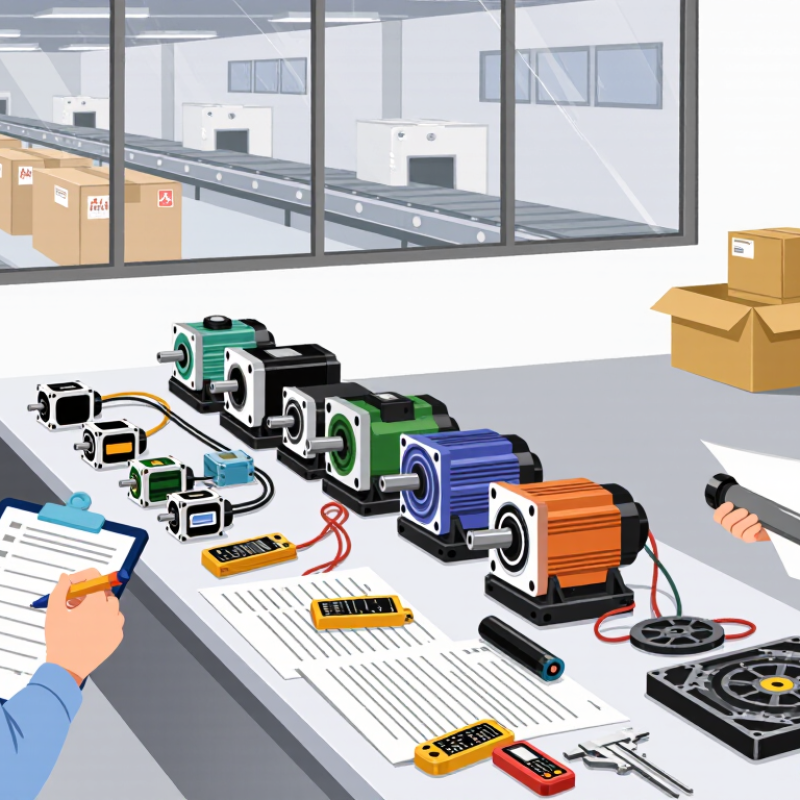
Choosing a DC motor starts with defining its real application, not its desired speed alone. Describe the mechanism it will drive, such as a conveyor, valve, pump, or compact actuator. Record the required speed, torque, movement direction, and duty cycle. A motor lifting a load needs different performance from one driving a small fan. Be precise.
Calculate both continuous and peak load requirements. Include friction, acceleration, gear losses, and unexpected resistance. Many purchasing mistakes come from sizing only the normal load. Leave a practical safety margin, but avoid excessive oversizing. A larger motor may consume more energy and create unnecessary heat.
The operating environment deserves equal attention. Check ambient temperature, humidity, dust, vibration, installation height, and available cooling. A motor inside a sealed enclosure may run hotter than its test rating suggests. In coastal or chemical areas, corrosion protection can affect service life. Voltage stability also matters, especially in mobile or remote equipment. Test the motor under realistic conditions before approving a large order. Short trials reveal noise, heating, and startup problems. I have seen calculated loads miss brief jams and repeated starts. That gap deserves review.
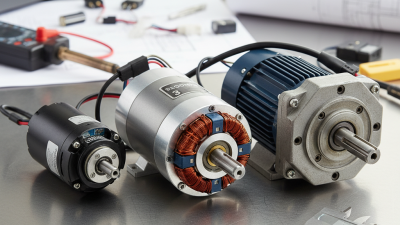
Choosing a DC motor starts with the application, not the catalog headline. A brushed motor may suit simple, low-cost equipment, while a brushless motor often supports longer service and quieter operation. Gear motors provide useful low-speed torque, but their added gearbox can introduce backlash and efficiency loss. Match the motor type to duty cycle, noise limits, maintenance access, and control requirements.
Voltage must match the available power supply, including normal variation and startup conditions. A 12-volt motor should not be judged only by its no-load speed. Check speed under the real load, because friction and voltage drop can change performance sharply. Torque needs two values: continuous torque for steady movement and starting torque for acceleration. Add a sensible margin, but avoid excessive oversizing. It increases cost, weight, and sometimes heat.
I once selected a motor from its peak torque alone. It stalled during repeated starts. That mistake taught me to review current, thermal limits, and duty cycles together. Measure the shaft load if possible. Even a small pulley can alter torque demand. Confirm mounting dimensions, shaft size, feedback options, and controller compatibility. Ask for test conditions, not just attractive ratings. Supplier data can still be incomplete. A short prototype test, with a thermometer and current meter, often reveals more than a polished specification sheet. Test under real conditions.
Global DC motor buyers should judge more than rated speed and torque. Efficiency affects energy cost, cabinet size, and operating temperature. The International Energy Agency reports that electric motor systems consume roughly half of global electricity. Small efficiency losses can become expensive across thousands of operating hours. Check efficiency at the actual load, not only at the nameplate point. A motor running far below capacity may perform poorly.
Tip: Define the duty cycle clearly. Continuous, intermittent, and cyclic loads create different thermal demands. Record start frequency, acceleration time, load changes, and ambient temperature. IEC 60034-1 provides a useful framework for duty classifications, but site measurements remain essential. Control options also matter. PWM drives can improve speed regulation, yet switching frequency may increase acoustic noise and heat. Confirm current limits, feedback needs, braking methods, and controller compatibility before purchase.
Tip: Treat heat management as a design task. The U.S. Department of Energy’s motor-system guidance links poor sizing, overload, and inadequate ventilation with avoidable losses. Keep airflow paths open, specify the mounting position, and review enclosure protection for dusty or humid sites. Forced cooling is not always better. It adds components that can fail. I have seen technically efficient motors derated because the cabinet trapped hot air. That mistake is easy to miss. Build a thermal margin into the selection, then test the motor under the longest real operating cycle.
| Buying Tip | Key Specification to Review | Practical Evaluation Criteria | Typical Reference Points | Recommended Verification |
|---|---|---|---|---|
| 1 Match Voltage and Operating Range | Nominal voltage, allowable voltage range, and supply type | Confirm that the motor is compatible with the actual battery, power supply, or control system. Check performance at minimum and maximum operating voltage. | Common low-voltage DC systems: 6 V, 12 V, 24 V, and 48 V. The permitted range must be confirmed from the motor specification. | Request speed, current, torque, and temperature data at the intended voltage limits, not only at nominal voltage. |
| 2 Evaluate Efficiency at the Real Load | Motor efficiency, output power, input current, and load point | Compare efficiency at the expected operating speed and torque. A motor's peak efficiency may occur away from the normal working point. | For many small and medium DC motor systems, approximately 70%–90% efficiency can be achievable, depending on motor type, size, speed, and load. | Ask for a measured efficiency curve or test report covering the actual duty point and operating voltage. |
| 3 Select the Correct Duty Cycle | Continuous, intermittent, periodic, or short-time duty | Determine whether the motor runs continuously, cycles on and off, reverses frequently, or operates with repeated starts and stops. | Continuous-duty applications require thermal validation at 100% operating time; intermittent applications must specify run time, rest time, and cycle duration. | Provide a complete duty profile, including load torque, speed, acceleration, braking, ambient temperature, and cycle frequency. |
| 4 Check Starting and Stall Torque | Starting torque, peak torque, stall current, and acceleration time | The motor must start the mechanism under the worst expected load without excessive voltage drop or controller overload. | Starting current may be several times higher than running current, especially in brushed motors or when the rotor is initially stationary. | Verify start-up performance with the actual transmission, friction, incline, inertia, and maximum product load. |
| 5 Choose Suitable Speed Control | Speed range, speed regulation, feedback method, and controller compatibility | Decide whether open-loop PWM control is sufficient or whether closed-loop feedback is required for stable speed under changing loads. | PWM control is widely used for basic speed adjustment; encoder or Hall feedback is preferable when speed accuracy, positioning, or load compensation is important. | Test speed regulation during no-load, rated-load, low-voltage, and high-temperature conditions. |
| 6 Review Brushed or Brushless Construction | Motor architecture, commutation method, maintenance needs, and electronic requirements | Brushed motors can simplify control and reduce electronics, while brushless motors generally support longer service life and lower brush-related maintenance. | Brushless motors require an electronic commutator or compatible drive; brushed motors require attention to brush wear, sparking, and commutator condition. | Compare expected operating hours, switching frequency, noise limits, maintenance access, and controller availability. |
| 7 Plan Heat Management | Winding temperature rise, insulation class, ambient temperature, and cooling method | Heat is influenced by current, duty cycle, enclosure, mounting surface, ventilation, and surrounding components. A motor should not be evaluated by ambient temperature alone. | Common insulation classes include Class B and Class F, with maximum winding temperature limits of approximately 130°C and 155°C respectively; design margins are still required. | Request temperature-rise data under the actual load and mounting arrangement. Check whether a heat sink, fan, or conductive mounting surface is needed. |
| 8 Specify Protection and Environmental Rating | Ingress protection, corrosion resistance, vibration, shock, and operating temperature | Match the motor enclosure and materials to dust, water, chemicals, outdoor exposure, and mechanical vibration at the installation site. | An IP rating must be interpreted by its individual digits; for example, the first digit addresses solids and the second addresses water ingress. The correct rating depends on the installation environment. | Confirm the tested IP level, test conditions, sealing method, cable exit design, and corrosion-treatment requirements. |
| 9 Verify Mechanical Fit and Transmission | Frame size, shaft diameter, mounting pattern, gear ratio, backlash, and radial or axial load | Mechanical compatibility affects efficiency, noise, alignment, bearing life, and achievable output torque. Gearbox selection should be evaluated with the motor as one system. | Output speed and torque depend on gear ratio and gearbox efficiency; the selected shaft and bearings must withstand the actual radial and axial loads. | Submit a dimensional drawing and verify shaft tolerances, mounting orientation, coupling method, load direction, and allowable overhung load. |
| 10 Confirm Testing, Compliance, and Supply Readiness | Electrical safety, EMC performance, documentation, sampling, production capacity, and lead time | Global purchases require clear technical documentation and a repeatable quality process. Compliance obligations depend on the destination market and end application. | Request applicable test reports and declarations for the target market; include efficiency, noise, vibration, endurance, insulation, and no-load or load-current records where relevant. | Use a signed specification sheet, approval sample, inspection plan, packaging standard, spare-parts policy, and agreed acceptance criteria before mass production. |
Buying a DC motor requires more than checking voltage, speed, and price. Quality begins with measurable production controls. Ask whether the motor follows relevant IEC 60034 requirements or equivalent regional standards. Request test records for insulation resistance, no-load current, temperature rise, and load performance. A clear report should show test conditions, instruments, and dates. Vague claims deserve careful questioning.
Protection ratings matter in real installations. An IP54 motor may resist dust and splashing water, but it is not suitable for heavy washdown. Confirm the rating on the nameplate and certificate, not only in a product brochure. Check ambient temperature, humidity, altitude, and vibration limits. These details often explain early failures. I once saw a motor pass a factory test but struggle in a poorly ventilated enclosure. The selection was technically correct, yet the application review was weak.
Certifications should match the destination market and the complete motor configuration. Verify certificate numbers through the issuing body when possible. A certificate for one winding design may not cover another. Reliable suppliers can provide traceability, spare-part guidance, warranty terms, and failure-analysis procedures. Ask for endurance data under conditions close to your application, including starts per hour and duty cycle. Laboratory results are useful, but field evidence is stronger. No supplier is perfect. Even careful buyers should record assumptions and review them before placing a large order.
When buying DC motors across borders, compare suppliers beyond catalog prices. I have seen a low quote grow after testing, packaging, and customs handling. Ask for winding data, torque curves, efficiency readings, and production lead times. Request a sample under your actual voltage and load. A motor that runs quietly at no load may overheat inside your machine. Check whether the supplier controls incoming magnets, bearings, and final inspection. Small gaps here can become expensive delays.
Calculate total cost per usable motor, not cost per unit. Include tooling, certificates, freight, duties, spare parts, and rejected units. Also price the engineering time needed for installation changes. Customization may involve shaft length, mounting holes, connector placement, encoder feedback, or noise limits. Put every dimension in a signed drawing. Verbal promises are weak evidence. Yet excessive customization can create difficult replacement problems later. I have underestimated this risk before.
Review warranty terms line by line. Clarify coverage period, operating hours, allowable overload, evidence requirements, and return freight. Ask who performs failure analysis and how quickly reports arrive. Global support should include a stable technical contact, time-zone coverage, remote troubleshooting, and replacement planning. Test communication before placing a large order. Send a detailed fault example. The reply often reveals more than a sales presentation. Keep records of samples, approvals, and production changes. Perfect forecasts are rare. Build a practical buffer.
This 100-point buyer scorecard highlights the factors that should be compared before selecting an international DC motor supplier. Total cost includes product price, shipping, duties, installation, maintenance, and expected service costs—not just the quoted unit price.