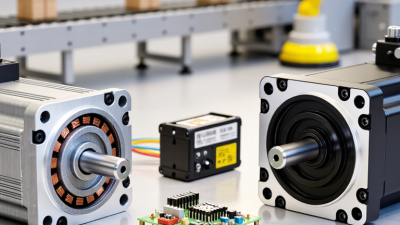
Choosing the right Dc Motor 3 requires more than comparing price, voltage, and advertised speed. The correct choice depends on the machine, workload, environment, and control method. A motor turning a small conveyor needs different characteristics from one driving a robotic joint. Start with the load. Measure required torque, running speed, acceleration, duty cycle, and available power. Do not guess here.
Michael Faraday wrote, “Nothing is too wonderful to be true if it be consistent with the laws of nature.” His principle remains useful when evaluating Dc Motor 3 performance. A motor must obey electrical and mechanical limits. Check rated voltage, stall current, thermal capacity, shaft size, mounting pattern, and feedback options. An experienced engineer should also examine the controller, because a good motor can perform poorly with unsuitable current limits. Manufacturer curves and IEC 60034 guidance provide stronger evidence than promotional claims.
Real conditions matter. Dust, vibration, heat, moisture, and limited installation space can change the decision. Brush wear may influence maintenance planning, while a brushless design may require more complex electronics. Review noise levels, service access, replacement availability, and total operating cost. A quick bench test helps reveal vibration, heating, and unstable speed. It may also expose an uncomfortable truth: the first specification was incomplete.
For dependable selection, compare at least three suitable Dc Motor 3 models. Record each result under the same load. Seek advice from qualified motor specialists when calculations remain uncertain. The best motor is not always the fastest or cheapest. It is the one that delivers stable performance, safe operation, and practical service life.
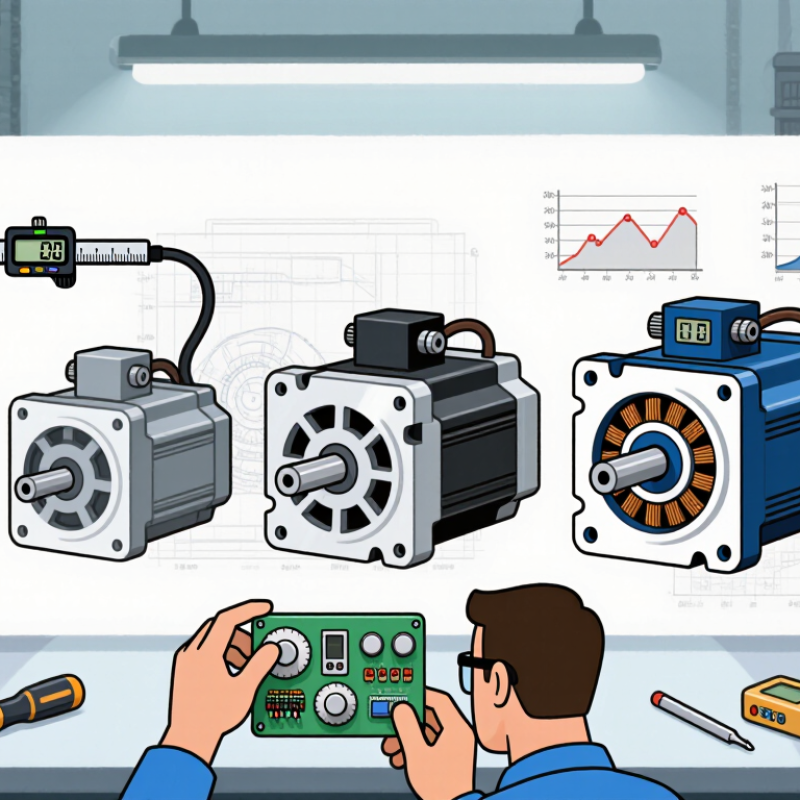
How to Choose the Right DC Motor for Your Needs?
Electric motors deserve careful selection. The International Energy Agency reports that motor-driven systems consume about 45% of global electricity. That figure makes efficiency more than a technical detail.
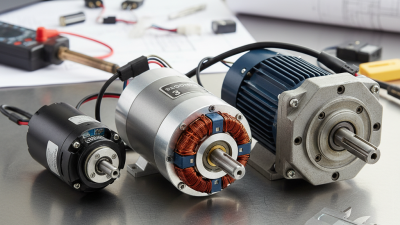
Brushed DC motors use brushes and a commutator to switch current mechanically. They offer simple control, low initial cost, and strong starting torque. However, brushes wear, create electrical noise, and require periodic replacement. Brushless DC motors use electronic commutation instead. They usually provide longer service life, quieter operation, and better efficiency. MarketsandMarkets estimated the brushless motor market at about USD 21 billion in 2024, with projections above USD 33 billion by 2029. The controller adds cost, though. That trade-off is easy to overlook.
Coreless motors use a lightweight, ironless rotor. Their low inertia supports rapid starts and precise movement, especially in compact instruments and automation equipment. They may struggle with sustained overload and high heat. Gear motors combine a motor with reduction gears, producing higher output torque at lower speed. They suit conveyors, valves, and lifting mechanisms. Gearboxes also introduce friction, backlash, noise, and efficiency losses. Do not select by efficiency alone. A neat comparison table can mislead. Measure load, duty cycle, speed, noise, available space, and maintenance access under real operating conditions. A small prototype often reveals assumptions that calculations miss.
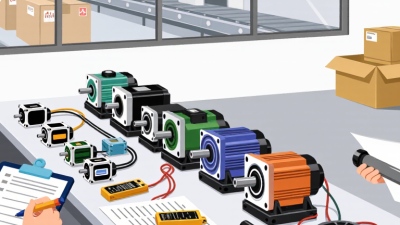
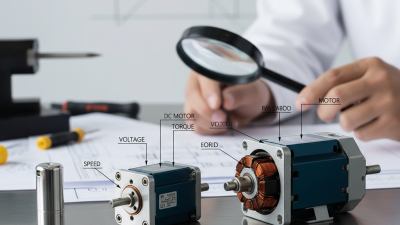
Choosing a DC motor starts with three numbers: voltage, speed, and torque. The rated voltage defines the intended electrical operating point. Rated speed and rated current describe performance under a specified load. Use these values together, not separately. At 12 V and 2 A, a motor may deliver its stated speed with a practical mechanical load. It may not maintain that speed when friction or weight increases. Do not treat the rating as a promise.
Stall current shows the motor’s worst normal electrical demand. It occurs when the shaft cannot turn, while the motor produces its highest starting torque. During acceleration, the current can briefly approach this value. If stall current reaches 8 A, a 2 A driver may overheat or shut down. Check the driver, wiring, fuse, and power supply against this condition. Measure startup current with the actual gearbox, wheel, or pump attached. Bench tests can be misleading.
Match the motor’s rated speed to the required output speed after gearing. Then verify that rated torque exceeds the continuous load, with extra capacity for acceleration. I once chose a motor by its no-load speed and underestimated the starting torque. The system worked unloaded, then stalled under weight. That mistake was avoidable. Review the current curve, duty cycle, heat, and load changes before approving the selection. A lower voltage may reduce speed, but it does not automatically solve overheating. Real measurements still matter.
Choosing a DC motor requires more than checking voltage and speed. Efficiency changes with load, speed, brush condition, and controller settings. A motor reaching peak efficiency at one operating point may waste energy elsewhere. Measure current during real operation, not only from the datasheet. I once assessed a motor that appeared efficient on a test bench but overheated inside a poorly ventilated enclosure.
Duty cycle describes how long the motor runs and rests. Continuous operation needs an S1 duty classification and stable heat removal. Intermittent cycles, such as S3 operation, may allow higher short-term power. However, frequent starts create extra current and mechanical stress. Thermal limits depend on ambient temperature, mounting, airflow, and insulation class. A motor rated for 40°C ambient may perform differently in a sealed cabinet at 55°C. IEC motor ratings provide useful reference points, but they do not replace application testing.
Tips: Record current, temperature, speed, and run time during a complete cycle. Leave thermal margin instead of designing at the limit. Check the IEC duty code and insulation class carefully. Test the motor after several repeated cycles. A short demonstration can hide a long-term problem. Reconsider the choice if the housing becomes too hot to touch safely. Efficiency matters, but predictable temperature and service life often matter more.
How to Choose the Right DC Motor 3 for Your Needs?
A DC motor’s IP rating should match its real environment, not an imagined worst case. The U.S. Department of Energy reports that motor-driven systems consume about 70% of industrial electricity. Protection affects reliability, maintenance, and unplanned downtime.
IEC 60529 defines IP54 as protection against limited dust ingress and water splashes. It suits sheltered workshops, control cabinets, and light outdoor exposure. IP55 resists water jets, while IP65 adds complete dust protection. Choose IP66 for powerful jets or frequent washdown near production equipment. These ratings matter where hoses, metal dust, or cooling fluids are present.
IP67 allows temporary immersion, typically up to one metre for 30 minutes. IP68 supports deeper or longer immersion, but the manufacturer must define the test conditions. IP68 does not automatically guarantee IP66 performance. That detail is often missed. I once treated IP68 as the best universal option; that was a poor shortcut. A sealed motor can still overheat if its housing restricts heat dissipation. Check ambient temperature, shaft seals, cable glands, and duty cycle together. The Global Energy Perspective from McKinsey estimates industrial energy demand will remain substantial through 2050, making efficient motor selection increasingly important. For a dusty indoor line, IP65 may be practical. For flood-prone equipment, specify IP67 or IP68 with documented immersion limits. Test the complete assembly, not only the motor.
| IP Rating | Solid-Object Protection | Water Protection | Typical Operating Environment | DC Motor Selection Considerations | Relative Protection Level |
|---|---|---|---|---|---|
| IP54 | Protected against dust in quantities that could interfere with operation; not dust-tight. | Protected against water splashes from any direction. | Indoor equipment, light industrial areas, and locations with occasional splashing. | Suitable when the motor is sheltered from direct jets, heavy dust, and immersion. | Basic |
| IP55 | Protected against dust in quantities that could interfere with operation; not dust-tight. | Protected against water jets from any direction. | Workshops, machinery areas, and applications exposed to routine washdown. | A practical choice for general industrial use where moderate dust and water jets are expected. | Moderate |
| IP56 | Protected against dust in quantities that could interfere with operation; not dust-tight. | Protected against powerful water jets from any direction. | Outdoor machinery and industrial installations exposed to strong spray or heavy washdown. | Choose when high-pressure spray is possible but temporary immersion is not expected. | High |
| IP57 | Protected against dust in quantities that could interfere with operation; not dust-tight. | Protected against temporary immersion in water under standardized test conditions. | Equipment that may be accidentally dropped into water or briefly flooded. | Provides temporary immersion protection, but does not provide complete dust-tight sealing. | Very High |
| IP58 | Protected against dust in quantities that could interfere with operation; not dust-tight. | Protected against continuous immersion under conditions specified by the manufacturer. | Specialized equipment used in environments with extended water exposure. | Confirm the permitted immersion depth, duration, water temperature, and installation position before selection. | Very High |
| IP65 | Dust-tight; no dust ingress. | Protected against water jets from any direction. | Dusty factories, outdoor equipment, and systems requiring regular washdown. | Often a strong balance for motors exposed to fine dust and ordinary water jets without immersion. | Very High |
| IP66 | Dust-tight; no dust ingress. | Protected against powerful water jets from any direction. | Severe industrial environments, exposed outdoor installations, and intensive washdown areas. | Prefer this rating where both fine dust and strong water spray are routine hazards. | Maximum Spray Protection |
| IP67 | Dust-tight; no dust ingress. | Protected against temporary immersion in water under standardized test conditions. | Outdoor equipment, flood-prone locations, and applications with accidental short-term submersion. | A suitable option when complete dust protection and temporary immersion protection are both required. | Maximum |
| IP68 | Dust-tight; no dust ingress. | Protected against continuous immersion under conditions specified by the manufacturer. | Submersible or permanently wet applications requiring a specially sealed motor assembly. | Verify the exact immersion depth, exposure time, fluid type, temperature, cable entry, and shaft-seal requirements. | Maximum Immersion Protection |
Selection note: IP ratings describe protection against solid particles and water ingress only. They do not by themselves indicate resistance to chemicals, salt spray, corrosion, oil, extreme temperatures, mechanical impact, or pressure. Always check the motor’s test conditions and installation requirements for the intended application.
A suitable DC motor should match the real load, not only the rated load. Measure starting torque, running torque, speed, and duty cycle. A conveyor may need high starting torque, while a small fan needs steady speed and low vibration. Check stall current carefully. Your power supply and controller must handle it without overheating. My early selections sometimes focused too much on peak torque. Continuous performance proved more important.
Tips: Record the load at startup and during normal operation. Leave a safety margin of 20–30 percent. Test the motor with the actual gearbox, coupling, and wiring. Small changes can affect current and noise.
Noise requirements deserve practical testing. Listen at the intended mounting position, not only on a workbench. Metal panels may amplify vibration. Rubber mounts can help, but they may reduce alignment stability.
Also verify the control method, including speed range, braking, and direction changes. Poor control settings can create humming, heat, or sudden current spikes.
Service life depends on temperature, brushes, bearings, dust, and operating hours. Review thermal ratings and maintenance access before purchase. A motor that runs quietly for ten minutes may fail after continuous operation. This is easy to overlook. Ask for test data, tolerances, and expected life under your actual conditions. If the application is unusual, build a simple prototype before approving production.